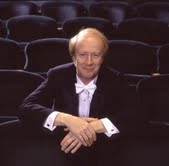
Master Conductor, Christopher Seaman Demystifies the Mysterious in Inside Conducting

Christopher Seaman, Master Conductor In the foreword of master conductor, Christopher Seaman’s new book, Inside Conducting, Chief Conductor of the Tonhalle-Orchester Zurich, David Zinman describes Mr. Seaman as a rare personality and a highly stimulating teacher.[1]

I read this passage after I had personally talked with Mr. Seaman on the telephone. I immediately thought that Mr. Zinman described the British conductor accurately. Aside from his kindness and positive attitude, Mr. Seaman is naturally delighted to share details about his new book and his experiences.

“So many people [often] ask me about what conductors do that I decided it was time to publish the answers the best I could. I thought it was time to answer people’s curiosities,” explains Mr. Seaman.

“This book is meant to stimulate interest and get alongside people. It is aimed at two kinds of people,” he adds. “The first are concert goers and music lovers that are curious to learn about what a conductor does. [The second] are students who are training and want to learn more.

“There is a lot of information in the book, and I hope to present it in a way that is interesting, stimulating, approachable and not intimidating. You can read it even if you have never gone to music school.”

I attest that Inside Conducting is for anybody who loves music, and those who played or are currently playing an instrument or are involved in music in some way might find it even more exciting. As for musicians training in the profession of conducting, Mr. Seaman advises students on specifics like how to correctly use a baton, what to do with the left hand when conducting, how to be more economical in their instructions to the musicians in the orchestra, and more.

One lesson from Inside Conducting that stood out to me is the balance of leading and yielding that every conductor must master. Like within any profession, including musical, controlling and managing is not enough. The individual must also learn to relinquish control and take chances in order to work with others in producing a great piece of music.

It is my pleasure to welcome Christopher Seaman as the full-length feature for this month on Music Historian’s Hear; Let’s Listen.

Conductors must master the balance of leading and yielding

“If a conductor does not give clear leadership, the orchestra does not function

as well as it can or should. As with any organization that lacks leadership, the organization flounders,” begins Mr. Seaman. “The musicians work with you [the conductor] and look to you for leadership. They also look to you to recognize and orchestrate the framework in which they can use their artistry. The musicians are the conductor’s partners, not subordinates in the creative process.”

Mr. Seaman continues to explain that conductors have to “steer between two extremes: one is to control everything so much that you take away from the musicians’ creative freedom; the other extreme is to give them so much creative freedom that the whole performance becomes a mess.

“Conductors have to steer between these two extremes all the time, off and on, bar by bar,” he enumerates. Quoting the Indian Parsi conductor Zubin Mehta, Mr. Seaman states “The balance between leading and yielding is something every conductor has to master.”[2]

“Rehearsing” is the passage in the book where I feel Mr. Seaman clearly emphasizes this balance, specifically in an experience in which a conductor might run into an orchestra of “lower standards.”

According to Mr. Seaman, a conductor, especially one who is new to this experience, might feel the need to show commitment to the music and to the orchestra through micromanaging the move of each musician. Although such a solution might seem logical, the conductor tends not to notice that he or she is restricting or preventing musicians from understanding the shape of the piece.

Mr. Seaman writes, “You may occasionally face a group that sounds so bad that you have the feeling of dragging them from note to note just to get through the piece. If some sections of an orchestra have rhythmic problems (particularly in playing late), you may feel the need to conduct every beat aggressively simply to get people playing together. This corrective style of conducting destroys the shape of any piece… if you take a chance and indicate flexibility and shape, you have the feeling that the whole thing will fall apart; so you may have to choose between square, shapeless accuracy and a well-shaped mess… but when an orchestra does grasp the shape of a piece or even a phrase, they’re music more likely to play together. So, in the end, you can usually take a chance and conduct the music rather than just the beats.”[3]

In this passage, Mr. Seaman explains that while a conductor needs to make sure the players are hitting the notes on the right beats, there also comes a time in rehearsal when the conductor must move on to additional essential components of a piece. Mr. Seaman tells me:

“If you imagine a piece, you [the conductor] want to be very clear and give direction in the beginning.”

He then supports this idea in the passage called “Rehearsing” in which he writes “An entry can be messy because whatever comes before it is either late or not together; players making the entry don’t know whether to follow their ears of your beat …[4]

“When you want an orchestra to find a particular place in the music, use a strong, clear voice and address the people farthest away, so nobody needs to ask his neighbor, “Where’s he going from?”[5]

Returning to our conversation, Mr. Seaman continues, “Then there may be a passage, perhaps during a solo, where you can be a little more lyrical and slightly loosen the reins and give [the musicians] a little freedom.”

Mr. Seaman parallels this statement with a passage in Inside Conducting that emphasizes the musicians’ need for independence and creative ownership of a piece.

“Occasionally it can be useful to leave an orchestra playing and go back into the hall to listen; you’ll get a different perspective… Playing on their own gives an orchestra confidence, so they’re not over-dependent on a conductor…

“Finally, take a chance and leave some things fluid. Don’t cross every “t” and dot every “i.” This may feel risky, but it keeps and orchestra on its toes and gives a concert an edge,” which helps the music get across; you’ll find what works best for your talents and personality.”[6]

An audience’s job is to respond

In addition to the valuable lessons Mr. Seaman provides, like the one above, he offers advice to aspiring or emerging conductors. He suggests some of the following to those looking to take on this profession: conducting a youth orchestra, acquiring keyboard skills in order to get a stronger understanding of harmony, and intensively training their own relative pitch – the ability to sing back a note that you hear on an instrument.

So, if Mr. Seaman talks about the practical side of this artistic pursuit, why would a music lover or a musician who has no intention of becoming a conductor, read Inside Conducting? The author explains:

Inside Conducting by Conductor, Christopher Seaman. Published in July 2013

“I talk about topics like rehearsing, learning scores, and playing instruments, economic gesture, concerto accompaniments, and more not just to teach but to gain the interest of a music lover.”

After music lovers read Inside Conducting, Mr. Seaman hopes they will be able to go to a concert, understand what does into a performance and see it with a new perspective. Then, one might ask another question – why might a master conductor feel the need to reach out to the interest of an audience rather than solely a conductor? Mr. Seaman answers, “An audience’s job is to respond to great music.”

During my phone chat with Mr. Seaman, I started to pick up bits of information that supports an opinion about classical music that I harbored for a long time – the classical music genre is not going anywhere; it is still alive and well in our musical landscape. I asked for the master conductor’s opinion on the notions few cynical critics make about classical music – that it is a ‘disappearing’ genre.

“I disagree with that,” Mr. Seaman begins. “Audiences are not disappearing. I’ve heard people say audiences are getting older. All audiences [actually] look the same as they have for 80 years, they looked the same since I started playing in the London Philharmonic at the age of 22, however; they are not the same people.

“People discover music later in life. For example, you get a job, you raise your kids, you send them to school… Then, when you are alone and have free time to yourself you say, “I’m going to give classical music a try.” You go, you try, and you might realize your musical but just never knew.

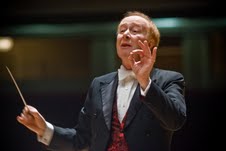
“Musical means responding to music, not playing the piano better than anybody in the world. It means responding to music and loving it. You can play all the notes correctly [on an instrument] and not be musical. As a conductor, I like people that can both play the notes and be musical.” Christopher Seaman. Photograph provided by Sally Cohen PR.
Hearing classical music live is better than listening to any record

I felt an enormous sense of comfort and relief to learn from an experienced musician that audiences for classical music are still alive and well and have not changed for the past 40 or some years that Mr. Seaman has been playing and conducting.  I asked the master conductor what about live classical music excites listeners, and he answers, “When you hear it live, you are present at the creative process. There is something about being there with the actual creation or recreation of what’s going on. No record – no matter how good the orchestra or how well produced – can replace that.”

Mr. Seaman is currently preparing for a long trip to Australia where he will be conducting. He will also return to the United States in December to conduct a concert in Orange County, California with the Pacific Symphony, and the Milwaukee Symphony Orchestra in Wisconsin. I suggest that all classical music lovers in the Chicago, Milwaukee, and the Orange County area keep their eyes peeled on these symphonies’ websites and mark their calendars for a future performance and a chance to see Mr. Seaman live in action.

In the meantime, whether you plan to attend as a music lover, musician, or conductor in training, I highly recommend Mr. Seaman’s new book, Inside Conducting, which is also available on amazon.com and in their kindle store. Readers will gain a better understanding of a conductor’s role in an orchestra and, they just might find a little piece of themselves in some of the stories within the book. Mr. Seaman’s storytelling of his days with England’s National Youth Orchestra, experience as assistant conductor in the London Philharmonic during his early twenties, and his time with the BBC Scottish Symphony Orchestra in Glasgow will also remind readers of a time they played in an orchestra as a child or the processes they experienced when learning an instrument.

At the moment, this is the only book I read in which the author, who is a working master conductor, pays the same level of attention to both student of conducting and amateurs from all musical backgrounds.

Inside Conducting bridges the interest of amateur musicians, listeners, and students with topics that Mr. Seaman says “demystifies the mysterious into something practical.” While talent in conducting will always have a mysterious element, Mr. Seaman asserts that conducting can be “much more practical than people think.”


[1] Seaman, Christopher. Inside Conducting. Rochester, NY, USA: University of Rochester Press, 2013, Kindle file.

[2] Seaman, Christopher. Inside Conducting (Rochester, NY, USA: University of Rochester Press, 2013) 239.

3-5 Seaman, Christopher. Inside Conducting. Rochester, NY, USA: University of Rochester Press, 2013, Kindle file.

[6] Seaman, Christopher. Inside Conducting. Rochester, NY, USA: University of Rochester Press, 2013, Kindle file.

Right Now for Now: Casey Dinkin Lets Go of Fear to Pursue her Music Making Dream

Music was always a large part of upstate New York-native Casey Dinkin’s life. Yet like many talented and passionate singer Casey Dinkin's Official Press Photosongwriters, Casey searched for a reason not to pursue music, up until now.

“I knew what I wanted to do with my life,” she explains. “I’ve always wanted to be a singer songwriter, have a band and tour around and make albums, but I never thought it would happen.”

So what changed the mind of this singer and guitarist who lyrically and musically sounds like a distant cousin of Norah Jones? In my interview with Casey Dinkin for Music Historian’s full-length feature for July, I learned that self-reflection, relocating to New York City, and raising money through Kickstarter.com to put her songs on a record helped her take the necessary steps towards making her dream of being a recording artist a reality. The result for all of Casey’s efforts is the release her debut record later this month, Right Now for Now.

“I love this independent music”

Music surrounded Casey all her life. She says that both her parents loved folk songs from the sixties. Her mother played music from Joan Baez’s songbook as well Judy Collins, and her father favored Motown and soul. Meanwhile, Casey’s musical tastes included The Beatles and The Grateful Dead.

Casey and her mother would sing tunes from musicals together. At fourteen years old, Casey picked up guitar, and she participated in musical theater and school choirs. During this time, her admiration for the independent singer songwriter blossomed.

“I remember in High School,” says Casey, “I watched people get up on a stage with a guitar and sing. They would sing a song they wrote at the coffee house. I thought that was so cool, and I wished that I could be that amazing.”

College opened up new performance opportunities for Casey and led to more experiences, some successful and some challenging. She explains:

“In college, I started singing with jazz bands. After college, I sang with a rock and roll cover band, which built a following and played many gigs. At this point, I became more confident with performing. I started to think “I really love this independent music.”

“Then I started collaborating on songs with one of the members in the band, and that was the first time I had really shared my songs with someone. When we performed them in public, people responded positively; they thought my songs were enjoyable.

“Unfortunately though, that band broke up, and I was on my own for a while. I found more opportunities as I looked for other bands. At this time, I also worked for an anti-hunger non-profit.”

Casey enumerates that at this moment, having a job and handling her own performance promotion and booking made her think twice about pursuing music. So she put music aside to focus on her non-profit work which eventually led her to Washington, DC.

Putting Music on the Backburner: Casey’s Self Reflection

“I got a job in DC working at a national anti-hunger research and action center. While I was there, I realized that I wanted to do something entrepreneurial where I could set my own path. Since I’m an artistic person by nature, I wanted to be involved in the arts.

“I found myself having conversations with people trying to figure out what I wanted to do. Then one day I was talking to my friend Beth who told me that she made a cork board to help her figure out what she wanted to do. She thought of every possible career and put it up on this board, anything she could think of, and then she told me that the goal she really wanted to pursue, which was to write a book, she didn’t have the guts to put up there. I then realized I had the same thing.”

Although Casey tried to put music aside, she never stopped writing songs. She claims to have written about 100 songs by the time she left DC.

Casey Dinkin singing at the Leave A Lasting Mark Concert Series Van Morrison Tribute Show, on 2/9/2012 at The Bitter End in NYC. Photo by Manish Gosalia, courtesy of www.caseydinkin.com “I started to realize that putting music on the backburner was just a response to fear. I was also learning to be a yoga teacher at the same time, and some of the studies included letting go of fear and being your authentic self,” reflects Casey. “I feared that I was not going to make it, or it [music] was not important enough. Instead of letting go of this fear and being a songwriter, I worried about my ego.”

Recognizing this worry was Casey’s first stepping stone in overcoming her fear. Her next stepping stone validated why pursuing the dream of singing and songwriting mattered. Casey enumerates:

“In the middle of this self-reflection, I realized I had always written songs. I never stopped. Every day that I walked to my job, I wrote songs in my head. Then, one night before I went to sleep, as my head hit the pillow, I realized “If I died tonight, in my sleep, then my songs would die with me because I had not done anything with them.”

In this moment, Casey realized her songs counted as a “real body of work” and from there she decided to change her life. This included leaving the nation’s capital and moving to a city she always wanted to live in, New York City.

“At the same time, the funding for the project I was working on in DC was ending. I called someone I knew at an anti-hunger organization in New York City. He happened to have a position that just opened. So, I made the decision to move to New York.”

The Move to New York City

In one of her songs on her record, “The Light of NYC,” Casey described Washington DC as “the city of all smarm and no charm.” Firstly, I wondered what this lyric meant. Secondly, I wondered whether Casey felt like the only individual she knew in DC that was torn between choosing either a life in public policy or the arts. Casey explains:

“I made up a phrase one day “a city of all smarm and no charm.” One of my former colleagues described this lobbyist we worked with as someone who was “so smarmy, it made her skin crawl.” Smarmy refers to a charming but manipulative person that cannot be trusted.

“One day, I was walking outside and said to myself, “This is the city of all smarm and no charm.”

Casey adds, “Of course, there are a lot of very charming things about DC, and not everybody is smarmy.”

She continues, “I thought DC was where I could be, but when I got to DC, it was clear that I wanted to be in New York City. I think if you want to live in DC in the long-term, you must want that long-term career in policy and government. I thought I actually wanted that, but when I arrived there, I realized I truly wanted music.

“Although I could do music in DC, New York is where I have more access to great people to work with in music. I feel like there are so many people here that pursue creative things. In DC, I sometimes felt like the weirdest person. But here [in New York] I feel it’s normal to be [both] a musician and something else. I’m never the weirdest person in the room. It’s so refreshing.”

One of the most important contacts Casey made when she came to New York City is her producer Dan Siegler.

“When I looked for a producer, I wanted somebody that did not see my music as just another project. I wanted somebody who genuinely likes my music; plays keyboard well; and thought about the lyrics I write. I wanted someone that would think holistically about my songs, understand what I was trying to say and guide that.

“Then I met Dan Siegler who is a gifted keyboard player. He understands my songs in ways I couldn’t even understand them. Of Course, at this point, he has probably listened to my songs 50,000 times.”

Casey talks about her first experience producing a record.

“The process involved the following,” begins Casey, “I would go and play 30 songs for Dan, and he would go through them and say “this song yes, this song no, this song maybe but it might need another verse or a bridge.” Then we would talk about how the song should sound, musically, and start putting together the instrumentation.

“It was a very interesting learning process to see how that happens and see how a song is built piece by piece.”

In order to support this essential step of putting her songs on an album, Casey decided she would raise the necessary funds.

Funding Her Dreams of Making a Record

“Two days after I decided I was going to make an album,” explains Casey, “I received an email from someone I knew asking me to Photo by DJ Glisson, courtesy of www.caseydinkin.comcontribute money for their band’s upcoming tour on Kickstarter.com. That’s when I researched Kickstarter and thought “this was how I was going to make my album.””
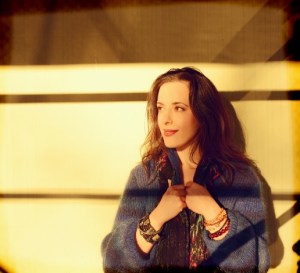
“I raised about $11,000 in 30 days,” continues Casey. “People came through in incredible ways.”

According to Casey, she and Dan have dedicated a tremendous amount of time figuring out each component of every song – for example, what type of bass line, or if the song needed a violin part – and the delivery, making sure every note has the right intonation and falls on the right beat.

Though she did spend time reworking lyrics for certain songs on the album, Casey feels that the lyrics in her songs, as a whole, seem to come out naturally and effortlessly. Casey claims she feels blessed to gain inspiration and constantly write.

“I’ve been thinking a lot about appreciating that gift. I think right now, I’m very fortunate that life seems to give me these thoughts that turn themselves into songs. Very rarely do I sit down and say “I’m going to write a song.” Usually, an idea pops into my head while I walk down the street, especially if I am experiencing distress, and I don’t know what to do. So I think “I’m going to write a song about it,” and that helps me through the process.”

The best example of a song that represents this is her title track “Right Now for Now.” This song, throughout Casey’s experiences as an artist, takes on multiple meanings.

“That’s the song I wrote while my first band after college was breaking up. I wrote that song when I needed to tell myself that everything would be okay,” reflects Casey.

“When I wrote that song, I was not into Yoga,” she adds. “Then when I studied Yoga and listened to leaders that talked about being in the present moment and recognizing each moment as precious and event as temporary, I [now] think that song also talks about living in the moment, understanding that troubles will pass, as well as letting go and forgiving yourself. That’s every point in my life.”

The Album Release Party at Rockwood Music Hall

Casey Dinkin, photo taken on 12/14/2012 While Casey searches for inner peace through her music and works to achieve her dream of doing music professionally a celebration follows – the album release party for Right Now for Now at Rockwood Music Hall on Sunday, July 28th.

“I really look forward to celebrating everything I have been working for over the past two years and longer. This is the absolute pinnacle; the longest-term, truest thing I have ever accomplished.

“It will be the first time releasing an album, playing at Rockwood Music Hall, and performing my album songs live with a full band,” Casey joyfully claims.

The icing on the cake for Casey’s album release party might be the reunion with people that have supported the new artist through her journey.

“I have people coming from all over the country which is super exciting. My upstate NY friends and family are coming, and people from North Carolina and DC.

“They followed my progress and my many updates along the way. They were a part of my Kickstarter campaign…, and this is the finish line.”

Every Present Moment Counts

As we conclude our conversation, Casey mentions that releasing an album has taken longer than she initially expected. This makes me think that whenever a musician has available time between live performances, recording a song, producing or promoting their record; they dedicated it to writing a new song, rehearsing, or completing a second job. Casey reminds me that every present moment counts.

In addition, even during her years in DC and Albany, not pursuing music, every moment Casey experienced included a lesson that prepared her for now. Learning yoga helped Casey see that her previous habit of putting music on the backburner was a response to fear. Moving to Washington DC slowly fueled Casey’s desire to move to New York City. Finally, Casey’s experience with non-profits taught her how to run a successful fundraising campaign – one that would help support her dreams of releasing an album of her beautifully constructed, charming and earnest songs to the public.

Right Now for Now will help listeners who are native or have become well-integrated into the New York City landscape, view this Casey Dinkin, photo taken on 12/29/2012city from a refreshing outsider’s lens. Having also been to Rockwood Music Hall several times, I can attest that Casey’s album release party on July 28th will be the perfect setting to enhance this listening experience.


In the time that Casey prepares for this big event, she is also looking to the future.

“The next thing that follows is expanding my fan base. It would be great to hit the road. I would also love to start recording another album after this one is released,” explains Casey.

The most important long-term goal for this smart, talented and ambitious artist is to become better at everything, from songwriting, to learning more instruments, and honing in on her arrangement skills.

“I’m trying not to get too descriptive about the future because I think there is no longer a cookie-cutter model of how the road to success in the music industry should look,” she adds.

And of course, Casey is right. So let’s enjoy right now, for now.

A Union of Bluegrass and Hip-Hop, Urban and Rural: an interview with Rench of Gangstagrass

Like many individuals, I initially questioned the thought of bluegrass and hip-hop in the same song. Then, I listened to the Brooklyn-based group Gangstagrass and became more confident and intrigued by this amalgam. When I watched Gangstagrass perform live at the Mercury Lounge earlier this year, I felt like I stumbled upon an exciting discovery on the New York City music scene.

“We get a tremendous amount of positive responses from people,” said Rench, the producer and guitar player of Gangstagrass, who also goes by the official title ‘Mastermind. “They say “Wow. I like hip-hop and I love bluegrass, and this is the kind of music I’ve been searching for my entire life.””

Gangstagrass Facebook Banner

In my full-length interview feature for the month of June, Rench talks about the events that helped Gangstagrass gain substantial attention from the public; how the union of bluegrass and hip-hop works; and why this union matters in today’s musical landscape. It’s my pleasure to welcome Gangstagrass to my blog on Music Historian, Hear; Don’t Listen.

From a one-man project, to a band, and to a theme song for a television show, and more!

According to Rench, Gangstagrass gradually evolved from a one-man project inside his own recording studios in 2006, Rench Audio studios, to a group composed of long-time musical collaborators and temporary instrumentalists in 2010.

“I met T.O.N.E.-z while working at a recording studio. We worked together in a few sessions, where I created beats for him, and we started talking from there,” said Rench. “I eventually recorded some of his albums in my studios.”

Rench arranged the beats and the instrumentation on T.O.N.E.-z’s latest solo album Hennessy and Moonshine released earlier this year.

“At the time I started Rench Audio Studios, I already had a band called B-Star which played honky-tonk hip-hop. Dolio the Sleuth was part of that group. I have been working with him for about a decade now.

“These are MC’s I already knew and I was able to draw on these existing relationships. I would call them up and say “Hey, can I put some of your hip-hop vocals with bluegrass music” and they said “sure man, go ahead.”

Rench, the group's Mastermind, performing with Gangstagrass at the Mercury Lounge on March 30, 2013 “Once I saw how many people were into this one particular project, I thought of making an actual band. I had been involved in the Brooklyn country scene and knew many musicians. I actually recruited people through word-of-mouth, and I was able to pick out a couple of them and bring them on board.”

Some of the bluegrass players that Rench originally recruited stayed in Gangstagrass for a while. The group also experiences a wave of musicians that frequently come and leave as they pursue separate projects or go into different directions.

The transformation of Gangstagrass from a project into an actual group opened the door to what would later be “a big stroke of luck.” In 2010, the band’s song “Long Hard Times to Come” featuring T.O.N.E.-z was selected as the opening theme for the television show on FX, Justified.

“They [the producers of the show] were looking for a bluegrass and hip-hop song, and we happened to be doing it,” enumerated Rench. “It was the perfect type of exposure for Ganstagrass.

“When we tried to explain our music, people tried to make sense of bluegrass and hip-hop mixed together and how that sounds. They don’t think that combination works well. Having people listen to what I make without explanation is the perfect exposure, and that’s what Justified has been doing by playing 30 seconds of Gangstagrass at the beginning of each episode.”

The positive reception of “Long Hard Times To Come” resulted in an Emmy Nomination in July 2010 for Outstanding Original Main Title Theme Music. The public’s growing interest in Gangstagrass encouraged Rench to make a full album later that year titled Lightning on the Strings, Thunder on the Mic.

“After the theme song was picked up, I knew I definitely had to get some original Gangstagrass music out there. I made the songs on Lightning on the Strings, Thunder on the Mic to sound a lot like the Justified theme with the same rapper and players. That album mostly featured T.O.N.E.-z.”

Rench also states that he applied the compositional formula in “Long Hard Times To Come” to the other songs on Lightning on the Strings, Thunder on the Mic. The album that followed Lightning on the Strings… was Gangstagrass’ 2012 release, Rappalachia, a record that displayed more the band’s versatility.

Rappalachia… explores different ways of combining bluegrass and hip-hop and welcomes different techniques and rappers,” elaborates Rench.

“I wanted to branch out a little and not stick closely with the same [compositional] formula, so I took the production in different directions. Sometimes I would start with a hip-hop beat and build with a bluegrass clip. On other songs, I would start with a bluegrass sound, build a beat around that, and then have the rappers build their rhymes. Some songs involved a more organic approach, like having the bluegrass band play a whole song through while others had more of a sampling approach.

“Some highlights also included working with new high-profile rappers like Kool Keith, Dead Prez and Nitty Scott to bring out different elements.”

The introduction of new rappers and new songs excited Gangstagrass followers. One rapper that stands out in my mind is the female Brooklyn-based rapper, Tomasia, who appears on the Rappalachia track, “Big Branch.”

Tomasia rapping in "Big Branch" with Gangstagrass at the Mercury Lounge “The song “Big Branch” is based on actual events that happened,” explained Rench. “When I brought the song to Tomasia, she took it upon herself to research the rural mining issues that affect many communities in Kentucky. Tomasia put herself into that role and wrote from that perspective so well.

“She is brilliant at writing these narratives from different perspectives with a lot of depth and clarity. I was really thrilled, and that song is a great example of reaching different people and seeing their struggles in us and our struggles in them.”

Rench’s last statement about “Big Branch” helped me see that both bluegrass and hip-hop include topics about the average person’s everyday struggle. Of course, one genre pertains to the struggles of rural life while the other focuses on the struggles of urban life. Then started I wonder whether these two genres have more in common than just lyrical subjects. Rench observes the similarities and differences of these two genres while working in the studios and performing with Gansgtagrass.

The Union of Bluegrass and Hip-hop

(Left to Right) Rench, R-Son, and Jon West on the Fiddle “When I work with the rappers and bluegrass players, we find a lot of common ground musically. Both these genres share improvisational elements and each has a different word to describe these elements. For example, during a jam session, we stand around in a circle and take turns improvising. In hip-hop, this is called a cipher while in bluegrass, it’s called a pick. Basically, they are both the same thing.
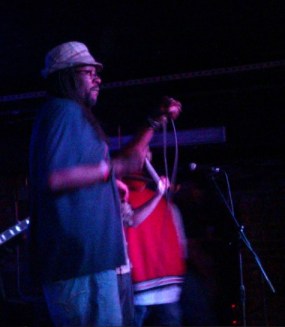
“Sometimes rappers will freestyle while the bluegrass players are improvising solos, and they will click. The artists from both genres approach improvisation with the same impulse – creating a dialogue within music and turning it into a conversation.

“As you mentioned,” added Rench, “both of these genres have a history of focusing on stories of outlaws, struggle, heartbreak, and hard things in life. Hip-hop and bluegrass help create a catharsis by singing or rapping about these stories.”

While the players in Gangstagrass have established a common ground musically and lyrically, the differences in performance within bluegrass and hip-hop balance each other nicely. Rench says:

R-Son performing with Gangstagrass“As a genre, Bluegrass is very virtuosic-focused and lacks an exciting performance element. Traditionally, it involves people fine-tuning their skills and ability to perform accurately and passionately. Bluegrass performers typically stand in one place and focus on their instrument and playing something amazing.

“We had to focus on the idea that our performance would be more like a party. So we asked the bluegrass players to move around more and interact more with the rappers.”

According to Rench, members of Gangstagrass “make sure to have fun on stage.” Rench adds, “It’s really exciting to perform and interact with these guys on stage.”

During a performance, the rapper often sings to the audience then turns his or her attention to the neighboring banjo player and says “take it away.” The instrumentalist can really focus on a solo and the rappers can freestyle a new verse.

When I went to see Gangstagrass perform for the first time back in March, I couldn’t remember the last time a room of 70 or more people had so much fun watching musicians that were also enjoying themselves. I believe this experience helps individuals with varying musical tastes accept and embrace the fusion of bluegrass and hip-hop. One question I do ask myself though is whether Gangstagrass’ union of bluegrass and hip-hop might help shrink the divide between rural and urban audiences. I ask Rench for his opinion on this thought.

Why this Union matters in today’s musical landscape

(Left to Right): Rench on Guitar, Landry McMeans on Dobro, and R-Son “I think the music industry has perpetuated this idea that there is white music and black music, rural music and urban music. Each style has a separate chart, separate radio stations, separate websites and separate everything, as though separate groups of people listened to these genres. That’s not the case.
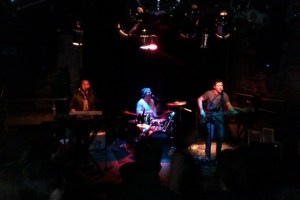

“People have Johnny Cash and Jay-Z on their iPods on shuffle. They listen to all kinds of stuff and appreciate a variety of different music that comes from different places in the country.

“I sometimes do see our fans discussing how these two [bluegrass and hip-hop] can integrate so well. I’m happy to the extent that this happens. If Gangstagrass can bring this up in discussion or give people a little hint that we are not so divided, I think that would be fantastic.”

Gangstagrass’ music definitely generates discussion. Some listeners feel excited that Brooklyn-based rappers are talking about issues that affect rural communities. According to Rench, when listeners commented on Tomasia’s rap in “Big Branch,” they often expressed, “I can’t believe you found this incredible rapper from Kentucky.”

Sometimes, Gangstagrass stimulates debates among purist listeners. Rench explains:

“Sometimes, we receive responses from bluegrass purists who say “I don’t think you should have rap in here, the lyrics will be too violent.” In reality however many bluegrass songs were inspired by violent imagery, especially in the tradition of murder ballads that are far more violent than any of the subjects that the rappers describe.”

First-time listeners also exhibit amazement at the fact that bluegrass and hip-hop can work well together.

“Many people think bluegrass and hip-hop would not work well,” says Rench, “and it’s certainly true that it can turn out badly or come out wrong. It happens sometimes.

“I take the project of bringing out the best of both worlds very seriously. I don’t take this as a novelty. It’s a great thing to do – making a full project out of the idea that these two genres can be brought together and have something cool come out.”

Gangstagrass is currently on the road, touring in various cities on the mid-Atlantic coast and stirring conversations and discussions among hip-hop and bluegrass listeners. By the middle of July, the band plans to hit California and make a stop overseas in the Czech Republic, before hitting the road on the East coast again in August.

In addition to the on-and-off touring, Gansgtagrass plans to release another album either in the Fall or early next year.

“I don’t know what to call it [the album] yet, but we’re exploring ways of bringing together a lot of the same rappers and bluegrass players that we are working with now,” enumerates Rench.

The Mastermind is exploring whether something beyond bluegrass hip-hop exists. “We don’t necessarily need to be locked in being half bluegrass and half hip-hop,” claims Rench. “I’m using this album to explore whether this is not just bluegrass hip-hop, but blending them together into a new sound – something that does not have a name yet.”

Apollo Run’s “Here Be Dragons” Saga: Bass player Jeff Kerestes Shares the story from start to finish

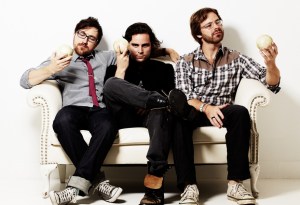
Apollo Run (Left to right: Jeff Kerestes, John McGrew and Graham Fisk)

The most successful bands establish a memorable sound, the one that encourages listeners to return to performances and purchase the group’s music. In the process, artists might find that the music they create does not fit a label. Jeff Kerestes, a professional bassist of the Brooklyn-based band Apollo Run, briefly explains this experience.

“When we changed the band’s name to Apollo Run we did not know how to categorize the music. It was all new to us, the three part harmonies, the bass, the drums… We were wondering “what’s here?” Let’s explore it.”

It was at this moment the band decided to name this phase of their musical development “Here Be Dragons.”

“In the old maps,” explains Jeff, referring to maps of the globe dating as far back as the 1500’s, “signs that read “here be dragons” were drawn to represent uncharted territories. The music was uncharted territory for us.”

In Music Historian’s full-length band interview for May, Jeff talks about how Apollo Run’s “Here Be Dragons” exploration started; where the course has taken them; the possible conclusions of their journey; and what awaits the band in the near future. It is my pleasure to welcome Jeff to Hear; Don’t Listen.

The Beginning: John McGrew and the Sit Backs

One night in 2007, the Arizona-native with a jazz degree from Arizona State University, was celebrating his one year anniversary of living in New York City. Through the husband of a friend, Jeff learned of a band that was looking for a bass player – John McGrew and the Sit Backs. Jeff joined this group in December of that year. Here, he met singer John McGrew and drummer Graham Fisk.

“John and Graham hit it off right away,” recalls Jeff. “The band also had another bass player, a guitarist and keyboard player.

“In this group, all the songs were fully-written by John and the members of the band would play these songs and perform under the moniker John McGrew and the Sit Backs. At that time, John was working a day job just to pay the band. In New York, there is almost nobody that will play another person’s song for free.

“Eventually though, paying the band became expensive, and John decided to leave his day job and do music full-time. Since John McGrew and the Sit Backs was the best experience I had at the time, I decided to stay, and so did Graham.

“Afterwards, John decided he wanted to change the name of the band because all three of us would be writing songs, not just him. We were ready to create a new sound.”

At this point, it was 2009, and John, Jeff and Graham decided they wanted to bring a new approach to music making – one in which all three members could use their ability and talent to the fullest and tie it together into a series of songs.

The Middle: Developing Ideas and Completing Songs Together Apollo Run at the Bowery Electric, April 5th, 2013

“One of the most exciting parts about Apollo Run is that we all write, and we will bring different ideas to each other.

“For example, John and Graham were both in a Cappella groups in their college years. Sometimes, John will have a great a Cappella line, and we’ll develop a song from there or, he will come to us with a song that is almost finished, and we’ll complete it together.

“Graham also writes songs on piano, and sometimes he will come in with a song that he has not finished, and we will hone out the rest of the parts – the vocal harmonies, the bass line, drums and the key board.”

Jeff enumerates on this example through a few stories about some of the songs on “Here Be Dragons” vol. III.

“One of the songs on our last record, “Sirens,” we wrote while we were on tour. I was playing chords on a ukulele during the car ride. In this time, we created the hooks of the song. Then, when we halted for rest stops, we would refine the lyrics and the vocal lines.

“For “Desire,” Graham came in with a partially developed idea for the song. We composed fifty to sixty percent of it in the studio. By the time we finished the other songs for the third volume; we had to complete “Desire.”

“This was one instance in which we were putting too much thought into how a song is “supposed to sound.” When this happens, it becomes very difficult to complete the song. Once we played the song several times through though, it came out right. We played [“Desire”] until it felt right.”

Naming the Band: “Many names can put you in a box and we did not want that”

Prior to recording any of the “Here Be Dragons” records, the band applied the same intuitive effort behind finding the band’s new name.

“Naming the band was difficult,” recalled Jeff. “We really wanted our music to dictate the name and not the other way around. For example, when you hear the name Led Zeppelin or Pearl Jam, you think about the music of the band, not their name. The words don’t mean much on their own until you define them with music.”

“We did not feel we could categorize our sound,” adds Jeff. “Many names can put you in a box, and we wanted to avoid that.”

Listeners will have a difficult time putting Apollo Run’s music neatly in a category. One might feel that the opening piano melodies to “Autumn Song” that paid homage to art songs from the Romantic period; or that the doo-wop-feel of “That’s How it Felt” belongs more to pop; or that the “Devil in Disguise” makes a slight nod to the swing-jazz genre.

The eclectic sounds of each “Here Be Dragons” album might also make listeners wonder what made the band chose the name Apollo Run. For this simple reason: it felt right.

According to Jeff, all the members liked the mythology behind the Greco-Roman God Apollo, who ruled music, poetry, and light. In addition, John who is also an astronomy enthusiast repeated the phrase “Apollo Run” to himself several times. The more he heard it, the more confident and comfortable he felt with the name.

The Music: “You never know where your inspiration is going to come from…”

(Left to Right) John and Graham at the Bowery Electric As my conversation with Jeff continued, I became curious about what influenced the lyrics behind their songs. I learned that for these three musicians, “influence comes from everywhere.”

“You never know where your inspiration is going to come from; it can be from literature to what’s going on politically. A couple of our songs are inspired the book series The Game of Thrones. Sometimes John will come to us and say, “I wrote a new song, it is inspired by The Game of Thrones,” says Jeff jokingly.

Then, some of the inspirations for Apollo Run’s songs come simply from gazing up at a clear night sky.

“Our song “Stars” is basically John’s take on what he hears from looking at the stars. As they twinkle back and forth, John hears they are singing “oh-way-oh,”” explains Jeff.

Apollo Run plays on romantic imagery while celebrating the union of many musical ideas. In addition, fans’ responses to the band’s music have been supportive and unusually phenomenal.

This brings me to what might be the beginning of the end to a great expedition, a possible musical theater production of “Here Be Dragons.”

The End: A Theatrical Reception?

During the summers, John, who has a background in musical theater, works at a drama camp in Oakland, Maine called Acting Manitou. Every year, John helps students put on a play. According to Jeff, “the kids really liked Apollo Run’s music” and they wanted to make a play using the band’s songs.

“Last year, the kids asked whether they could put on a play using Apollo Run’s music, and they did,” enumerates Jeff. “Graham and I went to perform the music for the production. The result was amazing.

“The play takes place in a dystopia. In the story,  a ruler is overthrown and then another ruler takes over. The replacement, however, turns out to be much worse than the initial leader. During this story, there is a love story taking place between two characters. The play references the many faults and issues within our society.”

“After the experience, we decided to bring the play down to New York City and invited Broadway actors for a reading.”

At the moment, the musical has only developed to a reading of the play by professional actors. John says “I do not know where it will go from there.”

Beyond the Saga: A Fourth Album with a New Focus

If the “Here Be Dragons” saga does not end with a big bang, then fans can look forward to a fourth album in the near future. Jeff says the band is in the process of creating a new record that will focus on this idea: now that the territory has been explored, it is no longer uncharted.

“We are currently in the writing stage,” he explains. “The songs are very exciting right now.

“The album’s title will depend on the shapes the songs will take.”

Apollo Run (left to right): John McGrew, Graham Fisk, and Jeff Kerestes In the meantime, the band continues to receive a positive reception from fans all over the country. Jeff recalls Apollo Run’s first national tour from November, which was to promote their third volume and first full-length album “Here Be Dragons” vol. III, as a career milestone for the group.
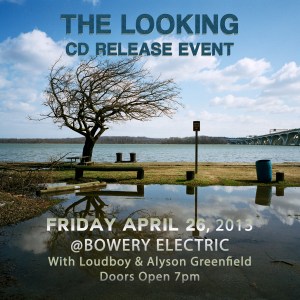
“That was pretty big for us,” enumerates Jeff. “We started on the west coast in San Francisco, then drove all over the country for a month. We traveled to my hometown in Arizona, then to San Diego, and several other places before concluding the tour in Maine.

“Our fans traveled great distances to come see us perform, and it was rewarding to see them enjoy our music.

“We love what we’re doing and taking that everywhere with us is great.”

Jeff also invites fans to watch Apollo Run’s music videos for the following songs on “Here Be Dragons” vol. III that just premiered today on their website – “Devil in Disguise,” “Bending the Light,” and “Act IV.”

Apollo Run reminds listeners that while establishing a solid sound is a necessary component for a successful band, creating music is not about fitting neatly into a category. Reflecting on my interview with Jeff, I realize that a band’s potential relies on their ability to explore new musical territory despite the uncertainties or possible dangers. Apollo Run’s exploration helped them arrive to the destination they sought – a definition of their sound. In addition, their expedition contributed greatly to their artistic development. The result is the complete “Here Be Dragons” trilogy.

What awaits Apollo Run fans after the HBD saga remains a mystery, but it is one that listeners will look forward to discovering. One thing is certain. The band will apply the same virtuosity, dedication and meticulousness to each song and its various components. As Jeff says, “Many bands are known for doing one thing really well in their music. We work to making everything sound well.”

Todd Carter a.k.a The Looking “Songs for a Traveler” Album Release Party

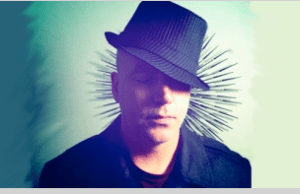
The Looking Album Release Flyer

The Looking Album Release Flyer

You have read about Todd Carter a.k.a. The Looking’s exciting listening party for his newest rockin’ cover album, Songs for a Traveler. Now, everyone has the chance to hear these great songs for live at The Looking’s album launch party at Bowery Electric on Friday, April 26th!

“I have been interested in American folk songs since the time I started playing music in Indiana,” Todd says. “It was the thought of mixing my love for 80’s and 90’s alt-pop with these old songs that resulted in Songs for a Traveler.”

Todd will spin songs from the 1950’s, like “Sail Around” and “Long Black Veil” into lush, dreamy soundscapes that climax in full rock fashion, with the help of his backing band. The band features John Andrews, Gerald Menke, Chris Morrissey, Adam Kromelow, and Bill Finizio. NYC Ukulele Troubadour Roger Greenawalt and Violin Virtuoso Ernesto Villa-Lobos will also join Todd as guest performers.

Loudboy, led by John Andrews (Botanica, Angela McCluskey, Morely), and Brian Viglione of the Dresden Dolls will open the show at 7:00pm.

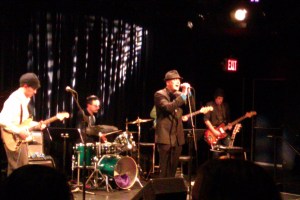
Official Press photo of Todd Carter

Official Press photo of Todd Carter

Experimental indie-songstress Alyson Greenfield, who has recently found fans in WNYC, Converse and AOL.com, will close the night.

Collected Sounds describes Todd’s vocalism and performance as “intriguing and fascinating.” The Chronicle claims his work is “eclectic and provocative.” IndieMusic.com says Todd’s voice is “like nobody else you have heard before…majestic.”

Make the weekend of April 26 one filled with the American classics you love made great for Rock ‘n’ Roll. Todd’s album launch party for Songs for a Traveler will start at 8:00 pm. The opening show begins at 7:00 pm. Purchase your tickets here and save your spot at the Bowery Electric.

Todd Carter a.k.a The Looking Make Old Folk Songs Great for Rock ‘n’ Roll

The Looking perform at Symphony Space on February 25, 2013 Todd Carter (a.k.a. The Looking), the New York City-based singer songwriter, is in the process of releasing their third album, Songs for a Traveler. In this record, Todd turns American folk classics and old country songs from the years 1850 to 1950, like “Wayfaring stranger,” “900 Miles,” “River in the Pines,” and “Blue River” into rock ‘n’ roll.
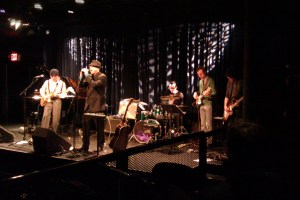
My personal love for rock music motivated me to talk with Todd about his newest album, which is set for a release date in April of this year.

In our conversation, I learned that Todd’s love for the archaic folk songs The Looking covers in their latest record doesn’t stem from a deep understanding of American folk music. Instead, he has developed an appreciation for how some of the crazy, romantic and mind-boggling themes and stories within these songs easily transition into the rock genre. This is why I am happy to introduce Todd Carter as the subject of my March full-length interview feature on Music Historian’s, Hear; Don’t Listen.  

The Perils and Romance in Travel-Themed Songs

I asked Todd what he liked about these folks songs and he said:

“I love travelling, and a lot of these folk songs have some sort of traveling theme in them. “900 Miles” is about a man trying to get back home to find this woman, but he’s lost on a train somewhere. “Hobo’s Meditation,” “Wayfaring Stranger,” “River in the Pines,” all share this theme.

“It really comes down to, not necessarily being about the music but how much I love these songs. It’s about taking the listeners on the journey of these songs. I just want to articulate that and present it in a way that is really available to people.”

To enumerate on this point, he took me through the process of recording “Blue River,” a ragtime song that was popularly performed by jazz singer Sophie Tucker in 1928.

“We ‘unragtime-ized’ the song by taking it out of its original 4/4 time signature and made it 6/8. We put some heavier guitar in there and we thought it would be fun to leave some of the jazzy influence. We also removed some of the lyrics that are found in the original version, which are really hokey.

“I really wanted to move it to another dimension.”

Some songs on The Looking’s latest record underwent fewer modifications. This enabled Todd to focus on conveying the tone and themes they presented. One example is “River in the Pines,” a song made famous by Joan Baez. He explains:

““River in the Pines” is a wild song that takes place around the Chippewa River in Wisconsin. It’s about a logger named Charlie, who falls in love with a woman named Mary. Later in the song he dies in a river accident; and at the end, Mary also ends up in the grave, but it is unclear how she got there. You think she was so bereft by Charlie’s death that she couldn’t handle it anymore. There is something romantic and a little hard core.”

The Story of Finding These Songs

Stories about danger, loneliness, and suggested taboos that one learns about on the road have graced many rock songs. Based on my experience, I always felt rock ‘n’ roll was a more popular and familiar genre among urbanites than American folk, especially in New York City. So then, I became curious about what motivated Todd to release a rockin’ cover album of folk music.

“Last year, I completed a residency at The Underground on 107th and West End, and I had two hours to perform every Wednesday night,” says Todd. “So, I started to gather a repertoire of more songs I could perform besides my own.

“I found some old Bob Dylan, which led me to look at Townes Van Zandt, which led me to examine all the versions of “Wayfaring Stranger.” We also found some old Gospel tunes like “Angel of Death” written by Hank Williams.

“My band and I started experimenting with these songs; and we started playing them live for the audience in different arrangements and keys.

“I really enjoyed playing the songs and started recording a lot of them in my studio. Then, I tried to figure out which ones I liked most and got the idea that I really wanted to make a record.”

Todd’s Musical Influences and Performance Background

Todd Carter aka The Looking at Symphony Space 02/25/2013 When I first listened to Songs for a Traveler, I had no prior knowledge that these songs were covers of folk and old country tunes. I simply judged them as originals. In doing so, I developed the following thoughts on The Looking’s record: the lyrics express an old country feel and tonally, the songs convey rock ‘n’ roll. Then, I picked up subtle influences of classical music, like the minor to major key modulations, and the simple duple meter in the song “Blue River.”
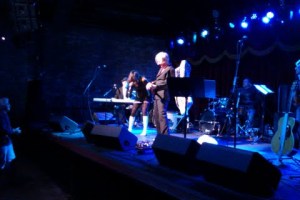
This led me to ask Todd about his performance background. He enumerates:

“Growing up, I loved listening to Michael Stipe from R.E.M. As you listen to Michael’s vocal evolution, you hear that he started becoming more of a crooner. Although he was never exactly a crooner, it was interesting to hear.

“During my early years, I was into Brit pop, and bands like New Order and Joy Division. I mixed that with my old-time love for country music – Johnny Cash, Ray Price, and Bob Dylan.”

Todd adds, “I started out singing in my parents’ garage in Carmel, Indiana. I played a lot of punk rock and didn’t have any real training until I moved to New York in about 2000, when I decided to study at the Mannes School of Music. That’s when I became really interested in vocal training.

“I began to study with various teachers. I eventually trained with a singer at the Metropolitan Opera, Edna Lind. I studied with her for quite a while and started putting on some Operatic performances around the city.”

The Recording Experience of Songs for a Traveler

During the time that Todd was performing Operatic pieces around Manhattan, he also worked on two other albums recorded with The Looking: Tin Can Head (2005) and The Cabinet of Curiosities (2009). Both of these albums were created under his label, Astraea Records. I asked Todd how his experience with making his 2013 album differed from that of his last two records.

“That’s a good question,” he remarked. “I wanted this record to have more of a live feel. I wanted to come out of our recording days with Ken Rich over on Grant Street Recording and record a lot of live music off the floor. I really wanted to try to deliver some of the vocals in the studio while we were recording the instrumentals live.

““Sail Around” included a live vocal recording. Then the vocals for “Blue River” and “900 Miles” were recorded in the studio. I sang the lyrics right back into the speakers.

“I love the way this record sounds. The man, who mixed the music for the latest record, Songs for a Traveler, Myles Turney, did an amazing job.”

At the moment, people can listen to some of the tracks on Songs for a Traveler on The Looking’s website. When I listened to the tracks prior to interviewing Todd, I received no auditory indication that these songs were recorded live. In short, the album lives up to its promise of being finely mixed.

As for Todd’s love for the musical styles and genres he previously touched upon, listeners can expect to hear something different on each record that he will release with The Looking. Todd already has another complete album he hopes to release in the next couple of months.  

Todd’s Plans for the Future

“I actually just finished another record that I’m hoping to release in the next couple of months called 1969 to 1984, produced by Roger Greenawalt,” he says. “It is another cover project I have been working through. We recreated songs by Leonard Cohen, Syd Barrett, Echo and the Bunnymen.”

When Todd is not recording or performing with The Looking, he works with an intermediary company that helps him place his original music on spots for television programs on channels such as Bravo and Discovery. Then, there is Todd’s record label Astraea Records, which he has been running for ten years.

Todd explains that owning his own record label “Came out of helping of friend who wanted to make a record. Her name was Morley; she is a New York singer songwriter. We got a couple of people together to help her and we created this record to get that project off the ground.

“It was really out of the spirit of assisting some friends that needed to get their music out. I felt it was important at the time because Morley made an incredible record that helped her get signed to Universal in France.

“Then, other projects came into play like Camomile, Parmidian One, and then mine.”

Todd continues, “Astraea has become more of a production company than a label per se. We’ve had a few releases. Astraea has been around for quite a while and it has created a presence on-line which enables people to listen to the different artists. I would say it’s more in its twilight sphere now. I’m actually moving my attention to The Looking.”    

At the moment The Looking are planning an official launch party for Songs for a Traveler sometime in April. A tour for this album and a potential release of 1969 to 1984 are also possible plans for later in 2013.

Roger Greenawalt on Music and Business Part 2: The Beatles Complete and Beyond

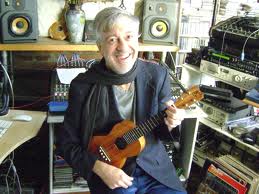
Leah Siegel sings "Oh Darling" with Roger on Ukulele In Part One of my conversation with Roger Greenawalt, I learned about the life of a record producer at Shabby Road Studios and how some producers work with artists. In the continuation, I learn more about Roger’s inspiration behind the annual Beatles Complete and his other title, the ukulele carrier.

“For three and a half years, I’ve been carrying this [the ukulele] everywhere,” Roger explains. “It’s an ongoing permanent art exhibit. This performance is forever. I also do it to constantly interact with people, and I sort of know the range of reactions.

“Today, for example, a woman jogged by and said “go on brother.” That was one reaction. A very common one I get is when a mother is with her kid, and she points me out to her child, but she doesn’t need to because children usually directly engage with me and follow me with their eyes. Then, there are those that pretend not to see or hear me.”

I asked Roger whether anybody ever approached him and asked to play his ukulele. He says:

“No, actually, the opposite happens. I’ll show you.

“Someone will come to me and say “wow that ukulele is so cool” and I will put it in their hands.” Roger hands me the ukulele to demonstrate. “I would tell you to put one finger right there and strum steadily.”

I placed my finger on the first string right on the third fret, and strummed as Roger sang an English lyrical improvisation of “Frere Jacques.”

“I’ve taught them a song they will always remember for the rest of their lives,” says Roger. “I’ve had people come back to me after I taught them the song, and they would say “I will always remember that first song.””

My personal experience interacting with Roger on the ukulele was exciting, especially when I realized playing the ukulele is really just playing a fragment of the guitar. According to Roger, many skilled guitar players express the same realization about the ukulele.

“That’s what I realized when I started playing,” he echoes.

I then asked Roger why chose the ukulele as a trademark instrument, and then why dedicated an annual music event to The Beatles.

“Multiple factors,” explains Roger. “A) People love the ukulele.

“I started playing the ukulele right after September 11th (2001) and like many people that year, I was in a lousy mood. Then, one day, my cousin who lives San Francisco – he is a book publisher and a talented amateur musician – invited me to visit. So, after the flights started up again, I took a plane to San Francisco.

“When I went to see him, I learned that he had just been in Hawaii cheering himself up from a break-up. He picked up the ukulele and started learning songs. It just made him happy; it’s this happiness machine. And, the appeal of the uke keeps getting bigger.

“B) There is the undying universal appeal about the Beatles.

“They have been a unique phenomenon throughout the years. The passing of their music from generation to generation has been frictionless. Kids continue to like their music and they keep getting bigger every year. They are the second best selling artist of the last decade after Eminem. So, these are both two good things.”

Roger continues, “Then, if there are 60 artists and they each have two friends, there is a good chance these two people will show up to watch them perform. So, there will be 60 different people in the show, and they will bring in an audience of 120.

“That’s why the event works.”

Yuzima jams with Roger at the Beatles Complete on Ukulele to "Hey Jude" Based on my experience, The Beatles Complete on ukulele does work in attracting a crowd. I remember the 2012 show, which fell on the first weekend in January. People packed the space in front of the stage, shoulder-to-shoulder. I remember singing to Yuzima’s rendition of “Hey Jude” with my sister as we stood among the crowds. To our right stood two Brooklyn bachelors sporting wind breakers and beanies, while to our left, a father was raising his toddler-aged son on his shoulders to see the musicians on stage.

However; I also do admit that outside circumstances, which are not related to music, also play a determining factor on whether the next show the following year will produce a greater turn out than the one prior. For example, this year’s show fell on a weekday, which probably prevented families from attending. In addition, it was also one of the coldest nights in January, a factor that might have discouraged many from coming out. Roger comments:

“If it was not the coldest night that day, the place would have been packed.”

Luckily, people, whether they are returning attendees, new comers to the area, first-timers, or tourists, will likely come to Brooklyn Bowl next January to hear the cheery sounds of the Beatles on Ukulele and hopefully remember it as an event that brightened their beginning of the New Year.

The same applies to many of the musicians that return the following year to perform a set. It gives them a great performance opportunity; a chance to jam with similar groups like them from the Williamsburg area; and a moment to make themselves known to a new group of Brooklynites.

As Roger prepares for next year’s Beatles Complete on Ukulele, he will also continue to work closely with artists looking to really make their big break on the New York City music scene. Roger talks about two musicians in particular.

“Lovely Liar,” he explains, “is a collaboration between me and Tatiana Pajkovic. She is tall, authoritarian, fabulous and tense. She has a Billy Holiday-kind of tone to her voice, and her style ranges from stately mid-twentieth century to French disco.”

Roger is also working with another act called Reno is Famous. Reno is a world class dancer who is a member of the Ballet Company of the Metropolitan Opera.

Roger describes her as “A very well-thought of modern dancer making her way to rock star.” He adds, “Her repertoire includes aggressive punk music ranging to electronic dystopia; a style that is much darker than Radio Head.

“This one’s really close to my heart. I’m making all the soundscapes [in her music] and it includes experimental elements of all my favorite things like strong acoustic ukulele and guitar riffs. It also includes reggae bass, funky drums, and hooks and groves…”

My interview with Roger has come back full circle to his work at The Shabby Road Studios.

In Part One, I learned of two very important pieces of advice that Roger has for aspiring professionals: musicians must always make room for business if they want economic success; and that the more an artist adapts, the faster his or her circumstances will change for the better. In Part Two, I learned about his inspiration behind playing the ukulele and the annual Beatles Complete.

Reviewing our conversation, I realize that Roger makes room in his studios for artists of all backgrounds. A musician can be inspired by a genre that is not widely heard in America, or have performance experience within a different art form other than popular music. If the artist is willing to commit to his or her craft, and willing to work with an experienced professional like Roger in making excellence in music; they will learn a great deal about how to work in the industry, and continue on their professional path with, hopefully, more confidence.

Roger Greenawalt on Music & Business Part 1: Running Shabby Road Studios

Roger Greenawalt at Shabby Road Studio. Courtesy of Originalhipster.net Last week, on one of the windiest evenings in January, I stopped by the Shabby Road Studios to talk with record producer Roger McEvoy Greenawalt. I asked him what a high-quality recording requires, and he says, “All you need is a good microphone, a mic pre-amp, and an audio digital converter like an M-Box going into a computer.
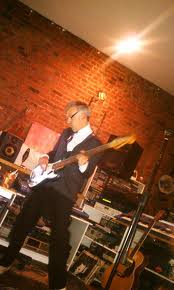
“That’s it; then knowing where to put the microphone, and a good musician playing a good part on a good instrument. Finally, a good mixer can make anything sound serviceable.”

As my conversation with Roger continued, I learned that while anybody can produce a record, a musician needs more than talent and ambition to become a professional.

My debut full-length interview for 2013 will be divided into two parts. In this article, part one, I talk with Roger about: the most important lessons he learned as a musician in his early years; the day-to-day in the life of a record producer at Shabby Road Studios; and the advice he has for young musicians looking to make it in music.

Early years with The Dark

During the start of his career in the early 1980’s, as a guitarist for the band The Dark, Roger learned the difference between a musician that was ready to take on the music industry, and one that was not. Roger explains:

“We [The Dark] were on Relatively Records at the same time as the Beastie Boys, when they were putting out their first record, “Cooky Puss.” And Megadeath was also on the label. We were at the right place at the right time. Our music, structurally, was cutting-edge, but not suicidally so.

“I think ultimately though, we had two weaknesses. The first was all my fault – I was the leader of the band and we did not develop an effective business team. Although we had some good PR instincts, we just couldn’t focus on them.

“Art lives in a system defined by commerce. Visionary entrepreneurs like David Geffen, for example, actually curated the culture. The artists that were closest to him defined the core of a dominant style and they acquired the best reputations. Think Neil Young and Joni Mitchell. Are they really the best of their era, or did they have the best PR and management?

“Secondly, our singer did not believe whole heartedly that he was the “Joseph Campbell” hero character. He would not inhabit the hero. He thought it was okay at the time to make fun of the rock star. Our singer was a virtuoso but he didn’t really believe he was a star. He made fun of it and didn’t really own it; so that gave people this view: “If he doesn’t believe it, then I don’t believe it either.””

Transitioning into the Recording Business

Roger eventually became The Dark’s ad hoc manager. Then, in 1983, the band parted ways.

Roger then describes the transitional period in his life from the guitarist in The Dark to learning the business of the recording studio.

“The Dark won a Battle of the Bands contest, and we won the time to do a record with Rico Ocasek at the Cars Recording Studio Syncro Sound, on Newberry Street in Boston. Then, I became the habitué at the studio and just insinuated myself there and made myself useful.”

Roger’s experiences at The Cars Recording Studio later took him to different recording experiences in the United States and abroad. Roger has only been living in Williamsburg, Brooklyn at Shabby Road Recording Studio for the past 13 years. Prior to this, he lived in Los Angeles; Kingston, Jamaica; and London. He briefly touches on what he experienced in each of these musical landscapes.

“During the time that I was in London, in the 90’s” Roger says, “the major label businesses were flushed with money; very different from now. I liked the energy of that city; it was similar to that in Los Angeles at the time. I still like the energy of LA now.

“When I lived in London, I was always learning a lot about new music. London is fantastic for music – their [London recording studios’] recordings are just more exquisite. They have more quickly evolving styles, they’re cutting edge. Since it rains there all the time, people stay indoors more when they record music.”

Working at Shabby Road: “…master the technical stuff and listen widely and voraciously.”

Living and working in different studios will definitely provide a developing music producer with plenty of experience. The more experienced the producer, the better they are at the craft. Roger states:

“To be a producer is to master the technical stuff: audio engineering; the physics of music – to understand that music is a subset of the physics of sound; and also the challenge to become an expert on as many musical instruments as possible; and listen humbly, widely and voraciously.”

During our interview, Roger exhibited to me exactly how the required skills of a music producer would translate into the everyday work of creating a record.

“My job is mixing and recording albums. I’m actually making loud speaker paintings.

“When we look at a classical musician, like Bach Concertos or especially Ravel, we figure out what to do with all the tones, frequencies and the ranges. Then, there is Nelson Riddle and George Martin and Max Martin to contend with. Time is the magic that music flows within. The rhythm of what’s coming out of the speakers, the display of all the different frequencies. What are the words being spoken/ rapped/ sung? You ask yourself ‘what do you do with all of that?’ ‘How do you disperse the energies to tickle the human brain and the nervous system just right?’ ‘Where do you draw the line between structure and surprise?’”

Roger on bass at the Shabby Road Studio. Image courtesy of Originalhipster.net Roger continues, “I really like playing reggae bass. I’ll give you a taste of what reggae bass is – the opposite energy-wise of the ukulele, which is a collection of high frequencies just floating and dancing above in the hi register. The voice is here, in the middle,” he shows me with a flat-hand positioned in front of his mouth, “and the ukulele is here,” he moves his hand above his head, “and the bass is down here,” he re-positions his hand below his chest. “So it’s great that the voice has all this space and the bass generations so much more energy without clouding the vocal.”
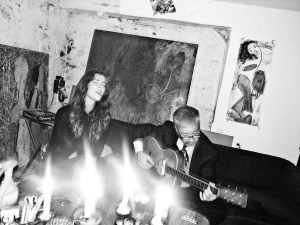
Roger plays me a line that is typical reggae bass. The line is written in a minor melody, and is easy to remember and repeat. He then picks up the ukulele and plays a few staccato minor chords. He plays these chords again in an arpeggio, and then changes them up again my turning these chords into major chords. Meanwhile, for every variation, he repeats the same minor bass line.

“There is a lot of color that can go over it [the bass line],” concludes Roger.

Whenever an artist comes to Shabby Road Recording studios, Roger applies a similar technical process to every client. The instrumentation and the goal for each recording session varies widely though.

“For musicians I haven’t worked with before, I ask them to send me a Spotify list of all their favorite stuff. I will listen to these songs with the artist and talk music. Then I will play them my favorite stuff and say “this is what I think is cool.” Then we would make a Venn diagram and see where our likes overlap.

“In the same moment, I will also try to tactically push a formal element so that this way, we are consciously doing something innovative without abandoning my two core values. The first: hook and second: groove. And crucially, the emphasis is on the singer. After that, everything is up for grabs: what instruments; what historical influence; what ensembles; tempos; and mood/feeling.”

Confident and Experienced Musicians are Interested in Learning

Artist Kiddeaux (Left) accompanied by Roger Greenawalt (Right) in the basement of Shabby Road Studio. Photo courtesy of maneatingseas.com  Roger’s job goes beyond providing the recording space and acting as master of the equipment.
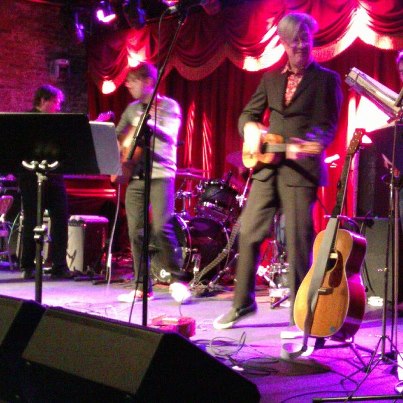
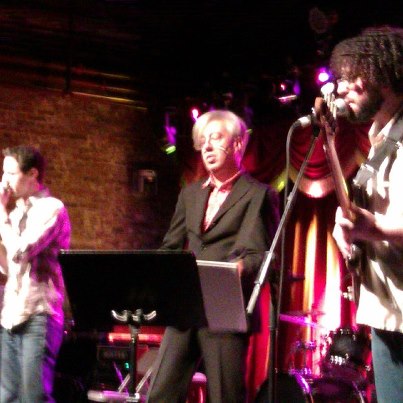
“I don’t want to be anyone’s bitch,” he enumerates, “nor do I want to oppress anyone. I find that the more confident and experienced the person is, the easier it is for me to collaborate with them and the easier it is for them to listen and take advice.

“It’s painful to work with the inexperienced and insecure. They’re unable to put excellence outside their ego.

“I ask, “Can you be taught?” Because if they are interested in learning, then I am as well, and I see they want to be on a team that learns together.

“I don’t care about me and what I think, I care about the thing being excellent; and that takes a little bit of maturity.”

Of course, there are plenty of artists that know exactly what they want when they enter a recording studio; that is to put their song on a record. While Roger is open to this idea, he still expects more openness and commitment to the creative and collaborative process from the musicians that enter his orbit.

“If a musician has songs to record, I’ll be up to record their songs. I’m still into all of that, but I would rather start songs from scratch and create songs together.”

For The Young Musician: the benefits and challenges of the industry

Shabby Road Studios caters to musicians looking to get serious about their craft, and sometimes that means the artist must step outside of their normal routine and create new songs with producers. Based on what I learned from Roger, the musicians that are open and willing to accept this are the ones ready to take the first steps in pursuing the music industry. So what are the benefits and the challenges of taking on such a task today? Roger explains:

“There are multiple levels of rewards. The arts are good for people’s soul. Talented artists that work for themselves and are not working for any corrupt institution that oppresses people is a win/win for humanity.

“Aside from the grandiose and narcissistic personality; fame is necessary for economic survival in popular music. Fame is just part of the job. On a spiritual level, it doesn’t have to be who you are. There are a range of celebrities that are more-or-less well-adjusted. There is a range between Amy Winehouse and Tom Hanks.

“The challenges? Now, you have to be an artist, an entrepreneur, run your own small business, find your own scenes and drive people yourself. You have to be very good at that and adapt. The more you adapt, the faster things are going to change for the better for you.”

Recalling my past interviews with artists, each one encountered a specific obstacle. Sometimes it involved growing comfortable with performing in front of a large crowd, discovering a signature sound, or seeking the right ensemble. Each musician found a way to overcome their challenge and continued on their professional path.

What I didn’t realize until I met Roger is that economic success for a musician also depends on their ability and willingness to firstly, grow artistically and secondly, learn from a producer with extensive experience on the business side of music. Like Roger confirms:

“Being good at music is just not enough. We have to be good in business.”

What’s ahead?

Since I am talking to a music producer that has a ton of experience under his belt; my debut interview with Roger Greenawalt will continue in part two, which I plan to have up by the end of the month.

The Beatles Complete on Ukulele with Roger Greenawalt: A Breath of Fresh Air

The Beatles Complete on Ukulele at the Brooklyn Bowl is a musical collaboration between young singer-songwriters on the New York City music scene and lifelong instrumentalists that met for the purpose of celebrating the canonical music of one of the most world renowned British bands.

Image Music producer and ukulele player Roger McEvoy Greenawalt led this event for the fourth time. This year, the back-up band he played with was The Angry Buddhist East Band. On stage, from 8:00pm to 12:00am this past Wednesday, Roger was also joined by a number of musicians of different professional backgrounds.

The Brooklyn-based experimental singer-songwriter, Alyson Greenfield was the first artist to jam with Roger on a cover of “Glass Onion” and “I Will.” The electric violinist who has toured the world with Cyndi Lauper, appeared on Saturday Night Live and the Late show with Conan O’Brien, Deni Bonet helped Roger and the back-up band transform the upbeat “Please Please Me” into a folky minor-key serenade. Avi Wisnia worked with Roger to turn “She Loves You” into a slow and sensual cover that echoed the pop singer-songwriter’s signature Bossa Nova sound.

Additional artists that joined Roger that night included: Mike Rimbaud, who covered “Can’t Do That”; Olivia Mancini who performed a rendition of “I’m Looking Through You”; the ukulele female duo, Supercute that performed “Getting Better”; Leah Siegel who performed “Oh Darling”; the underground industrial rock musician, Yuzima who covered “Hey Jude”; Craig Greenberg who together with Joy Askew performed a rockin’ version of “While My Guitar Gently Weeps”; and many more.

One might call this event a breath of fresh air, especially if the individual looks to get away from the confines of mosh-pit concerts or the house DJs in New York City’s most expensive clubs. The Beatles Complete on Ukulele allows Brooklynites to enjoy music among a crowd of respectable musicians and audience members. On this note, I will talk about some of the reasons why this event is attractive, as well as reasons for why some people might be turned away. 

A Wide Range of Listeners

The meeting of musicians of all ages and different musical backgrounds attracts a crowd of people that come from different walks of life and span across a wide age range. Some audience members might have formed a friendship with the musician from past shows, and have come to this event to lend their support and see a familiar friendly face on stage. Some might have just come from work, looking to have good and clean musical fun.

The majority of the audience absorbed the atmosphere and performance vibe just in front of the stage. The bar in the back of the performance space, just at the right of the coat check, was occupied by individuals that had planned social meetings with several of their closest friends and acquaintances, and purposely wanted to keep the music in the background. However; this is not to say the music didn’t reach them at all in the foreground of their conversations.

As I waited at the bar for a Brooklyn Lager and a long flat bread pizza, I listened to Craig Greenberg and Joy Askew play “While My Guitar Gently Weeps” and applauded them. A British man in a long black blazer and shades to my right joined me in my applause and remarked “This band definitely rehearsed!” I responded with a nod of agreement.

Everyone enjoys themselves and the music 

I watched Yuzima lead the crowd in a sing-along to Paul McCartney’s “Hey Jude” – a moment that lifted everybody’s spirit and created a sense of community in the audience. Earlier in the program, Leah Siegel sang her rendition of “Oh Darling,” in which she gracefully choreographed a physical performance that communicated beautiful anguish. This performance could only make some of the feel like Leah was specifically singing to them.

 Whichever artist came up to the stage, Roger was always in the foreground interacting with the main act. This makes audience members, especially those who are new to the Beatles Complete, naturally think that Roger is a part of all these groups. As for those who are returning for a second time to watch this line-up, they will also feel like Roger is a part of every musical act. Roger’s complete sense of comfort and joy in performing with each consecutive performer might attribute to this visual affect. Some might even begin to wonder how he finds the energy to stay on for the entire four hour program.

Ticket holders get their money’s worth   

I applaud the musicians for overcoming the distractions from the bowling area adjacent to the main stage. Every musician that night performed with Roger and The Angry Buddhist East Band like they were at an intimate venue. Attendees can rest assured that they will get their money’s worth at the Beatles Complete.

On this note, I should mention the ticket is only $10.00. However; if you are very pleased with what you hear and see, you will probably feel compelled to enjoy some food and drink. Now, here is where I believe concert attendees will run into a petty and annoying detail: Brooklyn Bowl is an expensive place.

Price for food and drink a little bit high

The drinks are all over $6.00 and customers can only use credit cards for a minimum of a $10.00 purchase. Although this might be great for attendees that crave food; a dish as simple as a Margherita flatbread pizza is at least $10.00. This and a drink come to $20.00 per individual, and this is only bar food! In addition, the kitchen closes at 11:00pm – something that audience members must research in advance.

Although I can come to understand the kitchen has to close at some time; the price for food and drink is still a little bit high. However; I do say the price is definitely worth the great experience at The Beatles Complete.

Avoid the “Gypsy Cab” after the show

I must also warn concert attendees that if they wish to take a cab home, they must vigilantly seek a yellow cab service as opposed to the white or black Lincoln Town Cars that are used in the highly popular and dodgy “gypsy cab” scheme. The outside of Brooklyn Bowl will be lined with both real taxi cabs and false ones.

See who is active on the NYC Music Scene

In conclusion the positives of The Beatles Complete on Ukulele at Brooklyn Bowl weigh out the negatives. The greatest strength about this performance includes Roger Greenawalt’s love for the Beatles, ukulele and collaboration with great artists on the independent music scene.

I am happy to share some very muffled-sounding videos from Wednesday night’s performance right here on my Youtube channel. I apologize for the poor sound recording quality but I hope readers form a good idea about the experience they might have if they’re interested in coming out to Brooklyn Bowl either for next year’s Beatles Complete led by Roger or other musical occasions. And then, of course, there is always the bowling.

Finally, for those real music lovers out there; The Beatles Complete is a great opportunity to see who is active on the independent music scene of New York City. Most of the artists that performed with Roger on stage that night are very likely to have something new – an album, a tour, or exciting musical project – taking place in the New Year.

So, to those that came out to the Beatles Complete last Wednesday night, I hope they enjoyed themselves and the musical experience. For those who did not, I encourage them to learn more about the musicians, including Roger Greenawalt, and make a trip to Brooklyn Bowl for next year’s performance.

The life lessons behind cross-dressing: a Review of Yentl Today

This Fall, the New York City-based troupe, The Beautiful Soup Theater Collective is reproducing the play by Leah Napolin and Isaac Bashevis Singer, Yentl.

In the story written by Singer, Yentl the Yeshiva Boy, a young Jewish woman living in Poland at the end of the 19th century, desires nothing more than to study from the sacred text, the Talmud. This means defying the rule that women are prohibited from reading scripture; and the only way she can pursue her dreams is by impersonating a man. Playwright Leah Napolin would later adapt this story into a play, which would then be adapted into a film in 1983, starring the actress that immortalized the character of Yentl, Barbara Streisand.

The BSTC production of the play under the direction of playwright, Steven Carl McCasland, doesn’t have the same pizzazz as the Streisand film, with the various musical numbers sung by the main character. Instead, the music in this 2012 remake is pushed in the background to conveying a restricting, uniform and orthodox atmosphere of a Polish town at the turn-of-the-century. Men and women sing songs in four-part harmonies that sound liturgical. All songs are composed in minor keys; with maybe just a few staccato rhythms that would make only the most attentive listeners do a double take but nothing more.

So if the music doesn’t do it, what makes this production of Yentl so desirable? Simply put the themes of cross-dressing and bi-sexual tendencies that are still a taboo in our society today, and most importantly, the lessons we learn from watching the main character explore these taboos.

Today, so many young people like Yentl are on a search for their own identity and eager to reach their desired destiny. Sometimes that requires temporarily stepping away from a life they know or are expected to live and understanding the realities of the life they want.

“God, what did you bear women for?”   Yentl (Mallory Berlin)

Yentl grew up as the only girl in her village whose father taught her the Talmud. During this time, a woman was prohibited from reading scripture. As Yentl matures, her parents realize she is not ready to be a wife. Further, Yentl has already set her sights for her own future on continuing her studies. Yentl’s wishes put her at a constant disagreement with her parents, even her father.

In the play’s opening scene, Yentl, played by Mallory Berlin, is quarreling with her father, played by Orlando Iriarte. Mallory successfully displays Yentl’s desires by bluntly dismissing the idea of living as a housewife. Meanwhile, Orlando exhibits a blatant impatience as a father that tries to deal with his stubborn daughter.

Strangely though, there is a compassion and bond between father and daughter that audiences will immediately feel. Although Orlando’s character recognizes that though he is slightly responsible for Yentl’s negative attitudes towards marriage and the feminine way of life; he also treasures the relationship he has with his daughter, which might have been facilitated by Yentl’s interest in the Talmud.

 When Yentl loses her father in the second scene of the first act, audience members can further understand why she is more adamant and more anxious to live a different way of life. In this moment of the play, Yentl is mourning her father’s death with his colleagues at a synagogue, and she joins the men in saying Kaddish, a prayer. However; they do not welcome her because women are forbidden from reciting this prayer and thus, leave her to herself. Then Mallory helps unleash Yentl’s voice in a time of confusion and sorrow. She says at the top of her lungs:

“God, what did you bear women for? To have children, to light candles? Then why give them souls?”

Our protagonist’s father, the only man that ever accepted Yentl for who she really was has passed; and now she worries that her only means for survival is to marry and abandon her dreams. It’s clear to her that In order to continue on to a life of study, she must travel into another town, change her identity and attend the Yeshiva, a Jewish school. So, she disguises herself as a man by the name of Anshel.


As a man, Yentl enjoys the freedom to study

In the second scene of the second act, Anshel comes off as a shy, stubborn and defensive young man. Yentl makes sure that Anshel keeps his head down in the Talmud in the company of male classmates, insisting he needs to study though he is ahead of all the students. Yentl does not want anybody to wonder why Anshel refuses to undress in front of other men; why he cannot grow a full beard; or why he covets at the naked body his 24-year-old classmate, Avidgor who is played by Peter Oliver.

Viewers watch as Yentl learns to behave like a man. Throughout the play, Yentl becomes close with Avigdor as a study partner and a friend under the disguise of Anshel. Avigdor reveals personal information to Anshel, including that he is already divorced and still in love with his ex-wife, Hadass, who is played by Kim Sweet. Avigdor even asks Anshel to talk with Hadass. Avigdor trusts that Anshel will find out whether Hadass still has any feelings left for Avigdor. Middle: Anshel, Yentl's diguise (Mallory Berlin)

For the first time in her life, Yentl feels like an intellectual equal among men that are not her father. As Anshel, she enjoys the freedom she so desired; but little does she know that even men in these Jewish towns are expected to fulfill specific roles as well. Our cross-dressing heroine slowly discovers this as she becomes better acquainted with Hadass in order to learn how she feels about Avigdor.

While Yentl plays the information medium, Avigdor develops an uncanny attraction for Anshel, who as far as he’s concerned is just another Yeshiva boy. This is evident when Avigdor expresses to Anshel, “Why can’t women be more like you?”

One might see Oliver’s character, as what we would call today, bi-curious. However, Avigdor is not one to consider a romance with another man. Avigdor admits to Anshel that he still needs a woman in his life, and announces that he is ready to marry another woman in town, Pesha.

The bi-curious and the heartbroken: Yentl lies with a woman

Like a good friend, Avigdor suggests that Anshel marry Hadass, but little does Avigdor realize that inside Anshel there is a woman slowly falling in love with him.

Left to right: Avigdor (Peter Oliver), Anshel (Mallory Berlin) At Avigdor’s engagement party, Anshel gets drunk, flirts and kisses the groom, falls on the floor and almost blurts out Yentl’s true identity. As a result, Avigdor leaves the Yeshiva. Yentl who feels disappointed and betrayed, asks for Hadass’ hand in marriage in order to get Avigdor’s attention, and eventually, it works.

By the middle of the play, viewers have so far believed that the gender-bending and bi-sexual themes within this play have been innocent. The second half however shows the dangers that our heroine faces in carrying the disguise of Anshel. Not only does she risk revealing her true identity; but the further Yentl is dragged into this love triangle, the easier it will be for her to commit one of the ultimate sins – “laying with one and wishing for another.”

In the scene that follows, Hadass and Anshel sit across from one another talking about the engagement, the hero turns to the audience, in a narrative, comments to the audience on how great it feels to have the freedom and power of a man.

Audiences now see a vengeful and selfish side of Anshel. Berlin successfully exhibits Yentl’s full transformation into her male disguise as she shamelessly exercises knowledge and power over a previously heart-broken woman who believes she is receiving a second chance in marriage. Anshel and Hadass lie in their wedding bed, and Hadass has no clue that it is Yentl’s fingers penetrating her; she believes she is making love to a man. Further she expresses her true emotions to Anshel when she says, “I feel like we are two bodies with one soul.” Then Anshel reveals that he feels the same way…about Avigdor.

The realities of living like a man Left to Right: Anshel (Berlin), Hadass (Kim Sweet)

As the marriage between these two develops, Hadass slowly becomes unhappy while Yentl grows tired of constantly upholding her disguise. Playing the role of the male did have its perks, like freedom to study scripture and choose any spouse. However, Yentl discovers that the pressures of being a proper spouse and having children can be just as taxing for a man, as it is for a woman.

Viewers now watch Yentl come to the end of her days as Anshel in a scene where Berlin’s and Sweet’s characters are trying to communicate their feelings to one another. Here, Yentl insists that Hadass can learn the Talmud like any man and find personal happiness in this. As Anshel opens the book and starts reciting the first lesson to Hadass, she directly expresses a lack of interest.

Yentl fulfilled her dreams of studying the Talmud among men as an equal, and now she learns that not all women have the same desire. Some, like Hadass prefer to live the life that is expected of them and find contentment in tradition. Afterwards, Yentl leaves Hadass, and makes arrangements to meet with Avigdor so she can reveal to him her true identity.

While Avigdor is upset to learn that his best friend from the Yeshiva is in fact no man at all, his emotional attachment to Anshel has not disappeared. Avigdor even proposes the idea of marriage to Yentl in hopes that she will accept. After all, Avigdor needs a woman. Yentl however refuses.

Our protagonist recognizes the bond she had with Avigdor once was false. Avigdor is really in love with Anshel, but Yentl has finally become tired of playing the man in order to feel accepted and appreciated for her intellect. She wants to be herself again.

Identifying with Yentl: Neither a Blessing nor a Curse

At the end of the play, Yentl has completed a full circle and has come back transformed. She traded back her pants for her skirt. The only thing she has not given back is her love for the Talmud.

One can say that through her gender-bending journey, Yentl learned more personal lessons than any man at the Yeshiva. She committed the ultimate sin; partook in taboos; and came out transformed. Yentl realizes that being a woman is not a curse and being a man is not a blessing, and living one life is not necessarily better than living another.

Yentl’s lessons might resonate with individuals in today’s society that might believe people belonging to a specific gender, race, ethnicity, sexual orientation or religion have an easier time achieving certain goals and living a fulfilling life. The Beautiful Soup Theater Collective’s production of Yentl proves to us that such thoughts are based more on beliefs than actual facts.

Yentl became a man and entered a Yeshiva based on the belief that she would have complete power and freedom over her destiny. Once she experienced the life of a Jewish man, our heroine realized that Anshel would experience just as many restrictions as a woman. The takeaway from Yentl’s experience is learning the sacred text and reciting from it freely and having a male counterpart, like Avigdor accept her as an equal.

The BSTC is currently showing Yentl at the Gene Frankel Theater from now until October 21st. Visit the official Yentl Facebook Page for this show to learn more.