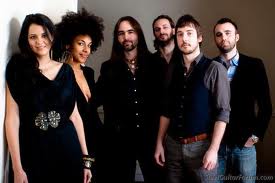
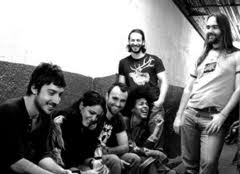
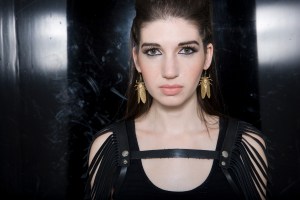
Sean Bones Interview: An artist on an Exploration… and he’s “Here Now”

I love living an hour away from Manhattan; it makes traveling to the city for band performances so easy. On Friday, August 3rd however, I was surprised to learn that a band I wanted to see, Sean Bones, was making a trip out to the suburban town along the north shore of Long Island, Huntington.

He performed an hour-long set on an outdoor stage in Heckscher Park. It was a great evening to enjoy music and an even better time to hang out after the show and personally invite Sean Bones to be the full-length interview feature for the Music Historian Blog, Hear; Don’t Listen.

“A charming take on the 3-minute pop song”

Anyone who listens to Sean’s music will hear a range of styles- from surf rock to folky psychedelia –all under the influence of Jamaican music. He explains, “I started to discover a lot of interesting older reggae. When I discovered rocksteady artists, like John Holt and Alton Ellis, I found that they really had a charming take on the 3-minute pop songs. And that eventually lead to more experimental dub music.”

Since I was unfamiliar with the term “dub” that often shows up in reggae music, I asked Sean to enumerate.

“Dub music began with Jamaican producers removing vocal tracks from singles and experimenting with the instrumentals. Producers like Lee Perry would break song down to just bass and drums, and sometimes add a layer of sound effects and delay.”

For Sean, reggae is a genre in which he can integrate his own musical experience with some of his favorite influences. In the album, RINGS which was released in 2009, he incorporated a Barrington Levy beat in the single “Dancehall.”

“He [Barrington Levy] is a reggae singer, and he was at the forefront when reggae started turning into dancehall,” explains Sean. “One of his albums, Poor Man’s Style inspired the song “Dancehall.”

Sean performed the single “Dancehall” for the Huntington audience at the end of his program. Most of the songs he played though are featured on his second release, Buzzards Boy.

 “I focused on making more of a deliberate statement”

The most obvious musical difference between the albums Buzzards Boys and RINGS is the pace in each song. Sean shares his experience recording these two different records.

“Production on both albums started with live band tracking. On RINGS I spent less time rearranging songs. On Buzzards Boy I took more time and focused on making more of a deliberate statement – something that was specific to a “Sean Bones” sound.

“The second album included a lot more layered recording than the first. I made the first record while I was in another band. When I created the second album, I wasn’t in a band anymore, and I acquired a bit of an audience as a solo artist. So, I focused on making an album that was specifically mine.

“Also, RINGS was very faced-paced, and I wanted to slow down Buzzards Boy.”

In addition, the word “Buzzards” is also “…a reference to the area I’m from – on Buzzards Bay,” adds Sean.

“Tell Me Again” is another song that struck a chord with me. At Heckscher Park, Sean described this track as “… a song from a colder place; no where tropical, more like the North Fork and beyond.” 
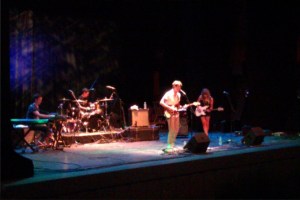
Several of Sean’s songs paint pictures of faraway areas and take listeners to places that are far away from the busy city – places of a nautical origin. Sean would say that many of his songs are about “getting away from Brooklyn, and coming to a nice place like this.”

The most enjoyable part of making music for Sean revolves around the ability and opportunity to create music with great musicians and experiment with sound engineering.

“I would like to appropriate some of what I learned from sound engineers and people that I’ve worked with”

“Recording at any time is the high point for me; as well as working with great musicians and in great recording studios.”

Sean is currently preparing to record more music in September and October of this year. He will focus more specifically on music that is fast-paced, like the tracks on his first major release RINGS. He is also preparing for a possible tour at the end of October. In the meantime though, he’s undertaking another exciting project.

“I’m building a studio in my basement, so I can make more of this record on my own” Sean explains, “it’s going to sound more home made.

“I would like to appropriate some of what I learned from engineers and people that I’ve worked with and make something a little cruder or maybe unclean. I’d like to maybe show that when there is a ‘learning-curve’ in making a homemade record, it can sound interesting in its own way.”

This ‘learning-curve’ is something that several artists have experimented with and revisited. I recall the White Stripes 2003 release Elephant where the band specifically played and recorded music with out-of-tune instruments.

Lately, I have also taken up listening to an independent group that wrote an album called Teenage Hate, a compilation of over 20 songs that sound like they were recorded in a small room with a tape recorder. On a more personal note, listening to this album sometimes reminds me of a time when I composed my own songs on guitar and used a hand-held Panasonic tape recorder to put them on a cassette tape. When I did this, I often used what little amplifying equipment I had in arms reach, like a karaoke microphone that I taped to a tripod.

Although I partook in this kind of music making as a high school student and in my early college years, I hadn’t written anything since then. Making music is not just a career; it is part of one’s life. This is especially true for Sean, who from early on was sure that music would always be a part of his life.

Starting as a supporting instrumentalist then developing “the core of the Sean Bones project”
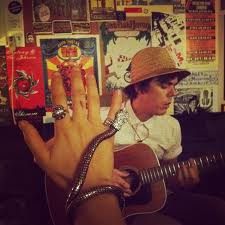
“I started playing music in grade school. My Dad taught me the piano, and then he taught me the guitar at 12. I played with my friends from high school band well into my 20s, and we all eventually relocated to New York City for different reasons. After that, we went our separate avenues, or looked for new musical projects.”

The New Bedford, Massachusetts native had been a supporting instrumentalist up until he made RINGS in 2009. Once it was time to look for a new musical avenue, Sean became interested in developing his own sound and pursuing his own musical projects.

“The Sean Bones project allowed me to pursue a style of music that wasn’t being replicated a million times,” he explained, “and that was the reggae style from the 60s and 70s.”

Very well, Sean admits that reggae music is definitely a part of the popular music landscape, and “it shows up everywhere,” from the Beatles’ music, to songs by Sean Paul. However; several fans of popular reggae music might forget that this genre includes a wider range of artists beyond the Bob Marley phenomena. Reggae and its relatives like dancehall, rock steady and more always leave room for experimentation; and Sean Bones might have found that as he embarked on an exploration for his own sound.

 Wherever his curiosities take him musically, Sean is bound to gain attention from people in the arts and entertainment world. He has already made an appearance on an episode of HBO’s Girls acting in a fictional band named Questionable Goods alongside actor, Chris Abbott. In addition, NME.com recently put up the video for “Here Now” on their site.

As for New York City audiences, they can expect to see Bones perform with his band at The Glasslands Gallery in Brooklyn this August 29th. Tickets are currently on sale here. In the meantime, you can also view the latest video for Sean Bones’s single, also from Buzzards BoyHit Me Up” on Nowness.com.

3dCosby’s Daniel Harris Talks about Band’s Latest Album, Satan’s Secret and “Doing Family”

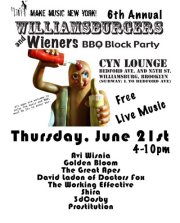
 On the hot and muggy Thursday, June 21st, I traveled to Williamsburg to visit the Cyn Lounge. Here, Avi Wisnia was hosting his annual BBQ Block Party. Although the heat persisted as 8:00pm rolled around and I was sweating through my work clothes, I was happy catch up with Avi to hear some of the bands in his line-up. One band I particularly enjoyed was 3dCosby.

The songs by this band that caught my attention included “Paint by Numbers” and the humorously-titled track, “Star F*cker.” Both songs are featured on their latest record, Satan’s Secret. All of 3dCosby’s tracks combine funk and jazz. Occasionally, they will add a special musical technique called polyphony – the playing of four different voices or melodies produced by the guitar, keyboard and bass all at the same moment.

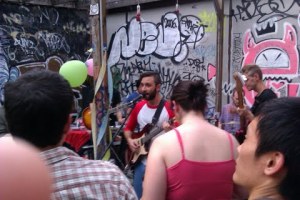
During their performance, the front man of 3dCosby, Daniel Harris, invited audience members to dance to some of the instrumental pieces. The audience, me included, responded positively, and moved to the rhythms of their songs inside the small cemented outdoor space of the Cyn Lounge.

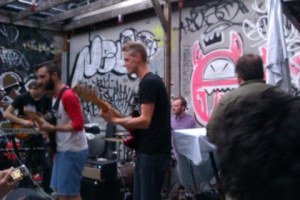
Daniel Harris on guitar and mic at the Cyn Lounge, June 21, 2012

Daniel admits that “it’s great to see people respond to it [our music].” However; Daniel and the member of 3dCosby who is perhaps closest to him, Matt Ross, see music making as more than just a means for having fun; it is how they “do family.” Over a telephone conversation, Daniel talked to Music Historian about the history of 3dCosby, the album, Satan’s Secret, and most importantly, the development of their style. I am happy to introduce 3dCosby as the full-length interview feature on Hear; Don’t Listen for the month of July.

Pre-beginnings of 3dCosby: Hillel

Anybody who listens to Daniel talk about 3dCosby can believe that this band is a family.

Daniel says, “Matt and I initially met when we both moved to Monroe, New York. Our Moms introduced us, and we were pretty much attached at the hip. We went to the same camp; we were in the same Jewish youth group” and they made music together from an early age. Daniel continues:

“We both grew up around music. Matt’s Dad was a professional musician who practiced saxophone and flute. My Dad taught me to use the turntable when I was 3 years old; and in the 4th grade, I started playing cello and Matt picked up trumpet. In the 5thgrade, I picked up guitar, and at that time, Matt and I would listen to songs on the radio and write our own lyrics.”

Daniel Harris and Matt Ross, courtesy of 3dCosby’s site on bandcamp.com

Daniel and Matt initially dabbled in the idea of forming a band. Then, once the two hit high school, the idea slowly turned into a reality.

“Matt and I wrote our first song at 14 years old called “Never End” inspired by the author, Michael Ende who wrote The Never Ending Story. We also started playing in bars, coffee houses and in people’s backyards at that age too.

“Our band was first called Hillel (named after Hillel Slovak of the Red Hot Chili Peppers), though we eventually changed the name to Ethan’s House of Pancakes. At the end of high school, I got a call from our friend Alan asking if I wanted to start a new band with him. “Can Matt be in the band?” I asked. Alan said “Totally,” then added, “We have a gig in two weeks at the House of Blues in Boston.”

Daniel admitted that playing the House of Blues was an epic opportunity for him and Family Junction at the time. The band stayed together for about 7 years. While they were in the process of recording a series of 5 EPs, Hillel separated. Daniel describes the break-up:

“We [all the band members] started taking on extra projects. Matt was working with other bands and I was working on solo stuff. We made the collective decision not to play anymore shows until the EPs were completed, which ostensibly was a diplomatic way for us to sadly agree that things had come to an end. In the Fall of 2008, I put out my first solo album, “Thirty-two bit isn’t really eight bits better” which you can check out on http://www.iamdanielharris.com.”

Luckily, the break-up of Hillel was not the end of the friendship between Daniel and Matt. These two would continue to make music together.

“This is just what we do – we’re brothers, and at the foundation of our relationship is music. It [music] keeps us together and it keeps us sane.”

“It All Made Sense”: A few jam sessions and songs later, a new group and record forms

Although Family Junction was over, Daniel and Matt decided to come together for a jam session in 2008. Daniel enumerates:

“After the band was already broken up, I drove to Matt’s house in New Paltz and decided to just jam. We soon started writing songs in his living room.
“We just wanted to see what would happen, and as we continued writing together, we soon had enough songs to make album. Just last winter, we decided to make a record which transformed into 3dCosby’s first album.”
3dCosby still remains just Daniel and Matt, and their friends that are invited to play during live performances. So far, the band gained tremendous recognition for their album, Satan’s Secret. The track “Paint by Numbers” became the band’s hit.
3dCosby’s album cover for “Satan’s Secret”

“This [“Paint by Numbers”] is a funny track. My younger brother wrote the lyrics, and it is about a guy named Colors, who only saw in numbers, and a girl named Numbers, who only saw in colors. It was originally an instrumental piece, but someone demanded we add lyrics. So, we gave Jesse, our bass player, my brother’s story, and asked him to write the lyrics.

“This song also makes fun a band we played with a few times. We still love them, and so we decided to tease them in “Paint by Numbers” because we feel one of the ways you show someone you love them is by teasing them.”

After the album was completed, Luke Sullivan, the musician who mastered Satan’s Secret suggested that 3dCosby send “Paint by Numbers” to Michael Marotta, a disc jockey who played songs by local artists in the Boston area on WFNX.

“Luke suggested we send the single to Michael. So we did, and he wrote back to us within 3 to 4 hours and agreed to spin it on the air. He also asked us to follow-up with him once the release date for the album came closer. Then, we were played on 4 to 5 difference station, and we made it to the top ranks on a few music charts like “The Deli New England.”

“The attention from the press was just flowing very naturally and it all made a lot of sense.”

3dCosby was “Satan’s Secret”

Daniel and Matt have constructed their own world of excitement by incorporating their own jokes into their songs. In addition, the dance beats and funky rhythms and dissonances that accompany the lyrics in 3dCosby’s songs invade the minds of attentive listeners and music lovers without creating any discomfort or pain. Daniel validates my thoughts as he explains the meaning behind the album title.

“When we were naming the album last year, this joke happened to come into our minds; then it became that 3dCosby was “Satan’s Secret.” We want to destroy you,” joked Daniel as he continued to make a reference to the Satan character in the 1999 South Park movie.

As Daniel and I continued to talk, I soon realized that we were starting to joke between ourselves. I reiterated back to Daniel my understanding of why 3dCosby thought that “Satan’s Secret” was a great name for their record. I said to him:

“Satan’s Secret is 3dCosby. They want to destroy you, and so do you. They will annihilate you in the best ways possible, and it will seem like you’re not being destroyed at all.”

Daniel responded, “That’s great, write that down.”

As our conversation continued, I saw the progress between the beginnings of 3dCosby to the band’s full-length, Satan’s Secret, which was released in February of this year,as the result of Daniel and Matt’s musical development, their friendship and the appreciation of different musical styles. One individual that Daniel credits for fostering his and Matt’s appreciation for music is their history teacher from junior and senior year of high school, Mr. Lee.

“He showed us a different dimension and put us on a specific path”

“When we graduated,” explains Daniel, “he gave me a copy of the book On the Road and two Frank Zappa albums. I didn’t listen to them until the year 2003. I was going to attend a protest in NYC against the war in Iraq, but ended up spending the weekend in Monroe, New York at Matt’s house.

“When we were there, we really wanted to listen to something we had never heard before, so I found one of the Frank Zappa albums Mr. Lee had given me and I remember listening to the first track titled “Inca Roads” off the album, One Size Fits All.We loved this track; we literally took it with us in the car and drove around Monroe for one hour listening to this song.

“This marked an important musical change in my life. This motivated me to get Frank Zappa’s albums, and through listening to them I was inspired me to revisit an album I already possessed by John Coltrane. Afterwards, I eventually fully understood jazz.

“So, if it wasn’t for Mr. Lee, we wouldn’t have learned to develop an understanding of jazz. He showed us a different dimension and put us on a specific path. That’s why, when we released Satan’s Secret, the initial idea was to make 3 copies of this CD: One for me; one for Matt; and one for Mr. Lee.”

“People…whether they’re musicians or not, they connect with the music” 

Although Daniel and Matt graduated high school over 10 years ago; have experimented with several different musical groups; and have each jumped from job-to-job in order to support themselves; the members of 3dCosby always remember the friends that have helped them and the communities that facilitated their growth and love for performing.

“This is what we want to be doing and we’re doing it our way,” says Daniel. “We’re gregarious; we have a strong sense of community and we love meeting new people. We also stay in touch with our friends from home. Matt still keeps in touch with the friends he’s known since he was a child.

“Through this album, and through music, is how we do family. When people see 3dCosby, and listen to the record, they get to know who we really are and they also see our profound dedication to music, as well as our humor and what music does for us as individuals. People get it. Whether they’re musicians or not, they connect with the music.”

3dCosby is currently working with a third party on a Fall tour for this year. They are booked to perform at Lit in New York City on September 22nd. In the meantime, the duo will continue to make music and perform for audiences everywhere they travel. For Daniel, playing music and doing music with Matt “means more than what any words can appropriately describe” – playing together is “a saving grace.”

Kamara Thomas and The Ghost Gamblers: Where Country Music and the Cosmos Meet

[left to right] Kamara, Amal Bouhabib, Jeff Malinowski

 When I first watched Kamara Thomas perform with The Ghost Gamblers on May 2nd at The Living Room in the Lower East Side, I was drawn by her style. She sported a cotton poncho top that was a combo of both a solid color and floral print fabric and a pair of pants with various religious symbols. Then there is her music, with song titles like “Stranded in San Antone” that include these lyrics:

You promised me the rivers of Damascus/ And your love was all that I was askin’ for/ instead you left me Stranded in San Antone…

As I researched the band, I learned they describe their music as cosmic country. The name of this genre and the catchiness of this acoustic folk and rock ‘n’ roll sound, intrigued me so much, I knew I had to invite Kamara to be the full-length music feature for May right here on Music Historian’s Hear; Don’t Listen.

A New Genre: Cosmic Country 

Aside from any country I hear on the radio, The Ghost Gamblers is the first band I heard of that plays cosmic country. Inside The Living Room, where shadows and flickering votive candles set a meditative atmosphere, Kamara explains the genre as she shares her personal history with music.

“In general, I think of myself as a priestess of country music. I was raised with country and classical music at a very early age.

“Before I was 7 years old, my mom was a big hippie and I had always listened to rock ‘n’ roll in my house. Then, when my mom “got God,” as they call it, she became a Seventh-Day Adventist – a religion that is on the side of fundamentalist Christianity. Afterward, I was cut off from rock ‘n’ roll, and also, as far as I could tell, fun. The only music my mother would let us listen to was country and classical.

“But I often wondered why country got to stay and why rock ‘n’ roll had to leave. Country talks about crazy stuff going on in the world just as much as rock ‘n’ roll. My mom just always told me, “Country was about life,” so it was okay.

“As I continued to live in this fundamentalist atmosphere, I adopted a philosophical point of view. I was always thinking about God and tried to integrate everything I was learning with my callings as an artist and singer. I also tried to integrate what I was learning with my own internal disagreements about the fundamentalist point of view. So naturally, my stuff is of a very spiritual nature and I always ask myself spiritual questions.”

Kamara and Jeff

Further in my conversation with Kamara, I learned her spiritual ponderings eventually transformed into journeys, which she shares through music. She says, “As my journey unfolds, the lessons I learn in my life end up becoming songs. One of the songs, “My Pretty Angel” is probably the most spiritual song you’ll hear.

“This song took my three years to write, because it accompanied me on my spiritual journey. When I get the inkling of a spiritual lesson I’m learning, I will write a song, but won’t finish it until the lesson has been fully learned or realized.”

I then wondered whether Kamara applied this process to all of her songs. She then explained to me how her creative cycles differ for each of her songs, and how they correspond with her spiritual journey.

“I write songs in cycles. Some are tiny ones, others are large. Some songs will take me an hour to write, and some will take me seven years. My spiritual lessons are cycles, and they are built into my song writing process. I found, the more I dealt with my spirituality, the more cosmic it became. So, that’s why it’s [my music] is cosmic country.”

Although I found my answer to “what is cosmic country,” I felt I was only seeing the tip of the iceberg on Kamara’s adventure with music. Then, she shared with me another important life lesson – accepting the path of music.

The Need for Solitude: Listening to the Still, Small Voice

She says, “There was a moment in my life I realized I was a musician, and it was weird because all my life, I was involved with music but had no idea I was being called to be a songwriter or a singer.

“As a child, I was heavily involved with church and I was a part of everything that had to do with music. I learned to play drums in the concert band, and I gained all of my singing experience from being in the choir, but I took it for granted. I didn’t realize I was actually a musician.”

When it came time for Kamara to go to college, she knew she wanted to perform, so she decided to pursue acting. However, she couldn’t put music aside. She explains:

“In my freshman year of college, I almost flunked out because I was involved in all these musical ensembles that would start as soon as classes ended, and continued until 11 at night, so I never studied for classes. I was also too involved in communities to listen to or even hear my still, small voice – one that wanted to say “Oh, I’ve been making music all my life” or “Oh, I’ve been a musician this whole time.” I didn’t hear it until I was alone long enough that it finally hit me.”

Kamara claims that solitude helped her discover her need to start songwriting. She found this solitude when she moved to Los Angeles after college to become an actress.

“I moved to L.A. to be an actress, and I didn’t act at all. I happened to stay in a part of the city that had everything I needed to do within a one-mile radius, so I walked everywhere, and fell into the solitude I needed to start writing songs. During this time I started to hear my still, small voice. Then it occurred to me I wanted to be a musician.

“That’s when I decided to move to New York, because I would never be able to cut my teeth into L.A. without a car. And, I could build experience in songwriting and performing.”

 For Kamara, this decision marked the end of one life chapter and the start of another – her life as a musician. Like the cycles of all things that exist in nature and in life, nothing is ever wasted, and that is what I learned from Kamara. She translates some of elements of her past experiences and spiritual lessons into songs. For example, Kamara’s experience with the west, inspired The Ghost Gambler’s hit, “Stranded in San Antone.”

A Place of Spirit that Inspired a Song

“This song is part of a larger story cycle called Tularosa, explains Kamara. “Tularosa is an area in New Mexico, a place that really caught my attention. I first learned about it when I studied theater in college, and I started to see this place as a focal point for several American dreams. 

“When I traveled to the west, I felt a lot of spirit in that land. If you become still enough, you can almost listen to it. Learning about all that happened in Tularosa lead me to write several songs about this place. “Stranded in San Antone” is one of them.

“So, I was writing this song, but I soon found myself stuck. I had a block, and decided to do a spiritual exercise to find the focus of this song. I took out some tarot cards and did a reading. This helped me find the focus of the story I would tell in this song – one of a woman who did whatever she could to make something of her life and then paid the price of her decisions in order to battle through the rugged terrain.”

Nobody can turn away from the tune that pulls the listener into this story. Kamara’s voice tells the story through the eyes of this character, but it is her voice that expresses that element of rock and folk that excites listeners from the very moment the song starts.

The inspiration behind “Stranded in San Antone,” is very intriguing. How often have you been able to listen to the New York City’s landscape when it’s still? I certainly haven’t, because our city never stays still, and we certainly don’t stand still enough to listen. “Stranded in San Antone” is one of the Ghost Gambler’s songs that will take you to the final frontier of someone’s dream and personal journey.

As my talk with Kamara drew to a close, I learned that aside from being a musician, she is first and foremost, a full-time mother. Playing both roles requires a balance of determination and patience.

The Path and Miracle to Creation

“It’s amazing to play music with a little child in the house,” says Kamara. “I often tell people “I’ve never gotten more done with my music before my daughter was born.” This is because time takes on this new meaning – everything you do is in this allotted time.

“I have to plan what I’d like to do and actually see it though. When I have free time, to not do what I really want is like sacrilege. I think to myself, ‘let me use this time to help make something happen.’

“In this way, she’s contracted me and my husband’s life, but expanded it at the same time. We’re able to do so much more. And it’s great that she’s inside inspiration all the time. She loves music.”

Kamara also says the journey of motherhood teaches her the true value of creation.

“Doing this creative act – passing a human being out of my body and into the world – helped me understand the path and the miracle of creation more deeply. Now, I know how hard it can be to bring something into the world.

“I was in labor for 32 hours. Nothing went wrong, it was very normal, natural and painful; it just took a long time. It helped me realize that in the creative process, you sometimes have to push your creation out; sometimes, you have to trust that it’s going to come out in its own time; and sometimes it is painful.

“What my daughter brought to the picture is far more than what she took away. Now, and I have more patience with myself, and I am more determined.”

Future with The Ghost Gamblers: “It’s Our Time”

 Earlier, Kamara talked about how her spiritual lessons and songwriting process accompany one another in creative cycles. Aside from realizing these cycles, Kamara is now at a point where she can listen to her own inner voice, and reflect on her experiences, and understand how she’s gotten to this point in life. All of these reflections help her to pursue what life has called her to do – music.

Right now, Kamara is finishing her residency with The Ghost Gamblers at The Living Room. They are also getting ready to release an album in September, and she’s currently putting together a free teaser, which she hopes to have ready in the next few weeks. As for the near future, Kamara hopes to get back into the studio and record the next record.

When she is not in the studio, she is raising a child with her husband, who is also the pedal steel player in The Ghost Gamblers. Kamara’s journey through motherhood is a large cycle that has just begun. Like the movement of celestial bodies in the cosmos; family, career and everything else that makes up life, all revolve simultaneously with one another. Some of these life cycles are small, some are large. Kamara’s cycle with The Ghost Gamblers is well underway. She says “We’re just getting up and running – it’s our time.”

“Put Yourself Out There”:Solo Guitarist, Hannah Winkler Shares Her Music and Story

In today’s indie band culture, especially the one in the Big Apple, I too often feel that something is missing. Then it hits me – “Where are the solo guitar chicks?” I was happy to finally find one on a warm and rainy February evening, at Seth Glier’s set in Rockwood Music Hall. Here, I stumbled upon the voice and guitar playing of singer-songwriter, Hannah Winkler

One of the songs I heard from her that night, “Dear Love” – which is on her self-titled EP – left me in awe. It starts with an unsettling progression of minor 7 chords, followed by progressions of major 7 chords, and then finishes soundly on the tonic, the 1 chord. On top of these harmonies, she sings about how she simply cannot wait for love to arrive, even though it is warm and comforting.

I wanted to find out more about the girl with the intricate chord progressions and the disillusioned views about love. So, I invited Hannah to be my April music feature for the full-length interview right here on Music Historian’s Hear; Don’t Listen.

“The Paper Plate Song”

Hannah and I met at the café on East Houston, Sugar. In our conversation, I learned that Hannah’s relationships with friends both from her home in Bethesda, Maryland and the University of Michigan at Ann Arbor influenced her songwriting. She says:

“During my freshman year, I was writing “Dear Love,” and one of my friends wrote lyrics which I later set to this song. Coincidentally, the lyrics he wrote happened to describe something I was experiencing at that time – a long distance relationship. The lyrics just fit with me, and I just finished with what he started. “Dear Love” became one of my favorite songs to play.

“My relationships and my friends’ relationships in college inspired my music; we were learning a lot about ourselves at that time. Also, missing relationships from home, missing relationships from college while I was at home also inspired my songs.

“I wrote a song after I left college called “The Paper Plate Song.” When I wrote it, I was at a concert, and I missed my friends so much that I started crying and had to leave the concert. As I left, I needed to write down what I was feeling, so I searched for whatever I could find to write on, and it happened to be a paper plate.

“Until this day, I don’t have a title for the song; it’s just called “The Paper Plate Song.”

College was also where Hannah had her first performing opportunities for her own music. All her life, Hannah only performed solo classical piano pieces or performed in ensembles. Luckily, Ann Arbor offered her several safe and intimate spaces where she could practice as a solo artist and share music with her friends and the surrounding community.

“Put Yourself Out There”

“I would perform for friends in my apartment and at a local church that welcomed a lot of jazz musicians.

“I also participated in a student songwriting competition which took place at Ann Arbor’s premier folk venue, The Ark. The winner of this competition would get to open for an undetermined better-known artist at the Ark. I ended up winning the competition, and opened for Joshua James a few months later.

“Not only did I open for Joshua James, but I got my foot in the door and was able to play again at the Ark. Afterward, I performed at a large outdoor concert series, Top of the Park Festival. I also met a few dj’s and had the opportunity to perform on a few local radio stations.”

Hannah’s message to all soloists is, “Put yourself out there. You might meet people who can recommend you to a specific venue or a band in need of an instrumentalist.”

This is just one way a singer-songwriter can attract opportunities. I then asked Hannah whether her move to Brooklyn was a result of her hunger for more opportunity.

“Moving to Brooklyn, I was able to collaborate with several artists. I opened for Seth Glier and Theo Katzman at Rockwood. Then last Thursday night, I played at Googie’s with several other friends. I also sang back-up vocals on a record by the band called Guggenheim Grotto.

“Open mic night is also great way to meet people with whom you can collaborate. I also like taking breaks from doing my music, and helping other people with theirs. This is how I met Kat Quinn, another artist. I will be singing back-ups for her on her set at Rockwood.”

Aside from singing with fellow artists, Hannah also scored a short film by her friend from college, Perry Janes titled, Zug. Her most recent single, “Hide it Away,” which she produced with Theo Katzman, is included in the film. Another one of Hannah’s friends, Brian Trahan, also from University of Michigan in Ann Arbor, helped her produce her EP.

“I want to see who will help me bring out the best in my songs”

“While I was in college, Brian and I sang together in an a cappella group. I started recording the EP with him and I enjoyed seeing what he had to bring to the table. He is very influenced by rock and classical music, and for some of the tracks, we invited string quartets to help us complete the songs.”

Hannah adds, “Recording the EP was a wonderful journey. I like painting with music, and you get do that in the recording process.

“I have a lot of ideas of how the tunes should feel, and I appreciate hearing others’ ideas as well. I am currently trying to assemble a team of recording engineers for a full-length album – one with 10 to 12 songs. I want to see who will enjoy working on the album, understand my music, and help me to bring out the best in my songs.”

The Puzzle: Rehearsing with Hannah

 The experience of producing an album differs for each artist. For Hannah, her recording days started in Ann Arbor, Michigan, where she created her first album with Brian. Recording the single, “Hide it Away” in her Brooklyn apartment however, presented a different challenge. Hannah explains:

“We only had a chunk of time each day to record songs. We had to wait for cars and ambulances to pass,” because every passing noise could be picked up by the recording devices.

Prior to recording a song, Hannah and her guest-musicians rehearse a piece of new music for the best process. An on-going puzzle during these rehearsals, is figuring out what Hannah is playing on her guitar. She says:

“I’ve been playing piano since the first grade. Then I picked up guitar in the 9th grade, and taught myself. I still have never taken a lesson. From the moment I picked up guitar, I started writing my own songs. I occasionally looked up the chords in songs from my favorite artists, but I never really learned them well. So I wrote my own.

“Playing the piano for so long really helped my ear, but I could never translate my theory knowledge onto guitar. I just press my fingers down wherever and just play things that sound good. When I rehearse with bands, I can’t explain to them what I’m playing so I show them, and they get it. For some, it’s like a puzzle and they really enjoy learning. In turn, these rehearsals help me figure out who I’d like to work with in the future.”

I was surprised to hear that Hannah composes songs purely by ear. I have played guitar for years, and actually picked it up around the same time as Hannah, but I only learned formally.

When I wrote my own songs, I always used tablature and mastered simple major and minor chords. If I don’t have something written in front of me, I don’t know what to do. For Hannah, the power of experimenting and her gift for hearing is an outstanding musical asset.

As I continued my conversation with Hannah, I learned more about her song writing process. She has a few recipes for creating songs that are ready for “the-road-to-recording.”

Setting a piece of music to words

Hannah says, “I experiment with chords for a while until I find a structure I like. Then, I usually start humming a melody over it, and the words come last. That’s the hardest part for me.

“Occasionally, I’ve written music to poetry by my mother, E.E. Cummings and myself, then composed music to it; and this instance, I found it easier to already have the words. To already have a piece of music with a melody and then have to add lyrics to it is really tough.”

Since they are the only musicians creating their songs, the solo singer-songwriter is often challenged by their own compositional methods. Collaboration is definitely one solution that can ease this pressure. However, even the most eloquent songwriter has to push themselves to create a song that will successfully express their emotions or thoughts.

“Sometimes, when I am really upset, I find it difficult to express myself eloquently or poetically; I just want to scream about it and say whatever it is I am feeling.” Hannah adds, “It is hard to make that sound beautiful. Usually though, my best songs come out of these moments.”

 “I Really Love This” 

Like every promising musician, Hannah has set goals for herself and has identified areas for improvement. One of these areas includes becoming more comfortable with performing.

“It’s a very vulnerable thing,” Hannah explains. “Singing with a group of people is comforting as opposed to singing a personal song by yourself. I still get nervous at large gigs just as I’m about to perform, but I want to continue to do so. Once I’m on stage, I feel great.

“The whole thing, like hiring, paying for a band, and covering expenses, can be intimidating, but it’s exciting. I hope to continue to perform more and more. It’s important for me to show people that I really love this and that I believe in myself.”

Hannah’s passion for recording and performing is unfaltering and infectious. Although she does occasionally worry about the challenges within the music industry now; it did not cross her mind when she decided to pursue this path. She says, “It definitely intimidates me, but I love it, so I’m going to continue with it.”

No Idea is Too Small

Hannah might have moved to Brooklyn for more opportunities, but her music career really started in Ann Arbor, Michigan. During this time, she learned to make connections with individuals, make herself known in a music community, and work with others on producing music.

That warm Friday afternoon at a café called Sugar, Hannah taught me that no performance or musical idea is too small. What can start as an open mic night at a little club in Brooklyn, can lead to a performance in a large line-up in Manhattan. What can start as a few words on a paper plate can turn into a beautiful song on either an EP or a full-length album. With her a beautiful voice, a passion for playing guitar, and a talent for songwriting, I feel Hannah Winkler will definitely receive a warm reception from both fans and fellow musicians in New York City.

Drawing Inspiration from Songs: A Conversation with Comic Book Artist, Nikki Umans

Today’s digital music technology enables everybody to create the playlists they need on a daily basis. A simple playlist can help a busy person get through the most tedious of tasks; enable an athlete to complete another rigorous workout; or nurture an artist’s creativity.

Nikki Umans is an SVA alumni and currently working on her first comic book

Dominique Lee Umans, or Nikki as I’ve come to call her, is a graduate from the School of Visual Arts in Manhattan and a comic book artist. She recently talked to me about how some of her favorite music helps her in creating Diamond Bright Delirium, her first original comic. It is my pleasure to interview her right here on Music Historian’s Hear; Don’t Listen in my first full-length aspiring artist feature.  

The Story of Two Brothers

Nikki explains, “This horror fantasy series takes place in an alternate and mythical universe, one where there is a world in the sky, another world below the earth, and one in between the two. The series is mostly set in the world between the two.” It is in this world the story begins.

Sketch of Teliau*

“The story starts when one of the supporting characters, Dr. Rivières loses his son, Teliau. Dr. Rivières refuses to accept the fate of his son, and tirelessly looks for ways to bring him back from the dead. Meanwhile, an angel, Ciel, accidentally falls from the world above, and Dr. Rivières takes him in as one of his own. Soon though, Dr. Riviera discovers that he can use Ciel’s genes to resurrect Teliau.”

Ciel and Teliau are the protagonists in Diamond Bright Delirium. Throughout the series, these brothers grow close and eventually fight battles together side-by-side.

“These brothers grow up knowing only each other and their father.

“Dr. Rivières isolates himself and his sons to avoid stirring any suspicion of what he has done, especially since it puts him in legal danger. In addition, both these sons are ridiculed by the people in their town because of their physical deformities. The effects of Dr. Rivières’s procedure on Teliau, left him looking like a monster. Meanwhile, Ciel still has wings from when he was an angel.

“These two brothers come from very different backgrounds and become very close as a result of their isolation. Throughout the series, the brothers rely on one another as they fight their way through every upsetting circumstance and perilous situations; most of which are caused by the female crime-lord and their boss, Evangeline.

Sketch of Ciel*

“Evangeline gives Ciel and Teliau work that involves racketeering, bounty hunting, procuring business deals with rival groups, and dealing with her own family whom she cannot stand.

“She doesn’t assign these jobs to the brothers because she’s confident in their skill. Instead, she assigns them these jobs in hopes that they will fail. If they fail, she will kill their father. If they don’t, she will continue to abuse her power and take full advantage of Ciel and Teliau.

Siren: Mythical villain that appears in the series*

“Her spiteful behavior towards the Rivières brothers stem from the pain she experienced in her past and her inability to move on from that pain. Creating upsetting circumstances for Ciel and Teliau is how she deals with it, but, she still remains unhappy.”

This type of hypocrisy is an overarching theme in Diamond Bright Delirium. Evangeline is one such character who is a hypocrite to the extreme. Her inner suffering increases in every episode, no matter how much trouble she single-handedly creates for the Rivières brothers. Later in the series, Nikki makes this “seemingly all-knowing mob-boss fight her hypocrisies.”

She also adds, “One of my goals for Diamond Bright Delirium, is to incorporate more characters and their backgrounds into the story and not make it only about Ciel and Teliau.”

Nuckelavees, Scottish water fairies, in Diamond Bright Delirium*

So what fuels Nikki’s tireless energy for simultaneously creating dramatic and bizarre situations for these heroes and supporting characters? She responds, “Aside from my favorite comics, which exude elements of black cinema, horror movies, and gangster movies, like Richard Sala’s The Chuckling Whats It and Mad Night; music is one of my other major influences.”

Gathering inspiration for Diamond Bright Delirium from songs by the Circus Contraption

Songs by the band and traveling circus, Circus Contraption, help Nikki visualize settings that inspire her, like urban America during the Victorian period and the 1920’s.

“Whenever I listen to one of their [Circus Contraption’s] songs, I start to visualize things that symbolize the settings of these time periods like old smoke stacks, battleships pulling into harbors, the turning of wheels.

“Also, every song by Circus Contraption is a story, and in every concert, they re-enact these scenes on stage; and the settings of their performances are also inspired by the Victorian period and vaudeville. Their songs lyrically focus on taboos that were shocking during those times.”

I then wondered how Nikki draws inspiration from a song by Circus Contraption and then incorporates that into her work, Diamond Bright Delirium. She talks to me about one episode, “The Carnival,” which is directly inspired by a song from Circus Contraption.

“In this episode,” Nikki explains, “Ciel and Teliau are sent to deal with the manager of a mechanical traveling circus Mr. Jynx, who Evangeline believes might have stolen some of her money.

“Once the brothers arrive to the premise, one of circus members is mysteriously murdered. Mr. Jynx believes it was a scheme by Evangeline, and suspects the brothers have some knowledge about this. Now, the brothers have to investigate whether the crime was committed by anybody from within the circus.”

“By listening to the emotions expressed… I can pick out what could be the next proceeding scene”

Although songs by Circus Contraption and other musical groups help Nikki in the creative process, she doesn’t take songs from these artists and simply turn them into visual stories using her own characters. Instead, these songs help inspire plot developments.

“If I ever come to an episode and I have trouble with plot development, I go to a song in my playlist that I feel fits the current scene I am working on. I can pick out elements from this song that I believe can be incorporated into the plot and hopefully further my story.

“By listening to the emotions expressed within the music, I can pick out what could be the next proceeding scene.

“On this note, I design playlists that are consistent in theme, tone and style, and I always revise my playlists to make sure they flow well. Listening to these playlists also helps me battle writer’s block.”

Playlists: “This helps me stay consistent in my writing process.”

In our conversation, I learned that writer’s block is more than a creative wall; it can trigger damaging setbacks for even the most successful artists.

“I have observed other writers who have attracted a strong following or fan base, and then experienced writer’s block, which caused them to stop updating their comics. This is detrimental; a stymie in their work disrupts the relationship,” between the artist and his or her audiences, “and disappoints readers. They often feel betrayed.”

Nikki takes the threat of writer’s block very seriously, which is why she is setting all of her ducks in a row.  At the moment, she plans to finish writing all 12 seasons of Diamond Bright Delirium by the end of this year. With 148 episodes under her belt, she hopes to have a total of 228 stories completed within the next year. This will enable her to have a whole storyline ready so that she can concentrate on drawing the scenes. She hopes to start drawing the comics by 2014, and finally publish the series that same year.

Consistency is very important for Nikki, and music is one of the many resources that will help her continue working towards fully publishing Diamond Bright Delirium.

“I feel writer’s block is the worst excuse I could have for disrupting my work. So I go through my playlists and find songs that I can easily connect to the scenes I am currently working on, and try to create an episode without pictures. This helps me stay consistent in my writing process.”

“I want readers to get lost in the story”

By the time Nikki’s comic hits the web, the end product of her creative process will come in the form of refined and colorful caricature sketches and boxed scenes that tell the story of two brave brothers. As a result, Nikki hopes her readers to take away the following from her series:

Driffiks: mythical woodland creatures*

“I want readers to go to this comic after a hard day’s work and really get lost in the story. People consistently deal with hardships, whether it’s a recent death in the family; not having enough money; or dealing with a physical ailment. I hope readers come to this comic to find something cathartic about these two main characters.”

“I hope my comics help readers re-examine their points of views about themselves and others”

While the characters in her series mimic and reflect the character flaws we exhibit in everyday life, like hypocrisy, Nikki wants readers to first and foremost have fun reading Diamond Bright Delirium. She explains:

“There are times I go to read some of my favorite web comics when I feel stressed. Afterward, I am happy to see that somebody out there can see the world from a point of view different from mine, and express it through their creative work.

“I hope that I can accomplish something like this with Diamond Bright Delirium help readers notice the flaws they observe in themselves and others in everyday life and hopefully view the world with fresh eyes.”

*All pictures are patented and published with permission by the artist and rights holder*

Opening Doors: Imagine Dragons’ Bassist, Ben McKee, talks about the band’s exciting journey

Creating hit songs, completing albums, and finishing nation-wide tours are series of feats in a recording artist’s career. This is why individuals who want to fully pursue music should be ready to dedicate their life to it and LOVE it, like the Las Vegas-native band, Imagine Dragons.   

In a telephone interview, Ben McKee, Imagine Dragons’ bassist, tells me, “We’ve all been playing music for a long time, and performance is where we feel most comfortable. It is magical to be in a space, especially an intimate one, where everybody can be a part of that same community. The music doesn’t become alive until you’re sharing it in a room with a crowd and feeding that energy.”

I saw Imagine Dragons perform at the lounge in Delancey, Pianos, on March 7th, and the experience from watching the band was electrifying. Their music was my greatest motivator for trekking out to Pianos to personally approach Imagine Dragons. Now, I am happy to bring my conversation with Ben to this month’s full-length band feature right here on Music Historian’s, Hear, Let’s Listen.

 The Busy First-Visit to the Big Apple: “That performance was our third one that day”

Getting this band’s attention was not easy. Following their showcase at Pianos, everybody in New York City wanted to meet Imagine Dragons. That evening was also the end to a busy first-time in the Big Apple. Ben explains:

“We drove all the way from Boston to make an 8:00am sound check earlier that day. We performed on the set of Mark Hoppus’s show on FUSE TV; then we had a couple of interviews at a few radio stations; went to another showcase; then made it to Pianos – our third performance that day.”

So what is it about Imagine Dragons that has recently caught the attention of disc jockeys, popular music figures, show hosts and of course, fans everywhere? The answer might hide in a sense of ‘mystery’ the band incorporates in both their music and image.

A Factor of Mystery: “We leave all the songs to the listeners’ interpretation”

When I listened to songs like “America” and “It’s Time” I felt that the singer, Dan was touching on the life philosophies and issues that affect everyone as a collective. Another song, “Cha-Ching” which the band performed at Pianos that night helped me imagine a more specific story – one about the tiring strife Americans experience when competing in the business world. These are the lyrics I recall:

“You’ll be a worker/ I’ll be your soldier/…/I’ve never seen this side of you…”

Dan Reynolds (right) and D Wayne Sermon (left) performing at Pianos

When I asked Ben about the meaning of “Cha-Ching,” he explained:

“Dan writes all the lyrics. He tries to write lyrics that are not so definitive. He focuses on something he’s feeling and tries to translate that into lyrics and a mood that people can connect with and attach their own meaning to. We leave the meanings of all our songs a little bit to listeners’ interpretation.”

Further into our conversation, I also learned the band’s name is another big mystery.

“The name, Imagine Dragons, is an anagram,” claims Ben. “We in the band all agreed on a statement and we switched the letters around to create this name so that nobody would guess the statement.” Fans from everywhere have already tried to decode the name ‘Imagine Dragons’ and uncover the hidden message, but nobody has come close. According to Ben, the band is “happy to keep it a secret.”

While the meaning behind Imagine Dragons’ name and music is undefined, their story as a band that gradually built their reputation on the popular music scene is clear and inspiring.

“When we met, we never thought that we’d go on to play pop music in a matter of years.”

Ben McKee, Imagine Dragons’ Bass Player at Pianos in NYC

In his early years, Ben’s love for music stemmed from trying to emulate his father on the acoustic guitar. By the 5th and 6th grade, Ben was forced into playing acoustic bass.

“Up until the 5th grade, I played violin, but then, my elementary school band needed a bass player. Later, in High School, I became part of a jazz trio, and that’s where I really learned to play the bass more proficiently.

“This led me to study at Berklee College of Music in Massachusetts, where I met Wayne (the guitarist) and Platzman (the drummer) who are in the band now.”

A few years later, a telephone call from Wayne led Ben to make the decision of pursuing performance and songwriting full-time with Imagine Dragons.

“Wayne started Imagine Dragons when he moved back to his hometown in Provo, Utah. Then, he moved his band to Las Vegas, and that’s when he invited both me and Platzman to join.”

Soon after the band was complete, the group created a definite style and sound. Introducing it onto the Las Vegas music scene however, was a challenge. According to Ben, Las Vegas is a great city to perform as a cover band, but original bands have a harder time gaining attention.

“A lot of venues will actually want to schedule cover bands in order to attract tourists. When we started, we played cover songs at Casinos by night, and spent the day composing original music. Then, we gradually introduced Imagine Dragons’ original sound into these sets, and found that people, both local and tourists, were stopping to watch us.”

This recognition opened the door to the next big opportunity – performing Battle of the Bands at festivals for four consecutive years and landing in first place a total of three times. Although they landed in third place at their fourth performance; this show would have the greatest impact on the group.

“Playing in front of 20,000 people… had the greatest impact on our career.”

“The Bite of Las Vegas is a music and food festival in Las Vegas, and the Battle of the Bands showcase within this festival is called Battle of the Bite.

“In our fourth consecutive and last performance at Battle of the Bite, we came in third place; just far enough to win a spot on the local stage. It just so happened, that when we performed on that set that afternoon, the promoter of Battle of the Bite was watching from the audience.

“Later that evening, Train, was supposed to perform on the same stage, but singer, Pat Monahan came down with a sore throat, and the band had to cancel their show. The same promoter who saw our show earlier helped place us in Train’s spot.

“Although we didn’t win Battle of the Bite, we played in front of 20,000 people that night. That moment had the greatest impact on our career.”

Imagine Dragons’ history holds a lesson – you don’t have to win every battle to open the next door in your music career. For Imagine Dragons, the opportunities that followed their performance at Battle of the Bite included a contract with Interscope Records in 2011 and working with popular music producer, Alex Da Kid.

“He believes in the music we are making, and he wants to help us bring it to more people”

“One of his assistants [Alex Da Kid’s assistants] presented him with a CD of our old music,” explains Ben, “and Alex connected with it and he loved our sound.

“He wanted to help us realize more of our own vision and work with us to release our music on a bigger scale. He believes in the music we are making, and he wants to help us bring it to more people, which is also what we want.”

Imagine Dragons is currently working with Alex Da Kid on their first full-length album, which they hope to release around this Fall. The title of their upcoming record is a mystery for now, and they can’t wait to reveal it to fans.* They also just wrapped up the music video for their single, “It’s Time,” and are planning to hit the road again in May. In the long run, Ben and the band hope to continue doing the one thing they love most – music.

“It’s been great, and we hope to continue doing it on a bigger scale.”

“Music is the primary way we express ourselves. We are not the most social people, and we feel we are in our element when we perform music. We feel that we can expose ourselves in a way that makes us feel less vulnerable than in other situations.

“We also love connecting with our fans as much as possible. Even with the increasing attention from the press – which we also enjoy – we always want to connect with those who travel great distances to see us perform.

“We are a band that lives and thrives when traveling on the road and performing live for crowds. It’s been great, and we hope to continue doing it on a bigger scale.”

“We never planned on doing music as second to our everyday lives.”

At the end of our conversation, I thought about the exciting road Imagine Dragons traveled so far. I realize an exciting journey like this one is rare, and it doesn’t come easy.

The life of a recording artist is not for the opportunistic job-seeker or entrepreneur, but for the most dedicated artist that is willing to devote years of practice to their craft. The road to bigger opportunities – whether it is a record contract with a big label, going on a nation-wide tour, or releasing a full-length album on a national level – is a long one. Luckily, Imagine Dragons accepted the challenge from what seems like, the moment they started.

Ben says, “We never planned on doing music as second to our everyday lives nor to escape our lives. This is our life and it’s what we wanted to do.”

*The full-length album by Imagine Dragons was released on September 4th, 2012 and it’s titled Night Visions. The record is available for purchase on iTunes.

Musical Theater Today with Mallory Berlin: The Lead of A Doll’s Life Shares Her Experiences, Thoughts and Advice for Young Performers

As a musician who played classical piano and sung in several women choir groups, I truly love to sing. However; being a professional vocalist is not in my future, mainly because I cannot master the skill that all classical and opera singers need for a successful performing career– acting.

Mallory Berlin*

I have known actress and casting director for The Beautiful Soup Theater Collective, Mallory Berlin for years, and she can attest that the most prevalent career roles for professional singers in the performance world are either in musicals or operas. Mallory fills me in on some of the tougher realities for individuals looking to make it as a singer and actor.

“Before I started working with The Beautiful Soup Theater Collective, I would go to auditions for several different productions. As an actor or actress, you are required to wait for long periods of times outside of studios or theaters, and even then, you might not even be seen by the casting crew. Usually, many non-equity performers arrive at 4:00am and stay until 5:00pm, just to sing an 8-bar song.”

Further in our conversation, Mallory also talked about additional ways a professionally trained actor or actress can gain the experience they need so that they are not just investing their time in waiting for a call back from an audition. In our conversation for Music Historian’s Hear; Don’t Listen, Mallory talks specifically from experience. She graciously shares stories from her journey in musical theater, and how she found opportunities in the most unexpected places.

Specializing in a popular style can work against young actors and actresses

Mallory’s professional training as a performer didn’t start in the theater, but in the music school at Ithaca College. She says, “When I got to college, I knew I wanted to perform, act and sing, but I wasn’t sure if I wanted a degree in musical theater. I did know that I wanted to continue singing, so I auditioned for singing lessons at the music school.

“I passed the auditions, and one of the professors, Jennifer Haywood, suggested that I should sing opera. This was something that I had no idea I could do; and she thought I would be great. So, I decided to audition for a spot in the music school.

“Once I was admitted, my advisor said to me, “We loved your audition, and we think you’d make a great music teacher.” I had never thought of myself as a teacher, and I was excited by the idea.

“From then on, the bulk of my college career entailed education and vocal training. By my junior and senior year, I realized I could be a cross-over artist and perform in a variety of mediums including opera, musical theater, and regular theater.”

Being a cross-over artist is a great professional strength for Mallory. Here is why:

“The most popular type of singing today includes belting pop and rock and roll,” explains Mallory. “While this type of voice is in demand, most actors and actresses who specialize in this style have to compete with other performers that sound the same.”

Specializing in a popular style can work against young actors and actresses, especially when they are the 50th person in line for an audition and have to perform the same monologue or 8-bar song that previous auditionees presented. Having a different sound though will not guarantee an actor or actress better chances for being cast.

To help myself, I had to make my own acting opportunities

“In classical music, I am a lyric mezzo- soprano. I have sung roles of little boys, children and occasionally men in opera. In the musical theater world, I am considered a soprano only because I do not have that belting pop voice.

“In purely theatrical roles, I am a character actor. Most people who fall into this category are typically cast to play comical roles. In my case though, my style of singing and acting doesn’t satisfy many casting directors in other theaters because character roles are usually assigned to women that can belt.

“Currently, nobody is producing plays for character actors that have classical voices. So, to help myself, I had to make my own acting opportunities.”

Networking is the key to making it in this industry

Mallory received a lot of sound career advice from experts in the performing arts during her studies at Ithaca College. One of the most important pieces of career advice was “always network.” Mallory enumerates:

“The most important thing I learned is that networking is the key to making it in this industry. Meeting people, making a good first impression and getting involved with different projects will help you in the weirdest of times.

“In my career orientation course at Ithaca College, a professor told all of us, “Look to the person on your left, and now look to the person on your right. One of these people will be in the position to help you find a job in the future.””

One of these individuals that helped Mallory tremendously did not sit on either side of her in the lecture hall but instead, shared a stage with her in Daniel Guyton’s original production, Where’s Julie?

The Beautiful Soup Theater Collective Icon*

“I was very fortunate to meet actor and playwright, Steven McCasland. We first met at the Author’s Playhouse in Bay Shore in the summer of 2006 during the production of Where’s Julie? From that point forward, we started talking and got to know one another. Then, we lost contact for a while.

“About a year after I graduated from Ithaca College, Steven asked me to sing in the benefit for the new theater company he was creating called The Beautiful Soup Theater Collective. He also asked me to audition for the role of Viola in his upcoming production of Twelfth Night. After I got the part for Viola and sang in the benefit concert; Steven recognized my credibility and then cast me as the Queen of Hearts in play he wrote of Alice in Wonderland.

“That summer, he asked me if I would consider joining the Executive Board. The position that interested me, and one I thought I was well-suited for, was the Talent Director. So, I started at Beautiful Soup as an actor, and then became a part of the Executive Board.

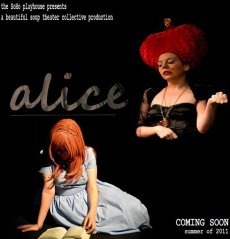
The Official Poster of Alice in Wonderland by the Beautiful Soup*

“Who would have known that meeting somebody at a low-budget theater would have lead to opportunities that made a huge difference in my career path? It’s been a great adventure so far, and Steven has really given me a lot of great opportunities that I wouldn’t have had anywhere else. I cannot thank him enough.”

Nora in A Doll’s Life: the Defining Role for a Character Actor and Classical Singer

Aside from working the business-end of the Beautiful Soup Theater Collective, Mallory’s opportunities ranged from playing Viola (Twelfth Night) to the Queen of Hearts (Alice in Wonderland). Her most recent role was Nora in A Doll’s Life.

A Doll’s Life is a musical with a book and lyrics written by Betty Comden and Adolph Green, with music by Larry Grossman. The musical is based on a play by Henrik Ibsen, A Doll’s House. It originally premiered in 1982 and it was a flop. In 1994, The York Theater re-premiered a slightly different version of the play. The Beautiful Soup Theater Collective is the third theater to have produced this play since its premier.

“For the Beautiful Soup’s production, Steven wanted to firstly create a version of the musical that only focused on Nora leaving her husband and finding herself. Secondly, he wanted to combine both ending scenes from the 1982 and 1994 productions.

“We made sure to get permission from the play’s composer, Larry Grossman and Adolph Green’s wife, Phyllis Newman to create this new ending.”

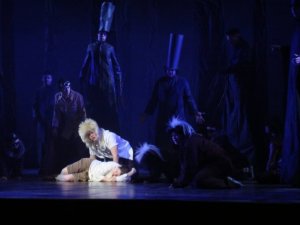
The Beautiful Soup's Production of A Doll's Life*

Since Steven decided to narrow the focus of A Doll’s Life strictly on Nora’s journey, Mallory adopted the same attitude as she prepared to act the part.

“When I researched Nora’s part, I was struck by the humanity in her character. She was raised her entire life to do what men asked of her, but has no knowledge of what she likes until she ventures into the world to find herself.

“Nora also wants to teach her children something genuine about life, and she does not want to return home until she feels she really knows what it is like to work, have power, start a business, and more.

“She makes several mistakes in her journey, and she learns from them. I really tried to live in the moment of that.”

I saw Mallory perform the role of Nora in A Doll’s Life back in February, and her performance was impeccable. She has found the perfect theatrical character that can facilitate all of her different talents. The character of the lead role is dramatic, and sings like a soprano. As a character, Nora is ambitious, subtly manipulative and innocently sexy for a woman who was once raised to live like a doll.

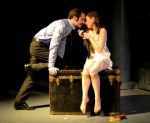
Mallory Berlin (Nora) and Alex Pagels (Eric) at The New Ohio Theater*

As I thought about more about Nora, I realized she is a timeless character. We have all experienced a time in our lives when we were programmed and taught to operate in a single structural manner, only to get out into the real world and see that in fact the only rules we need to follow are the ones we make ourselves.

In addition, some of the plays we consider timeless are performed by character actors and classical singers. Musicals with these actors and singers include My Fair Lady and A West Side Story. In addition, Mallory also taught me that what is popular isn’t always timeless.

What Musical Theater Experts Have to Say

“Although there is a large demand for singers who can belt out pop and rock vocal styles; many musical theater experts say that this style will be dated in 20 years, especially since musical theater changes through the generations.

“In the 1950’s, Rodgers and Hammerstein’s musicals were popular, and my voice is considered very appropriate for their work. During the years between the 1980’s and now, Andrew Lloyd Weber’s work became popular – and his works included that belting pop, rock voice that has since become the norm.

“I do know however, that the musical theater sound will change because if you look at audition tapes from the 80’s they are far different from those in the 90’s and even from those after the year 2000.”

Mallory’s Final Suggestion: Be Nice!

Several artists can attest that the popular demand for certain musical theater works, vocal styles and actors will change in later years. Although the industry will change, the landscape for all performers, actors and opera singers will still be competitive. Here is what Mallory suggests to all young actors:

“When you’re in school, you don’t have to be friends with everybody or like everyone, but you should be nice to them. And I can say this is relevant in the job world in so many ways.

“As the talent director for the Beautiful Soup Theater Collective, I do occasionally contact individuals I went to school with regarding auditions. If I remember things about a respective individual that I feel didn’t help them, for example, they didn’t treat me with respect, then I ask myself, what will make them treat me with respect now? Or what will make them treat the director with respect?

“When I do meet individuals who I went to school with that were nice to me, and I like their audition, I can put in a good word for them, and hopefully help them out in a small way, like recommend that they come in a second time.”

*All photos were published with permission*

The right place, the right time: Alyson Greenfield Talks about how Music is calling to her

A few hours prior to her music video debut of “Mama Said Knock You Out” at the Church for All Nations on the Upper West Side, Alyson Greenfield works with music engineers and her drummer, Van Alexander on a sound check. Afterward, Alyson, Van, her make-up artist Seevon Chau, hair-stylist Gloria Espinoza, and I travel downstairs below the church to an educational playroom. Here Seevon and Gloria help Alyson get ready while I interview her for my Music Historian blog, Hear; Don’t Listen. 

Surrounded by baby blue walls and preschool décor, Alyson multitasked on a few things like communicating with her industry representatives on her cell phone; cooperating with her stylists as they prepare her for the show; and answering my questions.

I personally know individuals who would get frustrated with this kind of hype, but not Alyson. During my interview, I learned that Alyson has years of experience working several jobs as an artist; and I initially assumed it was this experience that taught her to be comfortable in these situations. Slowly however, I realized that her kindness and flexibility might be the result of her personal development rather than professional.

“I NEVER said to myself “music is the only thing I want to do in my life.”

Alyson Greenfield is a woman of several talents and she happens to be a musician. For Alyson, music is not just a career. It is also plays a great part in her journey to discover her full potential as an individual artist and a member of a collective artistic community.

“I have never said to myself “this [music] is the only thing I want to do in my life.” Nor did I think “If I don’t do this, I’m going to crumble!” I just feel that right now, being a musician is calling to me,” explains Alyson.

“I moved to New York City three years ago to focus on music. In addition to composing and performing music, I started an organization called Tinderbox Arts, and my other jobs included being a teaching artist in drama and dance at different elementary schools. It wasn’t until May of last year that I realized I didn’t have the time or energy for several jobs, and that’s when I decided to only run Tinderbox Arts and perform music.”

Alyson proves that working in the music and performing arts industry can be trying. Working multiple jobs is an obstacle – one which can overwhelm even the most organized and talented worker. So how does Alyson keep going when the going got tough? She says:

“I ask myself questions like ‘do I still want to do this’; ‘do I have something to say’; ‘do I have something different to offer’; ‘do I have time for this’?

“At the moment, I am focusing on meditation and yoga to really help me find a sense of calm and peace within myself, and ultimately help transform whatever I am doing into something that will help me become a whole person.”

These words really struck a chord with me and raised these questions: what did Alyson mean by being a whole person, and how could music help? I found my answers as I listened to Alyson talk about her greatest musical influences and her attraction to electronic music.

“Their songs are about fear and seeing love from different angles…” 

“Tori Amos was the first person to really influence me. Her original compositions and her passion for music touched me. I also liked Radiohead, Bjork, Peter Gabriel and Kate Bush for their use of electronic sounds in their music, which I found really epic and moving.

“Their songs are also about fear and seeing love from different angles. Their songs deviate from the storybook love and heartbreaks. For example, in his song, “Digging in the Dirt,” Peter Gabriel reflects on the feelings he has about his past: he puts his feelings upfront and addresses them.”

Alyson continues, “In this instance, some of the emotions you bring out in music are not always going to be pretty, but expressing them is part of being human.”

One of her songs in which I can detect this openness and fearlessness is “Understand the Sky.” In this song, Alyson openly reveals her curiosities about the physical world. She sings, Get it into your head that I live in a bubble globe… Get it into your head that I am an adventurer… ‘Cause I think I touch you like the sky touches the ocean… but up close, I know I’d have to keep swimming to try and touch the sky. Alyson tells her story behind this song.

“While I was living in Alabama, I had discovered my Casio keyboard could make dreamy sounds. One day, I was in my studio in my apartment, and I just started playing a few chords. The melody simultaneously seemed to come right out of me.

“I wrote about the sky because one day, I was looking up at it and I realized there’s so much I don’t understand about the realm I live in, like where it beings and ends. I also thought the subject of the lyrics would fit very well with the chords I composed.”

“I think electronic instruments transcend time and space in a certain way.”

One can easily interpret “Understand the Sky” as an acceptance or an understanding of how we might never understand the mysteries of the space in which we exist. The electronic harmonies and her immaculate vocals help transform Alyson’s thoughts and words into complete songs.

“I think electronic instruments transcend time and space in a certain way. I also think they help me get over my fear of things I don’t understand, and just help me push forward and get into making music.

“As for singing, I don’t think I’ve ever lived a day without singing. I’ve been writing melodies since I was a kid, and I feel like I always have to write something.”

This inner need for singing enabled Alyson to create a cover of Coolio’s “Gangster’s Paradise.”

“I feel the covers kind of pick me. I just start singing these songs in my home and then sing them in my own way.

“I’ve always loved “Gangster’s Paradise,” and always found it very moving. When I sung it in my own head, I realized I wanted to turn it into a cover song. So, I tried several instruments for the cover like piano, the guitar, a few synths, and then, I found the glockenspiel, which seemed to be the best instrument.”

Anybody can listen to or watch the music video of “Gangster’s Paradise” on Alyson Greenfield’s website. What you will not find on her website are the songs she performed this past Saturday on the stage at The Church for All Nations.

“All the songs I am playing tonight are all new and they’re not recorded. So, that will be one of my projects. I am also releasing a single of a song I recorded at the Converse Studio in Brooklyn last spring, and I will start work on a music video for that single too. My overall goals are to record music and share it with people.”

“I look forward to sharing more spaces like this with people and other musicians.”

Aside from sharing her music with her listeners, Alyson also looks forward to sharing her performance space with musicians, as well as work with other artists.

“One of my favorite parts of being a musician is interacting and collaborating with other musicians. I have collaborated with people on music videos as well as artists in other realms. I enjoy this work because I learn a lot and I feel like I am part of a community.”

While Alyson will still write songs and perform them by herself, she is more excited about the communal experiences that arise with being a musician; like performing with musicians in a space like The Church for All Nations.

“It’s important for me to perform in a space like this, and I am looking forward to sharing more spaces like this with people and other musicians.”

The right place, the right time

 Leaving the Church of All Nations that night, I reflected on my interview with Alyson and realized the following: We all too often hear that a composer’s or musician’s success is based on being in the right place at the right time within the industry. Yet, several musicians rarely think about whether music is calling to them at the right time and place in their lives. Alyson is one musician that carefully examined her circumstances, and listened to her reasoning and her inner voice before fully-pursuing a career in both music and the performing arts.

Alyson is definitely not a musician that acts without thinking or out of pure impulse. Making music is perhaps the only instance where she surrenders her mental toughness, logic and control. The end result includes intriguing instrumentation and harmonies; whimsical and sometimes existential messages; and a voice that anchors all these elements down into one song.

Avi Wisnia: Open, Unreserved and New

 While every artist today enters the music industry ready to pave their own way through this unpredictable and sometimes threatening landscape, they all promote their EPs and records through the same tactic: live performance. This part of being a full-time musician excites Avi Wisnia.

“My schedule is kind of crazy,” he states, “but I love the challenges that come with it; I always play for a new audience. Playing one of my songs live is always a new experience, and I love the spontaneity and openness that comes with doing so.”

Roger Greenawalt on ukulele and band

After reviewing Avi Wisnia’s performance at CMJ 2011 right here on Music Historian’s Hear; Don’t Listen, I was set on interviewing him for a feature article. This past Saturday, I arranged a meeting with Avi backstage at the Brooklyn Bowl following his performance in the Beatles Complete Compilation with the Ukulele band.

During our conversation in the poorly insulated loft right above the Brooklyn Bowl stage, Avi talked about the obstacles he had to overcome before entering a studio. These challenges followed his from his pre-college years all the way to recording his first full-length album, Something New. Today Avi leaps over hurdles in order to do what he loves most: getting others excited about music.

“I want people to feel like they’re taking away something they haven’t heard before”

“I feel music is all about expressing yourself in the moment and creating that communal experience with the audience.

“Whenever people listen to me perform or sing on a record, I want them to feel like they’re taking away something they haven’t heard before – a mixing of different styles – something new.”

Avi Wisnia at the Brooklyn Bowl, January 14th.

Something New is also the title of his first full-length recorded album, one that evolved from his 2007 EP, Avi Wisnia Presents. As I researched Avi’s background online, I noticed he rerecorded many of his songs from his first album for his latest one. Further into our conversation, I discovered that rerecording these songs was essential to Avi. He wanted to present himself as the same musician from his EP on his full-length feature.

“I started performing my own music for people while I was in college, just to see their reaction. They would come up to me and ask for copies of my music to take home with them. This led me to recording an album.

“I brought my band from New York City to New Jersey to make this record in the a Synagogue where my father was a rabbi. My uncle, who was a cantor in that same temple, engineered our recordings.

“Working on this album was a real grassroots effort: I felt like were recording the songs just as they were in that moment. Everything we recorded for Avi Wisnia Presents was only a first or second take.

“Creating Something New gave me the opportunity to rerecord these songs exactly the way I always heard them in my mind. Although I felt more pressured to realize my own songs, we really made the most of the recording space – incorporating different sounds to bring the most out of the songs.”

  The ability to hear a brand new song before writing it to paper is nothing short of amazing and sought-after in the music industry. However, it would be years before Avi learned to trust his own ability.

“I didn’t accept the idea of projecting my influences through my own music, but then I embraced it”

“It took me a surprisingly long time to put songs onto paper. I thought if the song wasn’t going to be a masterpiece, then I didn’t want to write it down. I didn’t get over this until college, and before that; I never really allowed myself to finish songs. I eventually realized that every song I composed wasn’t going to be complete or perfect.

“For a long time, I also didn’t accept the idea of projecting my musical influences through my music. At first, I didn’t want to sound like someone else. Later, I embraced the fact that I couldn’t escape my influences. Now, I channel all the songs I grew up listening to through my voice and live performance.”

Avi proves to me that a musician can’t escape his or her greatest musical influences. These help shape an artist’s proclivity for a specific style. For instance, some tracks featured on Something New include musical elements popularly used in 20th century music, like ‘song quoting,’ which is present in the title track, “Something New,” and the 12-bar blues form in “Rabbit Hole.”

I then ask myself, why call a record from today, which pays so much homage to the styles that were new before our time, “Something New?”

The intimate mix of Bossa Nova, west coast jazz, acoustic folk, and blues 

“This was my first full-length album, and it was an introduction to me as full-time recording artist. It displayed my flexibility and diversity as a musician.

“Also, I want people to hear a new mix of different musical styles,” some of which include acoustic folk, west coast jazz, blues, and Bossa Nova.

I then asked Avi what he liked about these genres, and he responded:

“Looking back to all the records I listened to growing up, my favorite track on every album was the last, the really quiet and intimate one. You find that same intimacy and mellowness in folk, west coast jazz and Bossa Nova. Although they are different styles, they channel that same idea of mellowness and intimacy.”

Songs like “Rabbit Hole” and “Sink” focus lyrically on intimate issues like foolish young love and hitting rock-bottom. Musically, the slow tempo and improvisational style in “Rabbit Hole” helps both the attentive and recreational listener transcend to a silent space, closed off from the busy world. I asked Avi to talk about “Rabbit Hole” and I was surprised by his motivation behind this track. It was not what I initially assumed.

“One night, while I was half-asleep in my college dorm room, I wrote down a line that stuck in my head. I then spent the next 5 hours into the morning hours trying to develop it, and soon, it turned into a song. While it made sense to me as I wrote it, I still had to be sure it made sense in the morning.

“When you experience a moment like this, when an idea for a song just comes to your mind, you have to let it take you places. Just go with it.”

Avi then also explained that not all songs come to him as naturally. The story behind “Sink” is dramatically different.

“Sometimes, you have to put work into a song. Then the inspiration comes later”

“For “Sink” the idea of melody and rhythm were there, but I had trouble with both the lyrics and tying together different segments of the song. 

“When I took the song to the studio, I wasn’t sure how to communicate the track to either the musicians or the producers. Something was missing, and the song wasn’t translating. I also struggled with this song when I performed it for others.

“Sink” was the last song on the album to get attention, and I, along with my musicians and producers, felt it was holding the rest of the album back. I was pretty sure I would throw “Sink” into the trash.

“Then one day, when I was visiting my childhood home in northern Philadelphia, I went down to the basement and found a Fisher Price Xylophone. I started playing and found that the range of sound on this toy-xylophone fit the octave within “Sink.” So I brought to the studio, put a microphone to it, and started playing. Afterward, we invited some friends to sing a simple back-up chorus, and eventually, all these elements happened to sync everything.

“Sometimes, you have to put work into a song. Then the inspiration for the song comes later.”

The uncertainty of the next hit song, masterpiece, or duration of the next full-length recorded album may frighten some, but not Avi.

“The constant change allows me to express myself in different ways”

 “As I got more into the business, I had to remind myself that in the end, it is all about being excited by music.

“Before I became an artist, I was a music teacher for pre-school aged children. When I gave them a music lesson or handed them an instrument, they were always excited to play music. Even if their playing did not sound like a song, they were happy to express themselves.” This gratifying experience encouraged Avi to adopt a more positive attitude towards in his own life as a musician.

“Every time I go on stage, I remind myself to be open and unreserved when performing. I shouldn’t worry about being “good enough.” Music in this way can be very forgiving; and it’s a great way to get rid of the hang-ups in life and enjoy the moment.” And he wants to continue doing this even as a full-time recording artist.

“I love going on the road and meeting new people and also feeling the vibes of different cities. The constant changes in location challenge me to express myself in different ways, and I never want that to stop. I always run in to something new.”

A Conversation with Radiation City’s Randy Bemrose: The Process of Creating and Releasing “The Hands That Take You”

On December 3rd, I interviewed Randy Bemrose, the drummer from independent, Portland-based group, Radiation City.

Randy Bemrose

I originally learned about the band from a showcase at the Brooklyn pub, Spike Hill back in October. I had briefly talked with front man, Cameron Spies and keyboardist, Patti King, right before they took the stage. Naturally, I wanted to continue my conversation with Radiation City, so I invited them to be an interview feature for the month of December right here on Music Historian’s Hear; Don’t Listen.

In my conversation with Randy, I learned about Radiation City’s song writing process and their experience releasing the album, The Hands That Take You.

“What you hear on the record is often a first or second take”

“I would say the making The Hands that Take You was fast and loose,” explains Randy. “The sound was literally the result of emotional release.”

“Park,” a song off their debut album, is what Randy describes “a cathartic song about the budding relationship between Cameron and Lizzy (one of the keyboardists and singers). There’s this palpable excitement, a great deal of doubt and about a thousand miles between the two of them.

“I think we all appreciate the catharsis while being careful to not wear our hearts on our sleeves.”

As the conversation continued, I also learned about how Randy’s musicianship and skills are always tested during recording sessions. He explains:

 “We don’t take too much time to over think our music; our last album was truly a collaborative effort. On a number of the songs from this album where I played the drums, I had never heard the tunes before we started tracking. So what you hear on the record is often a first or second take. It was certainly a learning experience for me.”

Further in the interview, I became curious about the typical composition process behind every Radiation City song.

“We start with what we call the Nut – the basic idea for the song where one of us, or sometimes, Cameron and Lizzy collaboratively create. We then cut some sort of demo and play it as a group and start wood-shedding from there.

“Sometimes that demo will become the foundation for the framework of a song, or sometimes we’ll have a particular sound quality that requires starting over from scratch.

“From here, the recording and writing processes intertwine, and we basically flesh it out as we go. This is when the part of “fast and loose” come in” – the time of emotional release.”

As Radiation City worked to release The Hands that Take You, Randy claims time was the greatest obstacle.

“It didn’t leave us time to half-step or second guess”

“We had the release show booked before we had even started recording the second half. In hindsight, this was a blessing and a curse.

“On one hand, it forced us to keep our noses at the grindstone and didn’t allow us the time to half step or second guess. On the other hand, we were incredibly stressed out about it – we were cutting things way too close for comfort, not to mention prudence in some respects. Creatively, we were pretty confident about it, but a lot of the business involved with releasing the album was truncated.”

The expedited effort was definitely worthwhile. The Hands That Take You was released on a national-level with the help of the record label, Tender Loving Empire.

“It was great, having their assistance in getting the record out there as opposed to pushing it ourselves and waiting to shop for the next label,” stated Randy. “They are hard workers and salt-of-the-earth kind of people – sweet as peach pie.”

This accomplishment might have helped Randy decide that he had found the right group – the one he hopes to stay with “forever.”

Coming together from different backgrounds

Before Radiation City, Randy spent 10 years being part of at least a dozen bands. He also lived in New Orleans for some time, drumming in NOLA groups Jean-Eric and The Bellys.

Radiation City at Spike Hill in Brooklyn. (Left to Right) Matt, Randy and Cameron

At the time Randy was living in New Orleans; Cameron was in San Francisco, playing in a group called Raised by Robots, as well as another group, Spesus Christ. It was here Cameron met Lizzie; and the two started collaborating shortly afterward.

Meanwhile, the bass player, Matt, was playing in The Shotgun, The Intelligence, and a few other groups from the Northwest; and Patti was completing her performance studies at Truman State College in Missouri.

While they all come from different performance backgrounds, Randy, Cameron, Lizzie, Matt and Patti are all true musicians that have a natural ability to collaborate and create some of today’s most notable progressive rock music.

“We take our art seriously. I wouldn’t have it any other way.”

(Left to Right) Lizzy, Matt, Randy, Cameron and Patti

In addition to finishing their latest west coast tour, Radiation City just released a remix by PoPoPePe of their third single off The Hands That Take You, “Babies.” They are also scheduled to play a New Years Eve Show in Portland with Nurses, Wild Ones and DJ Beyonda.

Randy also talked about Radiation City’s riveting plans for 2012. They include:

“A video for “The Color of Industry”; a spring single release for South by South West; a summer album, and a ton of touring.”

At the end of our conversation, I thanked Randy for his time and expressed how I appreciate when musicians are honest about their work. He replied, “Of course. Interviews where people are just whistling Dixie don’t thrill me much…unless it’s the classical quick wit of John Lennon, or something.

“Anyways, we’re not super serious people, but we do take our art seriously. I wouldn’t have it any other way.”