The life lessons behind cross-dressing: a Review of Yentl Today

This Fall, the New York City-based troupe, The Beautiful Soup Theater Collective is reproducing the play by Leah Napolin and Isaac Bashevis Singer, Yentl.

In the story written by Singer, Yentl the Yeshiva Boy, a young Jewish woman living in Poland at the end of the 19th century, desires nothing more than to study from the sacred text, the Talmud. This means defying the rule that women are prohibited from reading scripture; and the only way she can pursue her dreams is by impersonating a man. Playwright Leah Napolin would later adapt this story into a play, which would then be adapted into a film in 1983, starring the actress that immortalized the character of Yentl, Barbara Streisand.

The BSTC production of the play under the direction of playwright, Steven Carl McCasland, doesn’t have the same pizzazz as the Streisand film, with the various musical numbers sung by the main character. Instead, the music in this 2012 remake is pushed in the background to conveying a restricting, uniform and orthodox atmosphere of a Polish town at the turn-of-the-century. Men and women sing songs in four-part harmonies that sound liturgical. All songs are composed in minor keys; with maybe just a few staccato rhythms that would make only the most attentive listeners do a double take but nothing more.

So if the music doesn’t do it, what makes this production of Yentl so desirable? Simply put the themes of cross-dressing and bi-sexual tendencies that are still a taboo in our society today, and most importantly, the lessons we learn from watching the main character explore these taboos.

Today, so many young people like Yentl are on a search for their own identity and eager to reach their desired destiny. Sometimes that requires temporarily stepping away from a life they know or are expected to live and understanding the realities of the life they want.

“God, what did you bear women for?”   Yentl (Mallory Berlin)
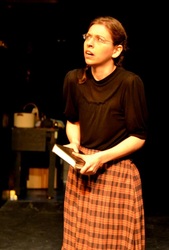
Yentl grew up as the only girl in her village whose father taught her the Talmud. During this time, a woman was prohibited from reading scripture. As Yentl matures, her parents realize she is not ready to be a wife. Further, Yentl has already set her sights for her own future on continuing her studies. Yentl’s wishes put her at a constant disagreement with her parents, even her father.

In the play’s opening scene, Yentl, played by Mallory Berlin, is quarreling with her father, played by Orlando Iriarte. Mallory successfully displays Yentl’s desires by bluntly dismissing the idea of living as a housewife. Meanwhile, Orlando exhibits a blatant impatience as a father that tries to deal with his stubborn daughter.

Strangely though, there is a compassion and bond between father and daughter that audiences will immediately feel. Although Orlando’s character recognizes that though he is slightly responsible for Yentl’s negative attitudes towards marriage and the feminine way of life; he also treasures the relationship he has with his daughter, which might have been facilitated by Yentl’s interest in the Talmud.
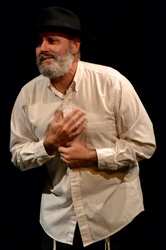
 When Yentl loses her father in the second scene of the first act, audience members can further understand why she is more adamant and more anxious to live a different way of life. In this moment of the play, Yentl is mourning her father’s death with his colleagues at a synagogue, and she joins the men in saying Kaddish, a prayer. However; they do not welcome her because women are forbidden from reciting this prayer and thus, leave her to herself. Then Mallory helps unleash Yentl’s voice in a time of confusion and sorrow. She says at the top of her lungs:

“God, what did you bear women for? To have children, to light candles? Then why give them souls?”

Our protagonist’s father, the only man that ever accepted Yentl for who she really was has passed; and now she worries that her only means for survival is to marry and abandon her dreams. It’s clear to her that In order to continue on to a life of study, she must travel into another town, change her identity and attend the Yeshiva, a Jewish school. So, she disguises herself as a man by the name of Anshel.


As a man, Yentl enjoys the freedom to study

In the second scene of the second act, Anshel comes off as a shy, stubborn and defensive young man. Yentl makes sure that Anshel keeps his head down in the Talmud in the company of male classmates, insisting he needs to study though he is ahead of all the students. Yentl does not want anybody to wonder why Anshel refuses to undress in front of other men; why he cannot grow a full beard; or why he covets at the naked body his 24-year-old classmate, Avidgor who is played by Peter Oliver.

Viewers watch as Yentl learns to behave like a man. Throughout the play, Yentl becomes close with Avigdor as a study partner and a friend under the disguise of Anshel. Avigdor reveals personal information to Anshel, including that he is already divorced and still in love with his ex-wife, Hadass, who is played by Kim Sweet. Avigdor even asks Anshel to talk with Hadass. Avigdor trusts that Anshel will find out whether Hadass still has any feelings left for Avigdor. Middle: Anshel, Yentl's diguise (Mallory Berlin)

For the first time in her life, Yentl feels like an intellectual equal among men that are not her father. As Anshel, she enjoys the freedom she so desired; but little does she know that even men in these Jewish towns are expected to fulfill specific roles as well. Our cross-dressing heroine slowly discovers this as she becomes better acquainted with Hadass in order to learn how she feels about Avigdor.

While Yentl plays the information medium, Avigdor develops an uncanny attraction for Anshel, who as far as he’s concerned is just another Yeshiva boy. This is evident when Avigdor expresses to Anshel, “Why can’t women be more like you?”

One might see Oliver’s character, as what we would call today, bi-curious. However, Avigdor is not one to consider a romance with another man. Avigdor admits to Anshel that he still needs a woman in his life, and announces that he is ready to marry another woman in town, Pesha.

The bi-curious and the heartbroken: Yentl lies with a woman

Like a good friend, Avigdor suggests that Anshel marry Hadass, but little does Avigdor realize that inside Anshel there is a woman slowly falling in love with him.
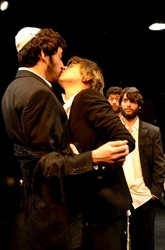
Left to right: Avigdor (Peter Oliver), Anshel (Mallory Berlin) At Avigdor’s engagement party, Anshel gets drunk, flirts and kisses the groom, falls on the floor and almost blurts out Yentl’s true identity. As a result, Avigdor leaves the Yeshiva. Yentl who feels disappointed and betrayed, asks for Hadass’ hand in marriage in order to get Avigdor’s attention, and eventually, it works.

By the middle of the play, viewers have so far believed that the gender-bending and bi-sexual themes within this play have been innocent. The second half however shows the dangers that our heroine faces in carrying the disguise of Anshel. Not only does she risk revealing her true identity; but the further Yentl is dragged into this love triangle, the easier it will be for her to commit one of the ultimate sins – “laying with one and wishing for another.”

In the scene that follows, Hadass and Anshel sit across from one another talking about the engagement, the hero turns to the audience, in a narrative, comments to the audience on how great it feels to have the freedom and power of a man.

Audiences now see a vengeful and selfish side of Anshel. Berlin successfully exhibits Yentl’s full transformation into her male disguise as she shamelessly exercises knowledge and power over a previously heart-broken woman who believes she is receiving a second chance in marriage. Anshel and Hadass lie in their wedding bed, and Hadass has no clue that it is Yentl’s fingers penetrating her; she believes she is making love to a man. Further she expresses her true emotions to Anshel when she says, “I feel like we are two bodies with one soul.” Then Anshel reveals that he feels the same way…about Avigdor.

The realities of living like a man Left to Right: Anshel (Berlin), Hadass (Kim Sweet)
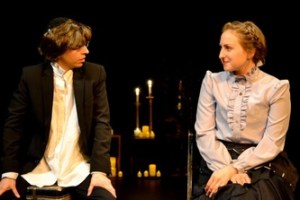
As the marriage between these two develops, Hadass slowly becomes unhappy while Yentl grows tired of constantly upholding her disguise. Playing the role of the male did have its perks, like freedom to study scripture and choose any spouse. However, Yentl discovers that the pressures of being a proper spouse and having children can be just as taxing for a man, as it is for a woman.

Viewers now watch Yentl come to the end of her days as Anshel in a scene where Berlin’s and Sweet’s characters are trying to communicate their feelings to one another. Here, Yentl insists that Hadass can learn the Talmud like any man and find personal happiness in this. As Anshel opens the book and starts reciting the first lesson to Hadass, she directly expresses a lack of interest.

Yentl fulfilled her dreams of studying the Talmud among men as an equal, and now she learns that not all women have the same desire. Some, like Hadass prefer to live the life that is expected of them and find contentment in tradition. Afterwards, Yentl leaves Hadass, and makes arrangements to meet with Avigdor so she can reveal to him her true identity.

While Avigdor is upset to learn that his best friend from the Yeshiva is in fact no man at all, his emotional attachment to Anshel has not disappeared. Avigdor even proposes the idea of marriage to Yentl in hopes that she will accept. After all, Avigdor needs a woman. Yentl however refuses.

Our protagonist recognizes the bond she had with Avigdor once was false. Avigdor is really in love with Anshel, but Yentl has finally become tired of playing the man in order to feel accepted and appreciated for her intellect. She wants to be herself again.

Identifying with Yentl: Neither a Blessing nor a Curse

At the end of the play, Yentl has completed a full circle and has come back transformed. She traded back her pants for her skirt. The only thing she has not given back is her love for the Talmud.

One can say that through her gender-bending journey, Yentl learned more personal lessons than any man at the Yeshiva. She committed the ultimate sin; partook in taboos; and came out transformed. Yentl realizes that being a woman is not a curse and being a man is not a blessing, and living one life is not necessarily better than living another.

Yentl’s lessons might resonate with individuals in today’s society that might believe people belonging to a specific gender, race, ethnicity, sexual orientation or religion have an easier time achieving certain goals and living a fulfilling life. The Beautiful Soup Theater Collective’s production of Yentl proves to us that such thoughts are based more on beliefs than actual facts.

Yentl became a man and entered a Yeshiva based on the belief that she would have complete power and freedom over her destiny. Once she experienced the life of a Jewish man, our heroine realized that Anshel would experience just as many restrictions as a woman. The takeaway from Yentl’s experience is learning the sacred text and reciting from it freely and having a male counterpart, like Avigdor accept her as an equal.

The BSTC is currently showing Yentl at the Gene Frankel Theater from now until October 21st. Visit the official Yentl Facebook Page for this show to learn more.

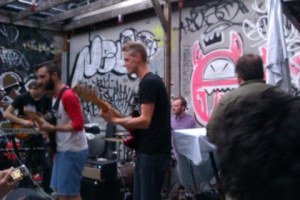
3dCosby’s Daniel Harris Talks about Band’s Latest Album, Satan’s Secret and “Doing Family”

 On the hot and muggy Thursday, June 21st, I traveled to Williamsburg to visit the Cyn Lounge. Here, Avi Wisnia was hosting his annual BBQ Block Party. Although the heat persisted as 8:00pm rolled around and I was sweating through my work clothes, I was happy catch up with Avi to hear some of the bands in his line-up. One band I particularly enjoyed was 3dCosby.

The songs by this band that caught my attention included “Paint by Numbers” and the humorously-titled track, “Star F*cker.” Both songs are featured on their latest record, Satan’s Secret. All of 3dCosby’s tracks combine funk and jazz. Occasionally, they will add a special musical technique called polyphony – the playing of four different voices or melodies produced by the guitar, keyboard and bass all at the same moment.

During their performance, the front man of 3dCosby, Daniel Harris, invited audience members to dance to some of the instrumental pieces. The audience, me included, responded positively, and moved to the rhythms of their songs inside the small cemented outdoor space of the Cyn Lounge.

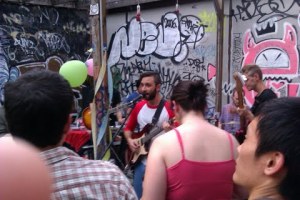
Daniel Harris on guitar and mic at the Cyn Lounge, June 21, 2012

Daniel admits that “it’s great to see people respond to it [our music].” However; Daniel and the member of 3dCosby who is perhaps closest to him, Matt Ross, see music making as more than just a means for having fun; it is how they “do family.” Over a telephone conversation, Daniel talked to Music Historian about the history of 3dCosby, the album, Satan’s Secret, and most importantly, the development of their style. I am happy to introduce 3dCosby as the full-length interview feature on Hear; Don’t Listen for the month of July.

Pre-beginnings of 3dCosby: Hillel

Anybody who listens to Daniel talk about 3dCosby can believe that this band is a family.

Daniel says, “Matt and I initially met when we both moved to Monroe, New York. Our Moms introduced us, and we were pretty much attached at the hip. We went to the same camp; we were in the same Jewish youth group” and they made music together from an early age. Daniel continues:

“We both grew up around music. Matt’s Dad was a professional musician who practiced saxophone and flute. My Dad taught me to use the turntable when I was 3 years old; and in the 4th grade, I started playing cello and Matt picked up trumpet. In the 5thgrade, I picked up guitar, and at that time, Matt and I would listen to songs on the radio and write our own lyrics.”

Daniel Harris and Matt Ross, courtesy of 3dCosby’s site on bandcamp.com

Daniel and Matt initially dabbled in the idea of forming a band. Then, once the two hit high school, the idea slowly turned into a reality.

“Matt and I wrote our first song at 14 years old called “Never End” inspired by the author, Michael Ende who wrote The Never Ending Story. We also started playing in bars, coffee houses and in people’s backyards at that age too.

“Our band was first called Hillel (named after Hillel Slovak of the Red Hot Chili Peppers), though we eventually changed the name to Ethan’s House of Pancakes. At the end of high school, I got a call from our friend Alan asking if I wanted to start a new band with him. “Can Matt be in the band?” I asked. Alan said “Totally,” then added, “We have a gig in two weeks at the House of Blues in Boston.”

Daniel admitted that playing the House of Blues was an epic opportunity for him and Family Junction at the time. The band stayed together for about 7 years. While they were in the process of recording a series of 5 EPs, Hillel separated. Daniel describes the break-up:

“We [all the band members] started taking on extra projects. Matt was working with other bands and I was working on solo stuff. We made the collective decision not to play anymore shows until the EPs were completed, which ostensibly was a diplomatic way for us to sadly agree that things had come to an end. In the Fall of 2008, I put out my first solo album, “Thirty-two bit isn’t really eight bits better” which you can check out on http://www.iamdanielharris.com.”

Luckily, the break-up of Hillel was not the end of the friendship between Daniel and Matt. These two would continue to make music together.

“This is just what we do – we’re brothers, and at the foundation of our relationship is music. It [music] keeps us together and it keeps us sane.”

“It All Made Sense”: A few jam sessions and songs later, a new group and record forms

Although Family Junction was over, Daniel and Matt decided to come together for a jam session in 2008. Daniel enumerates:

“After the band was already broken up, I drove to Matt’s house in New Paltz and decided to just jam. We soon started writing songs in his living room.

“We just wanted to see what would happen, and as we continued writing together, we soon had enough songs to make album. Just last winter, we decided to make a record which transformed into 3dCosby’s first album.”

3dCosby still remains just Daniel and Matt, and their friends that are invited to play during live performances. So far, the band gained tremendous recognition for their album, Satan’s Secret. The track “Paint by Numbers” became the band’s hit.

3dCosby’s album cover for “Satan’s Secret”

“This [“Paint by Numbers”] is a funny track. My younger brother wrote the lyrics, and it is about a guy named Colors, who only saw in numbers, and a girl named Numbers, who only saw in colors. It was originally an instrumental piece, but someone demanded we add lyrics. So, we gave Jesse, our bass player, my brother’s story, and asked him to write the lyrics.

“This song also makes fun a band we played with a few times. We still love them, and so we decided to tease them in “Paint by Numbers” because we feel one of the ways you show someone you love them is by teasing them.”

After the album was completed, Luke Sullivan, the musician who mastered Satan’s Secret suggested that 3dCosby send “Paint by Numbers” to Michael Marotta, a disc jockey who played songs by local artists in the Boston area on WFNX.

“Luke suggested we send the single to Michael. So we did, and he wrote back to us within 3 to 4 hours and agreed to spin it on the air. He also asked us to follow-up with him once the release date for the album came closer. Then, we were played on 4 to 5 difference station, and we made it to the top ranks on a few music charts like “The Deli New England.”

“The attention from the press was just flowing very naturally and it all made a lot of sense.”

3dCosby was “Satan’s Secret”

Daniel and Matt have constructed their own world of excitement by incorporating their own jokes into their songs. In addition, the dance beats and funky rhythms and dissonances that accompany the lyrics in 3dCosby’s songs invade the minds of attentive listeners and music lovers without creating any discomfort or pain. Daniel validates my thoughts as he explains the meaning behind the album title.

“When we were naming the album last year, this joke happened to come into our minds; then it became that 3dCosby was “Satan’s Secret.” We want to destroy you,” joked Daniel as he continued to make a reference to the Satan character in the 1999 South Park movie.

As Daniel and I continued to talk, I soon realized that we were starting to joke between ourselves. I reiterated back to Daniel my understanding of why 3dCosby thought that “Satan’s Secret” was a great name for their record. I said to him:

“Satan’s Secret is 3dCosby. They want to destroy you, and so do you. They will annihilate you in the best ways possible, and it will seem like you’re not being destroyed at all.”

Daniel responded, “That’s great, write that down.”

As our conversation continued, I saw the progress between the beginnings of 3dCosby to the band’s full-length, Satan’s Secret, which was released in February of this year,as the result of Daniel and Matt’s musical development, their friendship and the appreciation of different musical styles. One individual that Daniel credits for fostering his and Matt’s appreciation for music is their history teacher from junior and senior year of high school, Mr. Lee.

“He showed us a different dimension and put us on a specific path”

“When we graduated,” explains Daniel, “he gave me a copy of the book On the Road and two Frank Zappa albums. I didn’t listen to them until the year 2003. I was going to attend a protest in NYC against the war in Iraq, but ended up spending the weekend in Monroe, New York at Matt’s house.

“When we were there, we really wanted to listen to something we had never heard before, so I found one of the Frank Zappa albums Mr. Lee had given me and I remember listening to the first track titled “Inca Roads” off the album, One Size Fits All.We loved this track; we literally took it with us in the car and drove around Monroe for one hour listening to this song.

“This marked an important musical change in my life. This motivated me to get Frank Zappa’s albums, and through listening to them I was inspired me to revisit an album I already possessed by John Coltrane. Afterwards, I eventually fully understood jazz.

“So, if it wasn’t for Mr. Lee, we wouldn’t have learned to develop an understanding of jazz. He showed us a different dimension and put us on a specific path. That’s why, when we released Satan’s Secret, the initial idea was to make 3 copies of this CD: One for me; one for Matt; and one for Mr. Lee.”

“People…whether they’re musicians or not, they connect with the music” 

Although Daniel and Matt graduated high school over 10 years ago; have experimented with several different musical groups; and have each jumped from job-to-job in order to support themselves; the members of 3dCosby always remember the friends that have helped them and the communities that facilitated their growth and love for performing.

“This is what we want to be doing and we’re doing it our way,” says Daniel. “We’re gregarious; we have a strong sense of community and we love meeting new people. We also stay in touch with our friends from home. Matt still keeps in touch with the friends he’s known since he was a child.

“Through this album, and through music, is how we do family. When people see 3dCosby, and listen to the record, they get to know who we really are and they also see our profound dedication to music, as well as our humor and what music does for us as individuals. People get it. Whether they’re musicians or not, they connect with the music.”

3dCosby is currently working with a third party on a Fall tour for this year. They are booked to perform at Lit in New York City on September 22nd. In the meantime, the duo will continue to make music and perform for audiences everywhere they travel. For Daniel, playing music and doing music with Matt “means more than what any words can appropriately describe” – playing together is “a saving grace.”

Kamara Thomas and The Ghost Gamblers: Where Country Music and the Cosmos Meet

[left to right] Kamara, Amal Bouhabib, Jeff Malinowski

 When I first watched Kamara Thomas perform with The Ghost Gamblers on May 2nd at The Living Room in the Lower East Side, I was drawn by her style. She sported a cotton poncho top that was a combo of both a solid color and floral print fabric and a pair of pants with various religious symbols. Then there is her music, with song titles like “Stranded in San Antone” that include these lyrics:

You promised me the rivers of Damascus/ And your love was all that I was askin’ for/ instead you left me Stranded in San Antone…

As I researched the band, I learned they describe their music as cosmic country. The name of this genre and the catchiness of this acoustic folk and rock ‘n’ roll sound, intrigued me so much, I knew I had to invite Kamara to be the full-length music feature for May right here on Music Historian’s Hear; Don’t Listen.

A New Genre: Cosmic Country 

Aside from any country I hear on the radio, The Ghost Gamblers is the first band I heard of that plays cosmic country. Inside The Living Room, where shadows and flickering votive candles set a meditative atmosphere, Kamara explains the genre as she shares her personal history with music.

“In general, I think of myself as a priestess of country music. I was raised with country and classical music at a very early age.

“Before I was 7 years old, my mom was a big hippie and I had always listened to rock ‘n’ roll in my house. Then, when my mom “got God,” as they call it, she became a Seventh-Day Adventist – a religion that is on the side of fundamentalist Christianity. Afterward, I was cut off from rock ‘n’ roll, and also, as far as I could tell, fun. The only music my mother would let us listen to was country and classical.

“But I often wondered why country got to stay and why rock ‘n’ roll had to leave. Country talks about crazy stuff going on in the world just as much as rock ‘n’ roll. My mom just always told me, “Country was about life,” so it was okay.

“As I continued to live in this fundamentalist atmosphere, I adopted a philosophical point of view. I was always thinking about God and tried to integrate everything I was learning with my callings as an artist and singer. I also tried to integrate what I was learning with my own internal disagreements about the fundamentalist point of view. So naturally, my stuff is of a very spiritual nature and I always ask myself spiritual questions.”

Kamara and Jeff

Further in my conversation with Kamara, I learned her spiritual ponderings eventually transformed into journeys, which she shares through music. She says, “As my journey unfolds, the lessons I learn in my life end up becoming songs. One of the songs, “My Pretty Angel” is probably the most spiritual song you’ll hear.

“This song took my three years to write, because it accompanied me on my spiritual journey. When I get the inkling of a spiritual lesson I’m learning, I will write a song, but won’t finish it until the lesson has been fully learned or realized.”

I then wondered whether Kamara applied this process to all of her songs. She then explained to me how her creative cycles differ for each of her songs, and how they correspond with her spiritual journey.

“I write songs in cycles. Some are tiny ones, others are large. Some songs will take me an hour to write, and some will take me seven years. My spiritual lessons are cycles, and they are built into my song writing process. I found, the more I dealt with my spirituality, the more cosmic it became. So, that’s why it’s [my music] is cosmic country.”

Although I found my answer to “what is cosmic country,” I felt I was only seeing the tip of the iceberg on Kamara’s adventure with music. Then, she shared with me another important life lesson – accepting the path of music.

The Need for Solitude: Listening to the Still, Small Voice

She says, “There was a moment in my life I realized I was a musician, and it was weird because all my life, I was involved with music but had no idea I was being called to be a songwriter or a singer.

“As a child, I was heavily involved with church and I was a part of everything that had to do with music. I learned to play drums in the concert band, and I gained all of my singing experience from being in the choir, but I took it for granted. I didn’t realize I was actually a musician.”

When it came time for Kamara to go to college, she knew she wanted to perform, so she decided to pursue acting. However, she couldn’t put music aside. She explains:

“In my freshman year of college, I almost flunked out because I was involved in all these musical ensembles that would start as soon as classes ended, and continued until 11 at night, so I never studied for classes. I was also too involved in communities to listen to or even hear my still, small voice – one that wanted to say “Oh, I’ve been making music all my life” or “Oh, I’ve been a musician this whole time.” I didn’t hear it until I was alone long enough that it finally hit me.”

Kamara claims that solitude helped her discover her need to start songwriting. She found this solitude when she moved to Los Angeles after college to become an actress.

“I moved to L.A. to be an actress, and I didn’t act at all. I happened to stay in a part of the city that had everything I needed to do within a one-mile radius, so I walked everywhere, and fell into the solitude I needed to start writing songs. During this time I started to hear my still, small voice. Then it occurred to me I wanted to be a musician.

“That’s when I decided to move to New York, because I would never be able to cut my teeth into L.A. without a car. And, I could build experience in songwriting and performing.”

 For Kamara, this decision marked the end of one life chapter and the start of another – her life as a musician. Like the cycles of all things that exist in nature and in life, nothing is ever wasted, and that is what I learned from Kamara. She translates some of elements of her past experiences and spiritual lessons into songs. For example, Kamara’s experience with the west, inspired The Ghost Gambler’s hit, “Stranded in San Antone.”

A Place of Spirit that Inspired a Song

“This song is part of a larger story cycle called Tularosa, explains Kamara. “Tularosa is an area in New Mexico, a place that really caught my attention. I first learned about it when I studied theater in college, and I started to see this place as a focal point for several American dreams. 

“When I traveled to the west, I felt a lot of spirit in that land. If you become still enough, you can almost listen to it. Learning about all that happened in Tularosa lead me to write several songs about this place. “Stranded in San Antone” is one of them.

“So, I was writing this song, but I soon found myself stuck. I had a block, and decided to do a spiritual exercise to find the focus of this song. I took out some tarot cards and did a reading. This helped me find the focus of the story I would tell in this song – one of a woman who did whatever she could to make something of her life and then paid the price of her decisions in order to battle through the rugged terrain.”

Nobody can turn away from the tune that pulls the listener into this story. Kamara’s voice tells the story through the eyes of this character, but it is her voice that expresses that element of rock and folk that excites listeners from the very moment the song starts.

The inspiration behind “Stranded in San Antone,” is very intriguing. How often have you been able to listen to the New York City’s landscape when it’s still? I certainly haven’t, because our city never stays still, and we certainly don’t stand still enough to listen. “Stranded in San Antone” is one of the Ghost Gambler’s songs that will take you to the final frontier of someone’s dream and personal journey.

As my talk with Kamara drew to a close, I learned that aside from being a musician, she is first and foremost, a full-time mother. Playing both roles requires a balance of determination and patience.

The Path and Miracle to Creation

“It’s amazing to play music with a little child in the house,” says Kamara. “I often tell people “I’ve never gotten more done with my music before my daughter was born.” This is because time takes on this new meaning – everything you do is in this allotted time.

“I have to plan what I’d like to do and actually see it though. When I have free time, to not do what I really want is like sacrilege. I think to myself, ‘let me use this time to help make something happen.’

“In this way, she’s contracted me and my husband’s life, but expanded it at the same time. We’re able to do so much more. And it’s great that she’s inside inspiration all the time. She loves music.”

Kamara also says the journey of motherhood teaches her the true value of creation.

“Doing this creative act – passing a human being out of my body and into the world – helped me understand the path and the miracle of creation more deeply. Now, I know how hard it can be to bring something into the world.

“I was in labor for 32 hours. Nothing went wrong, it was very normal, natural and painful; it just took a long time. It helped me realize that in the creative process, you sometimes have to push your creation out; sometimes, you have to trust that it’s going to come out in its own time; and sometimes it is painful.

“What my daughter brought to the picture is far more than what she took away. Now, and I have more patience with myself, and I am more determined.”

Future with The Ghost Gamblers: “It’s Our Time”

 Earlier, Kamara talked about how her spiritual lessons and songwriting process accompany one another in creative cycles. Aside from realizing these cycles, Kamara is now at a point where she can listen to her own inner voice, and reflect on her experiences, and understand how she’s gotten to this point in life. All of these reflections help her to pursue what life has called her to do – music.

Right now, Kamara is finishing her residency with The Ghost Gamblers at The Living Room. They are also getting ready to release an album in September, and she’s currently putting together a free teaser, which she hopes to have ready in the next few weeks. As for the near future, Kamara hopes to get back into the studio and record the next record.

When she is not in the studio, she is raising a child with her husband, who is also the pedal steel player in The Ghost Gamblers. Kamara’s journey through motherhood is a large cycle that has just begun. Like the movement of celestial bodies in the cosmos; family, career and everything else that makes up life, all revolve simultaneously with one another. Some of these life cycles are small, some are large. Kamara’s cycle with The Ghost Gamblers is well underway. She says “We’re just getting up and running – it’s our time.”

“Put Yourself Out There”:Solo Guitarist, Hannah Winkler Shares Her Music and Story

In today’s indie band culture, especially the one in the Big Apple, I too often feel that something is missing. Then it hits me – “Where are the solo guitar chicks?” I was happy to finally find one on a warm and rainy February evening, at Seth Glier’s set in Rockwood Music Hall. Here, I stumbled upon the voice and guitar playing of singer-songwriter, Hannah Winkler

One of the songs I heard from her that night, “Dear Love” – which is on her self-titled EP – left me in awe. It starts with an unsettling progression of minor 7 chords, followed by progressions of major 7 chords, and then finishes soundly on the tonic, the 1 chord. On top of these harmonies, she sings about how she simply cannot wait for love to arrive, even though it is warm and comforting.

I wanted to find out more about the girl with the intricate chord progressions and the disillusioned views about love. So, I invited Hannah to be my April music feature for the full-length interview right here on Music Historian’s Hear; Don’t Listen.

“The Paper Plate Song”

Hannah and I met at the café on East Houston, Sugar. In our conversation, I learned that Hannah’s relationships with friends both from her home in Bethesda, Maryland and the University of Michigan at Ann Arbor influenced her songwriting. She says:

“During my freshman year, I was writing “Dear Love,” and one of my friends wrote lyrics which I later set to this song. Coincidentally, the lyrics he wrote happened to describe something I was experiencing at that time – a long distance relationship. The lyrics just fit with me, and I just finished with what he started. “Dear Love” became one of my favorite songs to play.

“My relationships and my friends’ relationships in college inspired my music; we were learning a lot about ourselves at that time. Also, missing relationships from home, missing relationships from college while I was at home also inspired my songs.

“I wrote a song after I left college called “The Paper Plate Song.” When I wrote it, I was at a concert, and I missed my friends so much that I started crying and had to leave the concert. As I left, I needed to write down what I was feeling, so I searched for whatever I could find to write on, and it happened to be a paper plate.

“Until this day, I don’t have a title for the song; it’s just called “The Paper Plate Song.”

College was also where Hannah had her first performing opportunities for her own music. All her life, Hannah only performed solo classical piano pieces or performed in ensembles. Luckily, Ann Arbor offered her several safe and intimate spaces where she could practice as a solo artist and share music with her friends and the surrounding community.

“Put Yourself Out There”

“I would perform for friends in my apartment and at a local church that welcomed a lot of jazz musicians.

“I also participated in a student songwriting competition which took place at Ann Arbor’s premier folk venue, The Ark. The winner of this competition would get to open for an undetermined better-known artist at the Ark. I ended up winning the competition, and opened for Joshua James a few months later.

“Not only did I open for Joshua James, but I got my foot in the door and was able to play again at the Ark. Afterward, I performed at a large outdoor concert series, Top of the Park Festival. I also met a few dj’s and had the opportunity to perform on a few local radio stations.”

Hannah’s message to all soloists is, “Put yourself out there. You might meet people who can recommend you to a specific venue or a band in need of an instrumentalist.”

This is just one way a singer-songwriter can attract opportunities. I then asked Hannah whether her move to Brooklyn was a result of her hunger for more opportunity.

“Moving to Brooklyn, I was able to collaborate with several artists. I opened for Seth Glier and Theo Katzman at Rockwood. Then last Thursday night, I played at Googie’s with several other friends. I also sang back-up vocals on a record by the band called Guggenheim Grotto.

“Open mic night is also great way to meet people with whom you can collaborate. I also like taking breaks from doing my music, and helping other people with theirs. This is how I met Kat Quinn, another artist. I will be singing back-ups for her on her set at Rockwood.”

Aside from singing with fellow artists, Hannah also scored a short film by her friend from college, Perry Janes titled, Zug. Her most recent single, “Hide it Away,” which she produced with Theo Katzman, is included in the film. Another one of Hannah’s friends, Brian Trahan, also from University of Michigan in Ann Arbor, helped her produce her EP.

“I want to see who will help me bring out the best in my songs”

“While I was in college, Brian and I sang together in an a cappella group. I started recording the EP with him and I enjoyed seeing what he had to bring to the table. He is very influenced by rock and classical music, and for some of the tracks, we invited string quartets to help us complete the songs.”

Hannah adds, “Recording the EP was a wonderful journey. I like painting with music, and you get do that in the recording process.

“I have a lot of ideas of how the tunes should feel, and I appreciate hearing others’ ideas as well. I am currently trying to assemble a team of recording engineers for a full-length album – one with 10 to 12 songs. I want to see who will enjoy working on the album, understand my music, and help me to bring out the best in my songs.”

The Puzzle: Rehearsing with Hannah

 The experience of producing an album differs for each artist. For Hannah, her recording days started in Ann Arbor, Michigan, where she created her first album with Brian. Recording the single, “Hide it Away” in her Brooklyn apartment however, presented a different challenge. Hannah explains:

“We only had a chunk of time each day to record songs. We had to wait for cars and ambulances to pass,” because every passing noise could be picked up by the recording devices.

Prior to recording a song, Hannah and her guest-musicians rehearse a piece of new music for the best process. An on-going puzzle during these rehearsals, is figuring out what Hannah is playing on her guitar. She says:

“I’ve been playing piano since the first grade. Then I picked up guitar in the 9th grade, and taught myself. I still have never taken a lesson. From the moment I picked up guitar, I started writing my own songs. I occasionally looked up the chords in songs from my favorite artists, but I never really learned them well. So I wrote my own.

“Playing the piano for so long really helped my ear, but I could never translate my theory knowledge onto guitar. I just press my fingers down wherever and just play things that sound good. When I rehearse with bands, I can’t explain to them what I’m playing so I show them, and they get it. For some, it’s like a puzzle and they really enjoy learning. In turn, these rehearsals help me figure out who I’d like to work with in the future.”

I was surprised to hear that Hannah composes songs purely by ear. I have played guitar for years, and actually picked it up around the same time as Hannah, but I only learned formally.

When I wrote my own songs, I always used tablature and mastered simple major and minor chords. If I don’t have something written in front of me, I don’t know what to do. For Hannah, the power of experimenting and her gift for hearing is an outstanding musical asset.

As I continued my conversation with Hannah, I learned more about her song writing process. She has a few recipes for creating songs that are ready for “the-road-to-recording.”

Setting a piece of music to words

Hannah says, “I experiment with chords for a while until I find a structure I like. Then, I usually start humming a melody over it, and the words come last. That’s the hardest part for me.

“Occasionally, I’ve written music to poetry by my mother, E.E. Cummings and myself, then composed music to it; and this instance, I found it easier to already have the words. To already have a piece of music with a melody and then have to add lyrics to it is really tough.”

Since they are the only musicians creating their songs, the solo singer-songwriter is often challenged by their own compositional methods. Collaboration is definitely one solution that can ease this pressure. However, even the most eloquent songwriter has to push themselves to create a song that will successfully express their emotions or thoughts.

“Sometimes, when I am really upset, I find it difficult to express myself eloquently or poetically; I just want to scream about it and say whatever it is I am feeling.” Hannah adds, “It is hard to make that sound beautiful. Usually though, my best songs come out of these moments.”

 “I Really Love This” 

Like every promising musician, Hannah has set goals for herself and has identified areas for improvement. One of these areas includes becoming more comfortable with performing.

“It’s a very vulnerable thing,” Hannah explains. “Singing with a group of people is comforting as opposed to singing a personal song by yourself. I still get nervous at large gigs just as I’m about to perform, but I want to continue to do so. Once I’m on stage, I feel great.

“The whole thing, like hiring, paying for a band, and covering expenses, can be intimidating, but it’s exciting. I hope to continue to perform more and more. It’s important for me to show people that I really love this and that I believe in myself.”
Hannah’s passion for recording and performing is unfaltering and infectious. Although she does occasionally worry about the challenges within the music industry now; it did not cross her mind when she decided to pursue this path. She says, “It definitely intimidates me, but I love it, so I’m going to continue with it.”

No Idea is Too Small

Hannah might have moved to Brooklyn for more opportunities, but her music career really started in Ann Arbor, Michigan. During this time, she learned to make connections with individuals, make herself known in a music community, and work with others on producing music.

That warm Friday afternoon at a café called Sugar, Hannah taught me that no performance or musical idea is too small. What can start as an open mic night at a little club in Brooklyn, can lead to a performance in a large line-up in Manhattan. What can start as a few words on a paper plate can turn into a beautiful song on either an EP or a full-length album. With her a beautiful voice, a passion for playing guitar, and a talent for songwriting, I feel Hannah Winkler will definitely receive a warm reception from both fans and fellow musicians in New York City.

Opening Doors: Imagine Dragons’ Bassist, Ben McKee, talks about the band’s exciting journey

Creating hit songs, completing albums, and finishing nation-wide tours are series of feats in a recording artist’s career. This is why individuals who want to fully pursue music should be ready to dedicate their life to it and LOVE it, like the Las Vegas-native band, Imagine Dragons.   

In a telephone interview, Ben McKee, Imagine Dragons’ bassist, tells me, “We’ve all been playing music for a long time, and performance is where we feel most comfortable. It is magical to be in a space, especially an intimate one, where everybody can be a part of that same community. The music doesn’t become alive until you’re sharing it in a room with a crowd and feeding that energy.”

I saw Imagine Dragons perform at the lounge in Delancey, Pianos, on March 7th, and the experience from watching the band was electrifying. Their music was my greatest motivator for trekking out to Pianos to personally approach Imagine Dragons. Now, I am happy to bring my conversation with Ben to this month’s full-length band feature right here on Music Historian’s, Hear, Let’s Listen.

 The Busy First-Visit to the Big Apple: “That performance was our third one that day”

Getting this band’s attention was not easy. Following their showcase at Pianos, everybody in New York City wanted to meet Imagine Dragons. That evening was also the end to a busy first-time in the Big Apple. Ben explains:

“We drove all the way from Boston to make an 8:00am sound check earlier that day. We performed on the set of Mark Hoppus’s show on FUSE TV; then we had a couple of interviews at a few radio stations; went to another showcase; then made it to Pianos – our third performance that day.”

So what is it about Imagine Dragons that has recently caught the attention of disc jockeys, popular music figures, show hosts and of course, fans everywhere? The answer might hide in a sense of ‘mystery’ the band incorporates in both their music and image.

A Factor of Mystery: “We leave all the songs to the listeners’ interpretation”

When I listened to songs like “America” and “It’s Time” I felt that the singer, Dan was touching on the life philosophies and issues that affect everyone as a collective. Another song, “Cha-Ching” which the band performed at Pianos that night helped me imagine a more specific story – one about the tiring strife Americans experience when competing in the business world. These are the lyrics I recall:

“You’ll be a worker/ I’ll be your soldier/…/I’ve never seen this side of you…”

Dan Reynolds (right) and D Wayne Sermon (left) performing at Pianos

When I asked Ben about the meaning of “Cha-Ching,” he explained:

“Dan writes all the lyrics. He tries to write lyrics that are not so definitive. He focuses on something he’s feeling and tries to translate that into lyrics and a mood that people can connect with and attach their own meaning to. We leave the meanings of all our songs a little bit to listeners’ interpretation.”

Further into our conversation, I also learned the band’s name is another big mystery.

“The name, Imagine Dragons, is an anagram,” claims Ben. “We in the band all agreed on a statement and we switched the letters around to create this name so that nobody would guess the statement.” Fans from everywhere have already tried to decode the name ‘Imagine Dragons’ and uncover the hidden message, but nobody has come close. According to Ben, the band is “happy to keep it a secret.”

While the meaning behind Imagine Dragons’ name and music is undefined, their story as a band that gradually built their reputation on the popular music scene is clear and inspiring.

“When we met, we never thought that we’d go on to play pop music in a matter of years.”

Ben McKee, Imagine Dragons’ Bass Player at Pianos in NYC

In his early years, Ben’s love for music stemmed from trying to emulate his father on the acoustic guitar. By the 5th and 6th grade, Ben was forced into playing acoustic bass.

“Up until the 5th grade, I played violin, but then, my elementary school band needed a bass player. Later, in High School, I became part of a jazz trio, and that’s where I really learned to play the bass more proficiently.

“This led me to study at Berklee College of Music in Massachusetts, where I met Wayne (the guitarist) and Platzman (the drummer) who are in the band now.”

A few years later, a telephone call from Wayne led Ben to make the decision of pursuing performance and songwriting full-time with Imagine Dragons.

“Wayne started Imagine Dragons when he moved back to his hometown in Provo, Utah. Then, he moved his band to Las Vegas, and that’s when he invited both me and Platzman to join.”

Soon after the band was complete, the group created a definite style and sound. Introducing it onto the Las Vegas music scene however, was a challenge. According to Ben, Las Vegas is a great city to perform as a cover band, but original bands have a harder time gaining attention.

“A lot of venues will actually want to schedule cover bands in order to attract tourists. When we started, we played cover songs at Casinos by night, and spent the day composing original music. Then, we gradually introduced Imagine Dragons’ original sound into these sets, and found that people, both local and tourists, were stopping to watch us.”

This recognition opened the door to the next big opportunity – performing Battle of the Bands at festivals for four consecutive years and landing in first place a total of three times. Although they landed in third place at their fourth performance; this show would have the greatest impact on the group.

“Playing in front of 20,000 people… had the greatest impact on our career.”

“The Bite of Las Vegas is a music and food festival in Las Vegas, and the Battle of the Bands showcase within this festival is called Battle of the Bite.

“In our fourth consecutive and last performance at Battle of the Bite, we came in third place; just far enough to win a spot on the local stage. It just so happened, that when we performed on that set that afternoon, the promoter of Battle of the Bite was watching from the audience.

“Later that evening, Train, was supposed to perform on the same stage, but singer, Pat Monahan came down with a sore throat, and the band had to cancel their show. The same promoter who saw our show earlier helped place us in Train’s spot.

“Although we didn’t win Battle of the Bite, we played in front of 20,000 people that night. That moment had the greatest impact on our career.”

Imagine Dragons’ history holds a lesson – you don’t have to win every battle to open the next door in your music career. For Imagine Dragons, the opportunities that followed their performance at Battle of the Bite included a contract with Interscope Records in 2011 and working with popular music producer, Alex Da Kid.

“He believes in the music we are making, and he wants to help us bring it to more people”

“One of his assistants [Alex Da Kid’s assistants] presented him with a CD of our old music,” explains Ben, “and Alex connected with it and he loved our sound.

“He wanted to help us realize more of our own vision and work with us to release our music on a bigger scale. He believes in the music we are making, and he wants to help us bring it to more people, which is also what we want.”

Imagine Dragons is currently working with Alex Da Kid on their first full-length album, which they hope to release around this Fall. The title of their upcoming record is a mystery for now, and they can’t wait to reveal it to fans.* They also just wrapped up the music video for their single, “It’s Time,” and are planning to hit the road again in May. In the long run, Ben and the band hope to continue doing the one thing they love most – music.

“It’s been great, and we hope to continue doing it on a bigger scale.”

“Music is the primary way we express ourselves. We are not the most social people, and we feel we are in our element when we perform music. We feel that we can expose ourselves in a way that makes us feel less vulnerable than in other situations.

“We also love connecting with our fans as much as possible. Even with the increasing attention from the press – which we also enjoy – we always want to connect with those who travel great distances to see us perform.

“We are a band that lives and thrives when traveling on the road and performing live for crowds. It’s been great, and we hope to continue doing it on a bigger scale.”

“We never planned on doing music as second to our everyday lives.”

At the end of our conversation, I thought about the exciting road Imagine Dragons traveled so far. I realize an exciting journey like this one is rare, and it doesn’t come easy.

The life of a recording artist is not for the opportunistic job-seeker or entrepreneur, but for the most dedicated artist that is willing to devote years of practice to their craft. The road to bigger opportunities – whether it is a record contract with a big label, going on a nation-wide tour, or releasing a full-length album on a national level – is a long one. Luckily, Imagine Dragons accepted the challenge from what seems like, the moment they started.

Ben says, “We never planned on doing music as second to our everyday lives nor to escape our lives. This is our life and it’s what we wanted to do.”

*The full-length album by Imagine Dragons was released on September 4th, 2012 and it’s titled Night Visions. The record is available for purchase on iTunes.

The right place, the right time: Alyson Greenfield Talks about how Music is calling to her

A few hours prior to her music video debut of “Mama Said Knock You Out” at the Church for All Nations on the Upper West Side, Alyson Greenfield works with music engineers and her drummer, Van Alexander on a sound check. Afterward, Alyson, Van, her make-up artist Seevon Chau, hair-stylist Gloria Espinoza, and I travel downstairs below the church to an educational playroom. Here Seevon and Gloria help Alyson get ready while I interview her for my Music Historian blog, Hear; Don’t Listen. 

Surrounded by baby blue walls and preschool décor, Alyson multitasked on a few things like communicating with her industry representatives on her cell phone; cooperating with her stylists as they prepare her for the show; and answering my questions.

I personally know individuals who would get frustrated with this kind of hype, but not Alyson. During my interview, I learned that Alyson has years of experience working several jobs as an artist; and I initially assumed it was this experience that taught her to be comfortable in these situations. Slowly however, I realized that her kindness and flexibility might be the result of her personal development rather than professional.

“I NEVER said to myself “music is the only thing I want to do in my life.”

Alyson Greenfield is a woman of several talents and she happens to be a musician. For Alyson, music is not just a career. It is also plays a great part in her journey to discover her full potential as an individual artist and a member of a collective artistic community.

“I have never said to myself “this [music] is the only thing I want to do in my life.” Nor did I think “If I don’t do this, I’m going to crumble!” I just feel that right now, being a musician is calling to me,” explains Alyson.

“I moved to New York City three years ago to focus on music. In addition to composing and performing music, I started an organization called Tinderbox Arts, and my other jobs included being a teaching artist in drama and dance at different elementary schools. It wasn’t until May of last year that I realized I didn’t have the time or energy for several jobs, and that’s when I decided to only run Tinderbox Arts and perform music.”

Alyson proves that working in the music and performing arts industry can be trying. Working multiple jobs is an obstacle – one which can overwhelm even the most organized and talented worker. So how does Alyson keep going when the going got tough? She says:

“I ask myself questions like ‘do I still want to do this’; ‘do I have something to say’; ‘do I have something different to offer’; ‘do I have time for this’?

“At the moment, I am focusing on meditation and yoga to really help me find a sense of calm and peace within myself, and ultimately help transform whatever I am doing into something that will help me become a whole person.”

These words really struck a chord with me and raised these questions: what did Alyson mean by being a whole person, and how could music help? I found my answers as I listened to Alyson talk about her greatest musical influences and her attraction to electronic music.

“Their songs are about fear and seeing love from different angles…” 

“Tori Amos was the first person to really influence me. Her original compositions and her passion for music touched me. I also liked Radiohead, Bjork, Peter Gabriel and Kate Bush for their use of electronic sounds in their music, which I found really epic and moving.

“Their songs are also about fear and seeing love from different angles. Their songs deviate from the storybook love and heartbreaks. For example, in his song, “Digging in the Dirt,” Peter Gabriel reflects on the feelings he has about his past: he puts his feelings upfront and addresses them.”

Alyson continues, “In this instance, some of the emotions you bring out in music are not always going to be pretty, but expressing them is part of being human.”

One of her songs in which I can detect this openness and fearlessness is “Understand the Sky.” In this song, Alyson openly reveals her curiosities about the physical world. She sings, Get it into your head that I live in a bubble globe… Get it into your head that I am an adventurer… ‘Cause I think I touch you like the sky touches the ocean… but up close, I know I’d have to keep swimming to try and touch the sky. Alyson tells her story behind this song.

“While I was living in Alabama, I had discovered my Casio keyboard could make dreamy sounds. One day, I was in my studio in my apartment, and I just started playing a few chords. The melody simultaneously seemed to come right out of me.

“I wrote about the sky because one day, I was looking up at it and I realized there’s so much I don’t understand about the realm I live in, like where it beings and ends. I also thought the subject of the lyrics would fit very well with the chords I composed.”

“I think electronic instruments transcend time and space in a certain way.”

One can easily interpret “Understand the Sky” as an acceptance or an understanding of how we might never understand the mysteries of the space in which we exist. The electronic harmonies and her immaculate vocals help transform Alyson’s thoughts and words into complete songs.

“I think electronic instruments transcend time and space in a certain way. I also think they help me get over my fear of things I don’t understand, and just help me push forward and get into making music.

“As for singing, I don’t think I’ve ever lived a day without singing. I’ve been writing melodies since I was a kid, and I feel like I always have to write something.”

This inner need for singing enabled Alyson to create a cover of Coolio’s “Gangster’s Paradise.”

“I feel the covers kind of pick me. I just start singing these songs in my home and then sing them in my own way.

“I’ve always loved “Gangster’s Paradise,” and always found it very moving. When I sung it in my own head, I realized I wanted to turn it into a cover song. So, I tried several instruments for the cover like piano, the guitar, a few synths, and then, I found the glockenspiel, which seemed to be the best instrument.”

Anybody can listen to or watch the music video of “Gangster’s Paradise” on Alyson Greenfield’s website. What you will not find on her website are the songs she performed this past Saturday on the stage at The Church for All Nations.

“All the songs I am playing tonight are all new and they’re not recorded. So, that will be one of my projects. I am also releasing a single of a song I recorded at the Converse Studio in Brooklyn last spring, and I will start work on a music video for that single too. My overall goals are to record music and share it with people.”

“I look forward to sharing more spaces like this with people and other musicians.”

Aside from sharing her music with her listeners, Alyson also looks forward to sharing her performance space with musicians, as well as work with other artists.

“One of my favorite parts of being a musician is interacting and collaborating with other musicians. I have collaborated with people on music videos as well as artists in other realms. I enjoy this work because I learn a lot and I feel like I am part of a community.”

While Alyson will still write songs and perform them by herself, she is more excited about the communal experiences that arise with being a musician; like performing with musicians in a space like The Church for All Nations.

“It’s important for me to perform in a space like this, and I am looking forward to sharing more spaces like this with people and other musicians.”

The right place, the right time

 Leaving the Church of All Nations that night, I reflected on my interview with Alyson and realized the following: We all too often hear that a composer’s or musician’s success is based on being in the right place at the right time within the industry. Yet, several musicians rarely think about whether music is calling to them at the right time and place in their lives. Alyson is one musician that carefully examined her circumstances, and listened to her reasoning and her inner voice before fully-pursuing a career in both music and the performing arts.

Alyson is definitely not a musician that acts without thinking or out of pure impulse. Making music is perhaps the only instance where she surrenders her mental toughness, logic and control. The end result includes intriguing instrumentation and harmonies; whimsical and sometimes existential messages; and a voice that anchors all these elements down into one song.

Seth Glier’s Food for Thought: Giving Back to Communities with Food and Music

Thanksgiving is upon us, and I would like to talk about how one up and coming singer-songwriter gives to his own music as well as to communities all across America. Seth Glier is currently wrapping up the Food For Thought tour. The tour is an effort that helps food banks all over the country feed the hungry.

Seth Glier: The Next Right Thing

In my interview with Seth Glier for the Music Historian blog, Hear; Don’t Listen, I talk to Seth about his efforts towards tackling hunger. In return, I learn about the genuine thought, emotion and experiences Seth puts behind his music.

The Food for Thought Tour

“We started planning this tour in April of 2011. At first, we were reaching out to performance venues and organizations in the community to help make this tour happen. Then, we looked at the schedule and noticed the tour would take place a few weeks before Thanksgiving. So we wanted to do something that created a feeling of thanks, and decided to collect food for people in need,” explained Seth.

Hunger currently affects 146 million Americans everyday – that’s one in every six people. As part of their Food for Thought tour, Seth and his guitar player, Ryan Hommel make time between shows and traveling to deliver collected donations of canned food to food banks. The two video blogged about one of these stops last Sunday: the Akron-Canton Food Bankin Ohio.

Guitarist, Ryan Hommel

In my telephone conversation with Seth, he tells me, “When we went to Ohio, we learned 45% of the state lives on food stamps. We also learned that the Akron-Canton Food Bank sends over 75,000 pounds of food to 40,000 people a week. By next year, they would like to send a total number to 20 million pounds of food. It was apparent that this type of tenacity is needed when tackling hunger.”

Seth also claims that making this effort and making these extra trips are worthwhile. He says, “I am happy to see how many people actually bring out food. When people came out to the New York City show, they stop to Whole Foods or Duane Reade on the way just to purchase extra food to help out with our efforts. They are going out the extra mile to help out a neighbor.”

In exchange for going the extra mile, Seth Glier charges only one can of food for concert admission on this tour!

Seth adds, “This tour is about providing hope and information; it is about inspiring fans to take action in their community. Although I know I can’t patch hunger in the world, I can do it for the communities I visit on this tour.”

“I’ve gotten to where I am today because of communities”

As I talked with Seth and listened to his answers, I started to wonder about what motivated him to give back to communities. He says:

“I’ve gotten to where I am today because of communities. The same three people that came to the Rockwood Music Hall for my performance last year came back to see me perform again this year. They also help spread the word about my performances in New York City to their friends and neighbors.

“I also enjoy returning to these communities and playing live music for them. For me, playing live is a great time and place to let go and share my personal stories and experiences with a group.”

Seth Glier at the Rockwood Music Hall 11/11/2011

“Whenever I share personal parts of my life on stage I feel that people hold it with them”

Seth’s need for sharing his life stories both in music and on stage is a fundamental part of his emotional process – one of the many factors that contribute to his song writing. Seth says, “Whenever I share personal parts of my life on stage [and through music] I feel that people hold it with them. My stories might be too personal for some, but for the right person on the right night, it can stay with them.”

That night, November 11th, 2011 at the Rockwood Music Hall, one of Seth’s stories definitely stayed with me; the story he shares in the song “No Place to Land.”

Seth tells his audience that he spends a lot of time away from home and when he returns, it’s like déjà vu – the feeling that he never really left. Although he is close to his parents and likes his childhood home, he also feels home is something you have to find and make alone. He says, “Home is a place of inspiration, not a destination.”

“No Place to Land” definitely resonates with me at the moment. I will soon look forward to starting a life somewhere in New York City. While I’ve spent some years away from home as a college student, I spent the last two years of my post-grad life at home. Now, I will begin the process of relocating in a new place once again.

Some of the inspirations behind Seth’s songs like “Too Hard to Hold the Moon” and “I Don’t Need You” are very personal and sometimes trying. Seth’s lyrics tell stories about growing up with a father that battled sobriety and a mother whose strength often overshadowed her compassion.

“I believe if you go too long without unveiling, you get a little wound up”

 Further in the interview, I wanted to know what Seth experiences when he shares his most personal stories in his songs. He describes this process of sharing as a purifying experience:

“I always feel lighter and more open. I believe if you go too long without performing or unveiling, you get a little wound up. The creative process for me might require a lot of preparation and careful thought, but the emotional process requires a lot of back and forth communication.”

Seth’s artfully constructed songs come from years of developed musicianship and dedication.

His guitarist, Ryan, grew up listening to Steve Ray Vaughn, Stevie Wonder and learning to play Motown, Soul and Rhythm and Blues. Meanwhile, Seth’s musical development started when he wrote his first song at the age of 13.

Seth developed a liking for classic song writers like Randy Newman, Billy Joel and Joni Mitchell, and he picked up the guitar and piano as musical tools that would help complete his lyrical compositions.

He also claims that learning more about music certainly helped him communicate better with people around him. It is no wonder Seth is such an intimate performer. Further, his openness and comfort in front of an audience makes the intimate concert experience a genuine one.

“I would love to play live for more people…and make a large performance seem just as intimate as the Rockwood Music Hall concert”

  I then asked Seth where he sees himself and Ryan in their career a few years down the line. Here is what he had to say:

“When people talk about a career, I feel like they’re referring to a list of checkpoints that have nothing to do with music or performing, like being on MTV. I would love to play live for more people. I would like to touch thousands of people a night and make a large performance, like one at Radio City Music Hall, seem just as intimate as the Rockwood Music Hall concert.

“I think there’s a place for intimate spaces in pop music – it’s not easy to create, but then again, most things never are.”

CMJ Music Marathon 2011: NYC’s Cornucopia of “New Music”

College Music Journal Marathon, the largest and longest-running music industry event of its kind, dominated the performance scene in Manhattan and Brooklyn this past week. Up and coming bands on the independent music scene, were the focal point of this massive 5-day city-wide festival. CMJ traditionally attracts college students, young professionals from all walks of life and members of the music industry and press. As a young professional and a ringer in today’s “new music” scene, I was sucked into CMJ and now, I have a new happy concert memory.

Avi Wisnia: “Something New” at Rockwood Music Hall

(From left to right) Toru, Avi, and Gil

My CMJ celebration started at Rockwood Music Hall in New York City last Friday afternoon. I came to this rustic, cozy and bohemian bar to see Avi Wisnia – an artist from the independent record label, MPress Records. Although they’re a new band, Avi Wisnia blends musical elements common in older genres like the blues and 1950’s west-coast jazz. The song “Rabbit Hole” is an ode to the 12 bar blues style and American jazz.

The acoustic bassist, Gil Smuskowitz, opens “Rabbit Hole” with a syncopated melody; which is repeatedly improvised on both the piano and guitar throughout the entire song. “Rabbit Hole” also makes a great anthem for those cold and nippy autumn days. Avi sings you know it’s a good thing we’re in here it’s starting to pour/… we’re in these close quarters but somehow we’ll make due/ well it looks like I’m stuck in this rabbit hole with you.

This funny song of young and foolish love will warm your insides, especially when you’re consuming your favorite cocktail. On the other hand, “Something New” – the title track on the band’s newest album – is far more riveting and upbeat.

Audience at Rockwood Music Hall

“Something New” quotes 4 different songs: “Smooth Operator” (Sade); “Eleanor Rigby” (The Beatles), “I Will Survive” (Gloria Gaynor), and “Pumped-up Kicks” (Foster The People). “Something New” was the perfect ending to Avi Wisnia’s set. Everyone in the audience, including myself, was curious about the singer’s next improvisational surprise but before we all knew it, the song was over. “Something New” is the single on Avi Wisnia’s newest album, which is now available on iTunes.

Purity Ring Steals the Webster Hall Show

That night, I came to a larger performance space, NYU’s Webster Hall. Here, the experimental electronic group, Purity Ring opened the 7pm line up. Purity Ring’s sound is undefined; their songs chill me to the core. Though the band is a duo; they together created a performance of theatrical proportions. Singer, Megan James and sythesizer player and automator, Josh Kolenik stole the show.

Nobody in the audience ever saw James’s and Kolenik’s faces, only their silhouettes, which were outlined by flashes of colored lights. James and Kolenik purposely programmed these lights to flash along with the

Webster Hall reception for Purity Ring's show

down beats in their songs. In addition to an eccentric lighting effect, Purity Ring’s clever use of automated and synthesized rhythms and incomprehensible sounds in tracks like “Belispeak” and “Ungirthed” transcended listeners to a deep dark abyss of nonsensical musical ambiance. Purity Ring’s performance was out of this world!

Britain’s Emmy the Great hooks Brooklynites at Spike Hill

On Saturday, I took the L train to Bedford Avenue in Brooklyn to a pub called Spike Hill. Here, music video distributor, BaebleMusic lined up bands to perform throughout the day and evening. One of the first artists in the line-up included the up and coming singer-songwriting duo from England, Emmy the Great.

Emma Moss and Euan Hinshelwood tune up at Spike Hill

Emma-Lee Moss sings beautifully with a clear and crisp pronunciation. The one track in which she exhibits this vocal skill is “Paper Forest” – a song that celebrates living in the moment, whether it be joyful or somber. In this song’s last verse, Emma sings, Oh come and we will celebrate the things that make us real/ the things that break us open and the things that make us feel/ like these accidental meetings and the partings of our ways/ that are not so much our choice but in the blood that we are made… . Those who gathered at Spike Hill to hear Emmy the Great were hooked by Emma’s bold and poetic storytelling.

Spike Hill in Williamsburg, Brooklyn

Select 5-7 bands each day, and personally chat with them!

One can describe CMJ Marathon as a cornucopia of new music; but the abundance of bands and performance venues can be overwhelming for first timers. If you plan on attending the next CMJ, I suggest you research a few bands you’d really like to see and, if time permits, select 5-7 for each day. Unless you are Hermoine Granger from Harry Potter, there is no way you can attend every CMJ concert; so take your time in deciding!

I also discovered CMJ is an intimate festival where attendees are in close physical proximity of every band. In addition, bands are excited to talk about their music with attendees, and I can attest that every musician I met at CMJ was welcoming and open to conversation. I look forward to continuing my conversations with a few of them. I hope to learn as much as possible and I can’t wait to record and share these conversations with readers right here on Music Historian’s Hear; Don’t Listen.

A Love for Piano Meets Entrepreneurial Achievement

Last Saturday, I caught up with Melissa Ng, a former classmate. She runs a music center with her family in Jackson Heights called PianoVerse – an organization dedicated to facilitating people’s love for piano and developing their passion.

PianoVerse has come a long way since it first opened over a year ago. According to Melissa, challenges during the first year of business involved getting the word out about the company and learning the logistics. The challenge for the second year was finding ways to improve the company.

Word of mouth advertising, or customer driven advertising, is one of the most effective marketing techniques today. This technique works in your favor when you provide individuals a positive experience. PianoVerse continuously demonstrates these experiences.

PianoVerse: A place to learn, play and love piano

“Parents come to PianoVerse to give their children a chance to play piano. They see their child has potential. Recently, I have seen an interesting development among parents: they start building an interest in piano after they see their kids practice. This has inspired many parents to take lessons at our facilities for their own interest in music.” This developing trend encouraged Melissa, her sisters and mother to make PianoVerse a more accommodating space for adults. I then asked Melissa on the challenges of working with students on a wide age range.

Young PianoVerse student performs at Summer Finale Recital at the Langston Hughs Library

“We believe age is just a number. We don’t lock anybody into a “learning” category. I’ve met all kinds of students and I’ve learned that each person has their own way of learning. Work ethic is a big part of learning piano; and if you have a desire and curiosity for it too, that’s already taking you half of the way. If you have the willingness to do it and you give yourself permission to try, this is what will help you move yourself along.”

Discipline and work ethic is a small part of learning piano; a larger part of it is passion. At PianoVerse, playing piano is all about “enjoying it – something that is a huge part of learning. It helps you stay engaged.” This is perhaps why PianoVerse’s latest tag line reads, “PianoVerse: A place to learn, play and love piano.”

As someone who has been a piano student for years, I wonder how PianoVerse facilitates this love for piano for their clients. The answers might stem from the fact that Melissa and her family doesn’t simply see their clients as business customers, but as “friendly new faces.”

The positive student and teacher dynamic

“When people come in here, we think of them as new friends. I believe you meet a person with expectations but you never know what you might learn from them. We want to create an environment where people can learn from each other and support each other; and we find this helps develop a positive relationship between teachers and students.”

The relationship between student and teacher is very apparent in the way some young students reacted when they learned they wouldn’t have the same teacher for the Fall as they did this past Summer. Melissa explains, “On one hand, this is endearing. On the other, some students had to continue with a new teacher due to scheduling differences. Overall, we are really happy to see that a positive student and teacher dynamic. It means the student really enjoyed learning with that teacher.”

Such a dynamic really helps create a familial atmosphere at PianoVerse. The idea of family is a reoccurring theme at PianoVerse – one that is perhaps fueled by the critical role music plays in Melissa’s own family.

It was a family pursuit and we all felt like it was the right thing to do

Melissa’s grandparents ran a piano center in Manhattan for over 30 years; her mother and her mother’s siblings also played a big role in managing the business in their youth. Melissa’s mother also pursued additional entrepreneurial projects outside of this center, but has now found herself returning to music.

Melissa tells me, “My grandmother told my mother, “Whatever you do with your life, make sure music is a part of it. It will give you peace.”

“Overtime, my mom continued her various businesses with my father while she raised me and my sisters. A year and a half ago, my grandmother became very ill and at that moment, my mom and sisters decided to drop everything we were previously doing and come together to make a piano center in Queens. It was a family pursuit and we all felt like it was the right thing to do.”

Melissa, her mother and sisters wanted to show their grandmother the results of this starting venture, but her grandmother passed away before they even had a chance to show her PianoVerse.

Melissa Ng (left) superving the Summer Finale Recital

As our conversation continued, I truly understood how music brought personal and entrepreneurial fulfillment to the Ng family. “Music has really drawn our family together,” explains Melissa. “My family has always been close and working with them is great. Jackson Heights is also a very family oriented neighborhood; many businesses are family run. And in times like these, people appreciate small businesses more, because working with family gives you that mutual support and constant communication. This helps make a business better.”

Creating opportunities in music

Like many young professionals in the arts industry, I am attracted to the robust artistic scenes in and around New York City; and I plan to make PianoVerse part of my artistic pursuits when I physically get closer to the city. In addition, I also feel young professionals in the arts have something to learn from Melissa Ng and her family’s business, and that’s how to find career opportunities in music.

Melissa explains, “We need to be more creative of how we want to use music in our lives. People will ask me, “What’s the point of learning music? Or “What can you do with music?” I believe everybody should learn music without expecting a specific end goal like “how much do I have to practice before I can become a concert pianist?” Most goals in our lives constantly change just like music.”

Melissa and her family wants PianoVerse to be a place where people can fall in love with piano and carry this love to something more notable like improving their performance skills or completing a piece. While PianoVerse cannot magically transform beginning students or training pianists into “superstars,” they can help students develop musical goals or simply help students relax and have fun.

Audience at Summer Finale Recital 2011

When I asked Melissa where she hopes to see PianoVerse a year from now, she would like to make the business “even better.” She enumerates, “We always want to improve and supports our students’ interests and help them out more… a lot of our teachers and students are very performance oriented and we’re looking to find them performance opportunities outside of recitals.”

For Melissa and her family, music is not just a business, it is a lifestyle. PianoVerse doesn’t only require dedication, business expertise and an understanding of music; it requires genuine love and a belief in the potential music helps unlock in every person. Melissa claims, “Just like people and life, music is beautiful and forever changing.”

Opera Night’s 7th Anniversary!

Like any modern day music historian, I talk about music during our generation in the 21st century. I also like to examine the role of classical music in today’s society. Although classical music is not on the top 10 list of popular genres, it is still used to educate and help young musicians, school children and professionals further their performance skills.

 Northport – a New York City suburb on Long Island – is one such artistic community where classical musicians and music teachers dedicate their time to building new talent. My former classical piano teacher, Isabella Eredita-Johnson has not only developed young artists as a teacher, but she has also created an organization called Opera Night.

Since its beginning, the series grew 

Since its first gathering at Café Portofino in Northport village on Friday, July 1st, 2004; Isabella and her sister, Maddalena Harris, have been inviting singers to perform arias and vocal duets on a monthly basis. They both named this gathering, Opera Night. As the series grew and began attracting larger audiences, the little café with the bistro charm couldn’t accommodate crowds.

Two years later, Opera Night relocated to St. Paul’s United Methodist Church across the street. Along with more seating space, the church provided an upright Steinway piano to accompany the singers and greater performance space. While moving to St. Paul’s greatly benefited audiences and singers, Isabella, also faced challenges. Some of them involved focusing on professional singing and musicianship while accommodating local audiences. I personally talked to Isabella about how Opera Night evolved from a monthly gathering to an actual venue, and the challenges that arose.

Opera Night is still as fresh and exciting as when it started

Isabella explained, “The caliber of the audience has grown and the presentation is now more formal than from Opera Night’s beginnings in 2004. The one thing that hasn’t changed is the spontaneity.” The performance program is determined by which singers show up that night. Isabella claims, “we do this to keep the performances fresh and exciting. After a performance, people come up to me and say, “this was the most exciting Opera Night to date!” If I had a dollar for every time I heard that, I would be very rich.”

 This spontaneity helps Opera Night stand out amongst the competing performance venues that heavily rely on structure in their programming.

Another aspect of Opera Night that hasn’t changed is the immediate delivery of famous arias and duets. Isabella started Opera Night to bring the most exciting and popular parts of great operas to opera lovers instead of performing full operatic works. Some musicians might find this hodgepodge of music overwhelming, but for Isabella, it comes naturally. Isabella claims, “For me, it’s easy because good, finely trained singers have come to me. The nature of inviting 20 different singers is they will most likely sing 20 different songs.”

Opera Night now focuses on furthering singers’ performing repertoire and skills

Focusing on the singers is fairly new general goal at Opera Night. Isabella explained, “The reasons a singer would want to sing at Opera Night are: they sing in front of a large audience; they get a free accompanist provided by Opera Night; and they increase the quality of their performances.” These benefits naturally encourage singers to spread the word about Opera Night to opera lovers and potential future Opera Night performers.  

If a free accompanist and a full house is not enough to attract singers to Opera Night, the success story of some regular performers will perhaps change prospective singers’ minds.

Bringing professionals back to the music and putting their voices in films

Bruce Solomon initially had a successful singing career. However; supporting a family while performing as a concert artist was challenging. So he went into sales.

Years later, he heard about Opera Night, which helped satisfy his passion for singing and helped make up for the years he was out of the musical scene. Thanks to Opera Night, Solomon can now easily step back into singing.

In the beginning years, Frances Fascetti was an Opera Night regular. Chris Garvey, an audience member, taped and recorded all of Fascetti’s performances and distributed them on a digital music platform.

One faithful day, independent film director, David Campfield, found Fascetti’s recording of “Ave Maria.” Isabella was thrilled to hear Campfield wanted to use Fascetti’s recording in his upcoming film, Cesar & Otto’s Summer Camp Massacre. Fascetti was doubly excited to learn that out of all the “Ave Maria” tracks available for download on the worldwide web, Campfield chose hers.

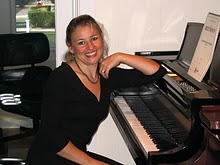
Opera lovers are all around and they are coming out to Opera Night

Aside from helping young professionals develop their skill and performance repertoire, Opera Night reinforces the communities love for one of the most classical performing arts.

Isabella says, “Opera lovers are out there and they’re coming out of the woodwork. We see the audience turn out, and it is growing. You meet these people who love Opera and want to know if there is anywhere they can listen to it… and you tell them about Opera Night.”

The minute Isabella meets an Opera lover looking for a good performance; she puts them on the email list and sends them reminders about upcoming performances.

Opera Night also reinforces Isabella’s life-long drive and passion for opera and classical performing arts.

Isabella’s performance experience during college encouraged her to take on Opera endeavors

 Isabella’s mother and father were the first opera lovers she ever knew. Their love of music fostered Isabella’s talent for classical piano, and soon, her years of dedication and performing eventually resulted in a degree from the Manhattan School of Music. Her greatest inspiration for opera however, was a “fine” bass/ baritone singer and enthusiastic voice teacher named Peter Maravell.

Isabella became Maravell’s piano accompanist at his studios. What Isabella thought would be a summer job that paid more than what her peers were making at McDonalds, turned into an assistantship and apprenticeship under a great singer. Maravell taught Isabella the music from the operas by some of the greats – Mozart and Puccini.

Maravell helped give Isabella a job that enhanced her experience as a concert pianist. Working under Maravell also expanded her musical world.

Isabella’s performance experience outside of academia encouraged her to teach music and take on projects and musical endeavors that would attract large audiences. For her, these projects and endeavors would revolve around opera.

Isabella encourages communities to help keep opera afloat

As Isabella continues in her musical endeavors and projects, she is constantly reminded of the hard economic times currently affecting many opera companies – even large ones in the neighboring metropolis, New York City. Isabella has taken the initiative in promoting New York City Opera’s Chairman Challenge, a fundraiser that will help City Opera continue producing full operas. More importantly; this challenge will help New York City Opera improve their opera education and professional development programs. This is why Isabella encourages community members to take an active interest in keeping opera afloat by attending a performance; spreading the word about a company; or donating.

Tonight is Opera Night’s 7th Year Anniversary!

Tonight’s celebration of Opera Night’s 7th year in Northport will remind community members of how much people love Opera. People want to have it and need to have it. “And for a good reason too,” Isabella says, “it is just wonderful!”