Let Your Heart Hear It First: An interview with John Elliott and Performance Review

John Elliott at the Cantina Royal in Williamsburg, Brooklyn John Elliott’s songs appeared on the television shows “Grey’s Anatomy” and “One-Tree Hill.” He even co-wrote a song within one episode of “Californication.” Yet, for most of his career, John remained an independent artist.

“It’s a serious balancing act,” explained the San Francisco-based singer-songwriter. When I asked him about the benefits and challenges of staying independent in the music industry, John honestly and humbly answered, “Sometimes the benefits outweigh the challenges and sometimes it’s the other way around. I’ve mainly stayed independent because… I just haven’t met the right people yet. Actually, I might have just met the right people the other day. We’ll see how that goes.”

He adds, “I do have someone working with me who started as a fan, and now because she believes in what I make and I [in turn] believe in her, she has become a valuable member of the team. I think that’s a rare relationship to find. I would love to continue to build a team, but it has to be with the right people.”

Since high school, during his first attempt to write music on a blank tape from 1993, John knew he wanted to pursue music as a career. So far, he has entirely self-produced all his records, including his latest Good Goodbyes – the first record on which he played every instrument, and the one that perhaps presented the most challenges. Now, as he continues the journey he started long ago, John Elliott reflects on the radical experience of relying solely on himself to bring his music to fruition. It is my pleasure to welcome John as the featured artist for the month of March on Music Historian’s Hear, Let’s Listen.

In the title track of his record, which is composed in a major key, John sings the following lyric, “I can’t let a good thing go even when it starts to bleed,” followed by, “Even when I know it’s dying and it’s time to set if free/ I’m afraid I won’t be treasured/the way she treasures me.” John wrote this song in 10 minutes one morning, without even writing the lyrics down.

He says, “I don’t question songs that come [to me] like that. They are just pure and right. If I look at it now and try to analyze it, I would say it’s [the song] about moving on from something without knowing what’s next, which is a scary thing to do. People always say “let it go, let it go” as if that’s something safe or easy. I think it’s a little disingenuous to claim you can just lightly skip into the future, unencumbered by the past, never to return or look back or wonder.”

“Of course,” he continues, “the album is called Good Goodbyes, so I understand that moving on and elsewhere can be, and often is, a good thing. The rest of album definitely lives under the umbrella of that song.”

As a critic, I find it comforting when the title track of the artist’s album is born with little effort and yet holds so much meaning that analyzing the lyrics might take 10 days.

John confirms, “It’s not about how “easy” it is to write something, it’s about how right if feels. I know when I write well, with honesty, passion and heart. When I try too hard, it’s no good.”

Other songs on his album like “Yin and Yang Collector,” “Monogamous” and “Friends Back East” seem to tell a definite story. I wondered whether these songs had a story and whether John spent more time trying to write them compared to “All These Good Goodbyes.”

“Generally, it’s doesn’t go well if I start by trying to write something with a message. That’s tricky. It’s better if the story, images, or lines are strung together by emotional truth of some sort. If you get that right, a message “might” emerge. The best writing is a little mysterious, but somehow makes perfect sense to your soul. You have to get your head out of the way and let your heart hear it,” explains John. John Elliott on Guitar at Cantina Royal

John describes the lyrics on his album more as poetry than storytelling. He also recalls a moment when he performed another one of his songs from Good Goodbyes, “Still I’m Not Still” for a producer. “That’s not a song,” remarked the producer, “that’s a meditation.” While John admits the producer might have meant to say this as a negative remark, John received it openly and happily. He claims “I loved it.”

Like most artists who perfect their craft (and the art of letting a song take its form without exercising too much control is one of the ways to be perfect), John has written, and rewritten a myriad of songs that did not make his latest record. By the time a song does make it on his album, he has “obsessed over every line” both lyrical and musical.

Listeners, of course, are another important part to any musical experience, and John’s music is no exception. “Every listener brings his or her own unique perspective to the experience, and might hear something radically different than what you intended,” adds the artist.

In the case of Good Goodbyes, I couldn’t help but feel that John really went out on a limb and made himself very vulnerable, especially since he was the sole creative and functional driver of this record. On his past albums, John included a number of different players in the process. He claims the making of his latest record “happened during a very solo time in my life and as the process of creating it continued, I realized it was important to me that I remained true to that.

“It’s quite unnerving to rely solely on your own intuition with creative choices that have no objective basis. It’s also, eventually, quite satisfying.”

Good Goodbyes also taught John how much he relies on other people for approval about his music. Although he enjoyed the experience of producing and only answering to himself, he still needed a second set of ears. After putting the record through seven revisions, John invited mastering engineer JJ Golden to help frame the final product.

“I tried to bring all the disparate pieces and sounds together into something cohesive,” he explains. “It’s a collage, and it has some sonic flaws, but hopefully that gives it character.”

Watching John during one of his live shows on his nation-wide tour back in November, I listened to and watched an artist whose music brought a character out of him, one who believes in himself so much and manages to attract an audience that believes in his sound and performance.

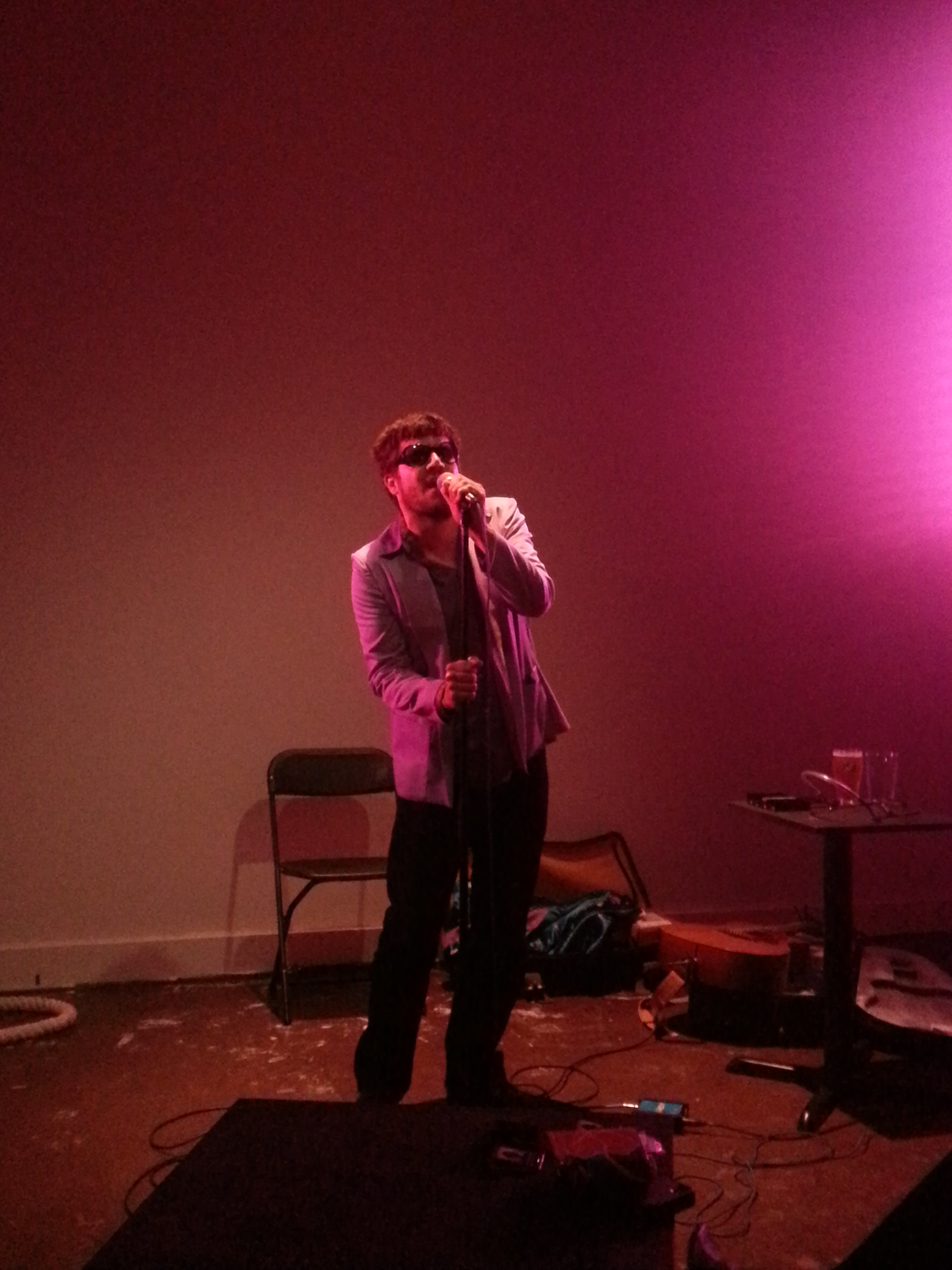
I walked in to Cantina Royal, a restaurant in Williamsburg just in the nick of time to see John Elliott. Secured with a Brooklyn Lager, I traveled down a red-light lit hallway to a performance space behind a gritty grey door.

In this performance space, there was no stage but a clear floor. There was plenty of room for audiences to take seats in rows of mobile chairs and mini tables. Pink and blue lights covered the space designated for acts. In the far left corner of the room, I noticed the uncanny detail of a rope that extended from the high ceiling and coiled out on the floor.

Most chairs were filled, and the only available seat was at a table occupied by a couple. As I sat down and prepped myself for a night of intense observation and musical analysis, I occasionally peeked at the flirtatious exchanges between the man and the woman next to me. Underneath the table, the guy caressed his girlfriend’s bare knee as she sketched a picture on some scrap paper. Both shared a package of very low caloric snack of seaweed sheets. Perhaps they decided this food paired well with beer? I was not sure whether this combination was romantic or strange.

Returning to John’s performance set, I knew I was in for a performance I would never forget. And I was right.

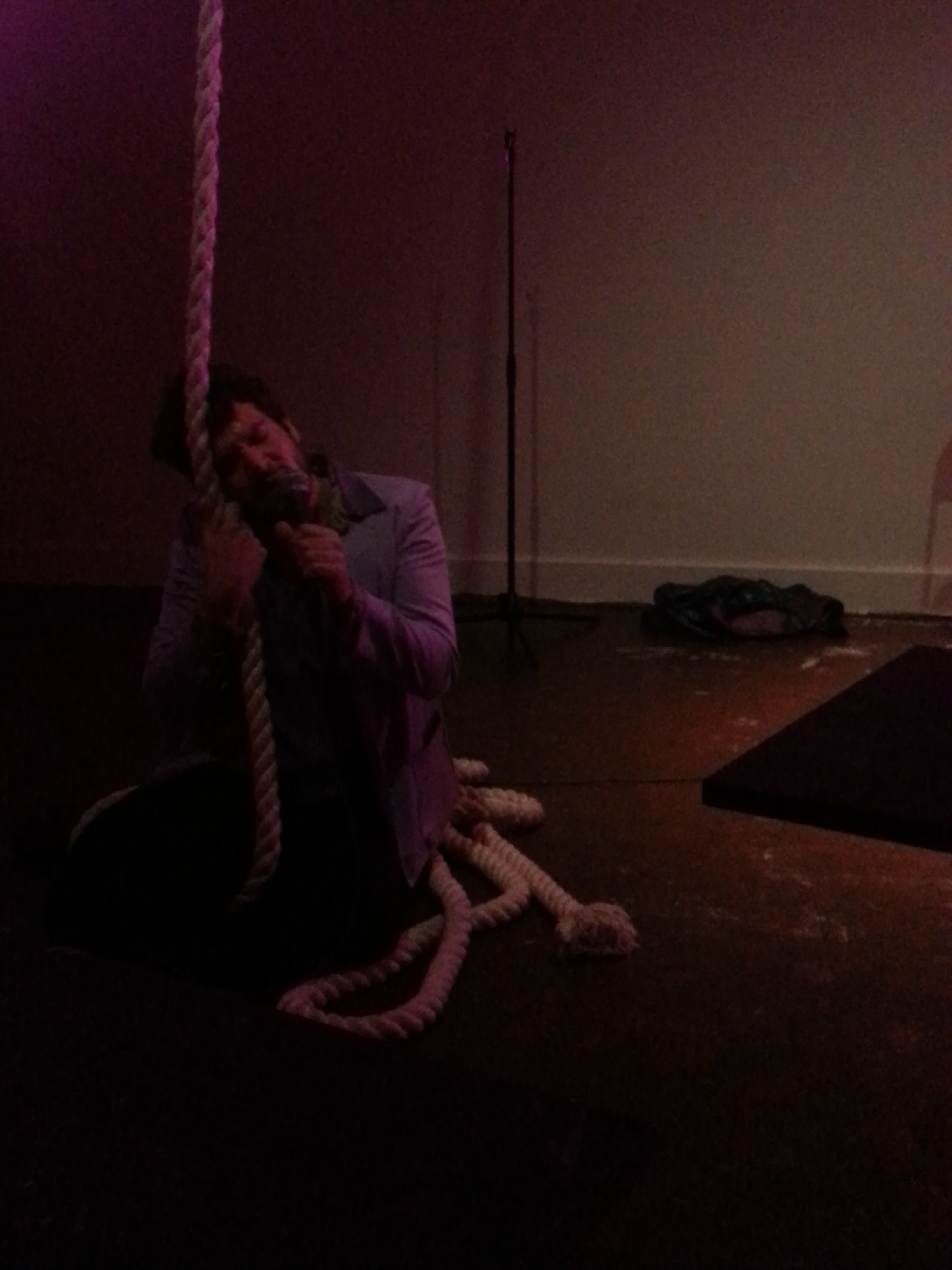
During his song “Monogamous,” which is primarily built on ambiance created by electrical and synthesized instruments playing held out notes, there is a long period in which John does not sing. On the record, the artist can get away with this, in a performance it is a different story. John knew he had to fill up that silence with something, so he started to swing on a rope in the far left corner of the room; a move several audience members found amusing. John Elliot in Williamsburg, November 2013
For his next song “Yin and Yang Collector,” John had a costume change. He dressed as a king, one that somebody might find in a frat house in New Orleans as opposed to one in a dramatic film about Henry VIII. During this song, he picked up his guitar and started playing like a true singer songwriter. But, I soon learned the surprises were not yet over.

John did not finish “Yin and Yang Collector.” Instead, he looped into another song, a cover of “Somewhere Over the Rainbow,” then transitioned back to “Yin and Yang Collector.” An artist successfully and easily accomplishes this only when the tonic of another song is the dominant or the predominant of the song they initially sing. This makes for easy modulation, and often, one will not find artists doing this during a performance but rather in their private time practicing.

John Elliot at the Cantina Royal in Williamsburg, Brooklyn in 2013As I looked back to the couple, I noticed the woman started sketching a new picture, one of a masked face that imitated the appearance of John’s costume. It made sense then and there that something about John’s performance successfully captivated the imagination of one and perhaps multiple members in the public.

When I asked John what audience members said about his music during his tour, he remarked that most of what he heard has been “positive!” That or complete silence,” he adds. “A few people said it’s their new favorite. One person told me how much they liked this album more than the last.

“I just finished a show in Bellingham, Washington. Someone told me [I put on] the most entertaining show they’ve ever seen, so that was nice. But really, I have to remind myself to make what feels right to me and then let it go.”

John recalls a few moments from his tour in which listeners did not enjoy his set. During his show at Cantina, he humorously told the audience about the reception of one of his songs.

“This song went well in Austin, but horribly in Oregon because it was a song about people in Austin. Then it went well in Pennsylvania.”

Humor is just part of John’s nature, it is no way a coping method of dealing with the downsides of being a musician. Sharing your creation with the world comes with the territory, and that is why so many individuals who probably have songwriting talent will not pursue anything with music. Luckily, John understands this territory well, having traveled it before. He claims:

“The album is out there now. I hope people listen to it and like it. I’m very proud of it… And I’m thinking about what to make next.”

Currently, John is in between touring for Good Goodbyes. His agent is currently booking shows in the Midwest for 2014. In the meantime, he tackles the toughest component of any business plan, the marketing of his product. Audience at Cantina Royal watch John Elliott, November 8th, 2013

“Promotion is the greatest challenge of releasing an album independently. Truth is, I had some good plans in place, and then I went on tour and lost track of things. I want more people to hear it… I funded this album myself with savings from tours and other music income.”

When I asked him about the most important lesson he learned about being an artist and a businessman, he openly claimed, “The most important lesson I’ve learned as an artist is that everything happens in waves and you must learn to ride them. The most important lesson I learned as a businessman is that I’m learning as I go, and sometimes I luck into great decisions. In general… I need help on that side.”

John’s story of making and promoting Good Goodbyes is honest. It reminds listeners that like heroes in our favorite novels and films; if a musician does not go through any struggle, whether it is letting go of an old relationship, a bad habit or faulty belief, or a challenge of understanding business or making music, there is no reason for that listener to care about the artist. As for John’s music on Good Goodbyes, which is now available on iTunes, his website http://thehereafterishere.com/recordings, on Spotify, and, of course, at his live shows, the album will draw listeners into his world of expression, one that reaches the soul on an esoteric yet comforting level. Perhaps it is no surprise why his songs appeared in the hit television shows among audiences that fall within the 25 – 40 year age range. John presents us with something worth listening to, but we have to get out head out of the way and let our hearts hear it first.


Just Listen: Trumpet Grrrl Brightens Days with her latest music video “Rain Boots”, public performances and upcoming record

New Press Photo of Trumpet Grrrl. Courtesy of Cultured ProductionsThose who follow Trumpet Grrrl – a young musician who moved from the Burtonsville, MD to New York City to achieve her dream of being a singer songwriter – will tell you her music is “fun, quirky, soulful and creative.” These adjectives also accurately describe the music video for her new single from her third album in the works, Just Listen, called “Rain Boots.”

In her music video, Trumpet Grrrl skateboards to a second-hand clothing boutique in Brooklyn with a box of her clothes. One of these items is a pair of cute girly rain boots. She trades them in for cash, and in a funny turn of multiple events, these boots get in the hands of several different owners, and somehow find their way back to our heroine.

This music video was made possible with the help of Cultured Productions. Trumpet Grrrl explains:

“The Cultured Productions team thought of the serendipitous theme, and I added my own flair with the dancers and skateboarding. The whole process took about 6 weeks from planning to release. We filmed in one day.”

As I listened to the lyrics within the song, “You only think of me when it’s raining/ pick me up while complaining/ walk right over me/ kick through the mud with me,” I wondered whether the topic of the song focused on something more than rain boots; perhaps a relationship or friendship? Trumpet Grrrl says, “During an overcast day, I left my house, and realized I left without my umbrella. “Rain Boots” spawned from the line “You only think of me when it’s raining.” I intentionally wrote the lyrics in a manner that listeners could interpret in multiple ways.”

Researching her last two albums, It All Starts Here (2012) and The Basement Tracks (2011), and a track recorded with producer Matt Shane at Converse Rubber Tracks studios called “Afghan Palace”; I sensed Trumpet Grrrl developed from a newbie on the music scene to a must-be-heard talent. So, I invited her to be this month’s interview feature on Music Historian’s Hear, Let’s Listen.

Trumpet Grrrl picked up the trumpet at the age of 10 and has been hooked since. Private lessons and summer camps served as the starting platform for her classical music training. In later years, the trumpeter would perform at Carnegie Hall and the National Symphony Orchestra on a fellowship. In 2008, she received a Bachelor’s of Music in Trumpet Performance from the University of Maryland, College Park.

“I love the beautiful sound you can get out of the trumpet,” the musician explains. “I feel I can truly express my emotions through the trumpet; I tend to fumble when it comes to words. I also have a very active brain, which is easily calmed by music. In the end, the fact that music is awesome kept me ‘hooked.’”

Trumpet Grrrl by Larkin GoffDuring her final months of college, Trumpet Grrrl formed the rock band La Coterie where she played keyboard, sang lead vocals and composed music. Two years later, she left the band to start her solo project. Here, she taught herself to play the trumpet and piano simultaneously.

Watch her Youtube videos, and you know Trumpet Grrrl has proven herself a multi-instrumentalist. She claims that playing two instruments and singing at once provides room for varying tonal colors and harmonic motions. The challenge is the quick change of putting down the trumpet and getting her right back on the keys, which according to the musician, can lead to a fallen trumpet. During live performances though, Trumpet Grrrl says her skills creates a “wow!” factor for the audience.

Since she went on her own, Trumpet Grrrl has written all her own songs and has developed her own style of music. “My sound is original, soulful and emotional,” explains Trumpet Grrrl. “I tend to attract fans from varying genres. Based on this I’ll say indie soul, jazz, pop rock.”

Trumpet Grrrl also claims that patience is one of the biggest lessons she learned over the past three years.

“Trying to force myself to compose never works; I have to let the song come to me. Over time, I’ve gotten better at expressing thoughts in different ways and in a concise manner. The fewer words I use to express something, the better. Additionally, I have a better feel of which chords and song structures I want when writing.”

Now, as she prepares for the completion of her third EP, Just Listen, which is set for a date in late summer or fall of this year, Trumpet Grrrl sums up the experience of making this record.

“In my first two albums, I literally did everything myself. I played all the instrumental parts, recorded on home equipment, produced it all and did my best mixing. For the first time, I will record with GRAMMY award-winning producer Scott Jacoby and have a band – a guitarist, bassist and drummer – play the songs. Scott is producing and recording; he has a great ear for little flairs and additions that can make a song pop! Recording my third album [has been] amazing.”

Trumpet Grrrl. Photo taken by Larkin Goff “Rain Boots” is just one song from Just Listen that pops. Trumpet Grrrl claims that she will release two additional songs from the EP before its official debut. The performing artist also says “while fun is the most important reason to make a music video, the primary business of creating a music video is promotion.”

Earlier in 2013, Trumpet Grrrl participated in a Twitter chat run by @GoGirlsMusic, held weekly on a Thursday, called #ggchat. Here, she inquired about companies that produced music videos and was referred to Cultured Productions. She claims the company’s investment in social media was a key decision factor.

Trumpet Grrrl’s low and sultry voice and her trumpet skills blows listener’s minds. “Rain Boots,” which Trumpet Grrrl also produced with Jacoby, is catchy, and memorable, especially as it exudes a New Orleans jazz band charm with splashes of pop and soul. Enthusiasts of indie films will find charm in her music video for “Rain Boots” as they watch how much joy someone can experience in simple pleasures while living in the complicated, urban, cluttered and fast-paced landscape of New York City. This music video is bound to brighten someone’s day.

Prior to recording songs for Just Listen, Trumpet Grrrl also wrote the cheery, experimental and gospel-imitating track “Up!” from The Basement Tracks. If listeners seek a minor-key song with a cool electric guitar solo to help drive away their daily blues or mentally travel to another place, then “Afghan Palace” will fulfill this musical and emotional need.

When I asked Trumpet Grrrl on what she hopes fans of her music take away from Just Listen, she responds, “Whatever feelings it gives the listener; I love hearing their various emotional responses and thoughts. It’s always relative to what they’ve experienced in life.

“Since moving to NYC, I have also played on subway platforms. Nothing makes my day like the reactions I get. Some [people] will start dancing, draw pictures of me, miss their trains to listen and some just stop to encourage me to follow my dreams. It really warms my heart when I get a “thank you,” and when my music is received as a gift and brightens someone’s day.

“I have written a fair amount of songs with the intention of cheering myself up and fans tell me it does the same for them. [That’s why] I named the album Just Listen because that’s all I want. I truly believe my music will [brighten] people’s day if they just listen.”

Trumpet Grrrl reminds us that consistent and constant performance, and playing an instrument or many in addition to singing, makes a good musician a memorable and well-received one. Whether the audience observing the show is passing through the subway, sitting inside a comfortable landmark performance space, or surfing on Youtube, listeners respond well to confident performers. Trumpet Grrrl finds happiness in performing, and in turn, this brings her pleasure and contributes to her development as a singer-songwriter and artist.

A World of Wonderful Machines: The philosophy behind Yuzima’s new LP

Yuzima Philip, Press PhotoNew Yorkers might recognize Yuzima for his performance of “Hey Jude” at the annual Beatles Complete on Ukulele concert. While the concert approaches, Yuzima is currently celebrating the release of his latest LP, THE MACHINE.

The singer songwriter describes his earlier works – Sound Opera – Project One (2012) and Powerful (2012) – as statements, larger than that of his additional work Glasnost (2011), all adding up to THE MACHINE (2013). “The songs on THE MACHINE are bigger, more pop, and more political. Everything is more,” he explains.

“Get Things Done,” is the first song on the album that gives the listener any idea about the meaning of the record’s title. The vocalist mentions within his lyrics how everyone should have dreams so that they can avoid becoming part of “the machine.”

In my first full-length interview feature for 2014 on Hear, Let’s Listen with Yuzima, I come to understand the machine he describes only operates properly with contradictions, politics, and musical craftsmanship.

“Everything is a machine – your family, your neighborhood; they all have systems, habits and levers,” explains Yuzima. “We all know what makes our families work: who’s who, who’s a bully, who’s artistic. It’s a system.

“People like to think of things in a very compartmentalized way: allies and enemies, etc. Life in essence is about competition. We’re all the current players in the way life works.”

He adds, “You can’t escape “the machine.” The minute you exit one you enter another. It happened in the 60’s going into the 70’s where many learned that the alternative of the system was another system. On the other hand though, you can “escape the machine”, in the instances of, being yourself, getting out a bad relationship, and more. In the end, the artist wants to be free.”

THE MACHINE Poster

As I listened to the song “Get Things Done,” I wondered whether Yuzima feels that there is a moment where individualists want to be a part of the machine – a collective in which individuality is lost. According to Yuzima, this is “the irony of human nature.” He enumerates:

“People want to be alone – just in a crowded room… We’re all working together while competing against one another.”

Yuzima helps express this contradiction through his music. The first few tracks of his record include a fragmented musical form. For example, “Black Graffiti” has a guitar that produces riffs which follow measures with specifically placed rests. There is a disruption in the harmonic flow of the chords. Yet, the clear and imagistic storytelling keeps the listener moving throughout the discord of the song. Half-way through “Black Graffiti,” a listener will soon start putting together in their own minds how to sing the song back in a continuous flow that follows the harmonies from the music and Yuzima’s vocals.

By the time listeners get to “Sex City,” they no longer have to make the inner effort to put a fragmented song together. Instead, Yuzima delivers a more easily audible tune that listeners can immediately sing back. In this song, he sings, You were spotted on the outskirts of town/ looking for a new drug…

Yuzima reminds listeners of experimental independent music that no matter what message is being expressed within the song; chord progressions, vocal melodies, harmonies and rhythm come first. Meanwhile, his vocals include a hint of soul that resonates deeply with the listener, especially when the lyrics tell a story about love, violence or societal troubles. “Black Graffiti” and “Sex City” are such examples. Then, there is the simple political message in the song “Guns,” expressed through lyrics guns kill.

Yuzima claims that while he freely makes political statements in his songs, he does not classify himself as a political artist. He says:

“I write about what is happening to people and what they are going through; kind of like a documentarian. If you don’t write about what is really going on, you’re playing pretend.”

While Yuzima may repeat some of the lyrical practices artists before him implemented, like politically themed messages – which I believe veers toward the prosaic – and compositional experimentation; the clear artistic reflection between song structures and titles – a practice he has implemented throughout all of his music – presents something new for the independent musical culture.

“Anarchy,” for instance, includes several musical ideas, like an electric guitar riff playing with drums against the fragmentation between the song and the lyrics. The song evokes a feeling of disorder. Listeners can guarantee that all his songs on THE MACHINE will accomplish this reflection between song structures and titles.

“Music for me is an art form from top to bottom,” he enumerates. “I’m thinking of these songs from the beginning to the end. Some songs, you want to be easy while some you want to be more ambitious.

Yuzima, Press Photo “In order to be ambitious, you need to break rules. Yet, at the same time, you need to get to the point – for instance, the drums on “Anarchy” have a monochromatic hard hitting sound to them. The guitars have a militant feeling to them with discordant notes, and the chorus is a ground shaking explosion.”

Clearly Yuzima is the type of experimental musician who makes a plan for each of his songs, putting a great deal of effort and love within each track. On this note, he makes a point to keep his collaborating and recording process very restrained. Yet, Yuzima openly listens to feedback from reliable colleagues, including mastering engineer Nathan James, who “throws the magic” on the music.

At the end of our conversation, I learned the machine is a system that feeds on overused politics and the contradictions produced by human nature. This system exists in all dimensions within our present societies, the societies that once existed, and the ones yet to emerge. I also learned that philosophy has always been the hidden hand behind Yuzima’s most pop-inspired material, including THE MACHINE. Yuzima shares the quote from Red Plenty that inspired the theme of his LP.

“Capitalism created misery, but it also created progress, and the revolution that was going to liberate mankind from misery would only happen once capitalism had contributed all the progress that it could, and all the misery too… At the same time, the search for higher profits would have driven the wages of the working class down to the point of near-destitution. It would be a world of WONDERFUL MACHINES and ragged humans.”

While these philosophies might have inspired political and social movements, Yuzima does not serve a political agenda through his music. Instead, Yuzima wants to express the nature of machines – systems that leave little room to reinvent the wheel but at the same time require changes, usually brought about by the continuation of time, in order to survive. The artist successfully conveys this idea through his music by accomplishing two different goals simultaneously. The first developing the symbolic relationship between the titles of songs and structures which validate each title’s specific tone. The second, breaking some of the compositional rules of pop music through fragmentation, the imbalance in the volumes of the electronic instruments, and that unsettling industrial noise.

THE MACHINE Cover Art Yuzima’s THE MACHINE inspires lovers of experimental indie music to embrace a new listening experience. This might be why writers described Yuzima as a “rising indie luminary,” while fans deemed his music to be “bad ass” and “flawless.”

Yuzima will perform songs from his latest LP for audiences on January 11th at Pianos NYC. In the near future, he also plans to debut three music videos for THE MACHINE online. THE MACHINE is currently available on iTunes, Cdbaby and Bandcamp.

Experimental Classical Music Exists in a World of Art: My Conversation with Ian Fiedorek, composer of Fallout Symphony

Ian Fiedorek Experimentation with classical music quietly lingers around the New York City music scene. Singer songwriter Ian Fiedorek, and the composer the project Fallout Symphony states the following about experimental culture and instrumental music in the city, “I don’t think too many people are thinking in terms of the classical structure, the four-movement structure … but there’s an incredible wealth of experimentation happening in New York generally. By nature, categorizing or pigeonholing this music can be difficult, as it should be.”

Ian recently completed the shooting of a music video for Fallout Symphony’s second movement “Jim Crow”, with the help of film directors Nasa Hadizadeh and Robert Dume of Cultured Productions. This fashion-charged short film which captures the avant-garde beauty of the song. The themes of paranoia and overcoming bigotry addressed in the lyrics – “I’m your guardian angel now, tearing this all down to timeless/ There’s an ancient bigotry that’s always set in drunken stone/ I will stop their hateful words tonight” – are emotionally conveyed in the music and video.

Watching this beautiful video, I could not help but raise the following question – why experiment with images that, while aesthetically pleasing to the eye, do not capture the historical aspect of the song’s title?

Ian answers my questions and also talks to me about this experimentation, and touches on the following for this type of musical among today’s listeners. It is my pleasure to welcome Ian to a full-length interview feature for the month of December, right here on Music Historian’s Hear, Let’s Listen.

Musical Background

Ian began studying classical piano at 7 years old and grew up a pop/rock aficionado. He appreciated classical music for its long-form structures and physical challenges, two attributes that attracted him intellectually. As a mode of expression, he states “nothing was as viscerally impacting as picking up a guitar at age 13 and writing songs. Fallout Symphony is something of an amalgam of these two components of my musical upbringing.”

After studying music at NYU and Cal State Los Angeles, Ian entered the NYC music scene as a guitarist for Harlem Shakes. Then, in 2012, he continued as a solo artist. Ian does not see these life events as transitions, but as “lateral movements between projects.” He explains: “Studying music was beneficial, but it was mostly an excuse to devote my time to making music. Performing in Harlem Shakes and other bands while working on my own material is all part of an intuitive progression in my view. I never thought in terms of ‘going solo,’ I always viewed myself as a singer, songwriter and composer who dabbled in a couple of different projects on the side.”

Harlem Shakes and Fallout Symphony differ immensely from a musical perspective. One is an indie rock band that is very performance-centric, mobile and public. The other is a 30-piece orchestra that is restricted to recording music in a studio, Ian spends hours after rehearsal mixing and editing.

Fallout Symphony is a far more insular experience than Harlem Shakes or other bands I’ve been in – there’s a moment in the timeline of production where it’s very collaborative, but generally, it’s you alone in a studio putting together the most detailed and thorough score possible, then later, the clearest final mix.”

Fallout Symphony

Creating a band is easy, and many of them emerge spontaneously in NYC. One might agree that the cultural scene in large urban and cosmopolitan areas are often saturated with the typical pop-rock band, the guitarist, drummer, bassist, a keyboardist, and a lead singer. Very rarely do we hear about symphonic groups emerging on the popular music scene. When I asked Ian about what classical musicians are doing on today’s musical scene, he responded, “I haven’t met many artists experimenting in this particular way [the classical structure].”

Ian describes Fallout Symphony as an ambitious, kaleidoscopic effort, and bold musical vision; one which mixes symphonic elements with vocals and a lengthy lyric sheet – something unusual in classically influenced music. I asked Ian about his greatest influences:

Igor Stravinsky’s The Rite of Spring was an influence on me – his use of non-linear musical cues and motifs was a large reason I structured Fallout Symphony to be through-composed, in many ways quite unstructured. Only a few of my motifs loop around and appear again. Mainly, the entire 40-minute duration is all new sections. I relied on the lyrics to be the glue of continuity, helping the piece cohere.”

The song and video for “Jim Crow” Ian Fiedorek in his music video for "Jim Crow"

As I thought about what Ian meant by continuity, I recalled how the lyrics “Now I know I dress like Jim Crow,” sung after “I am your guardian angel now…” contrasted each other. I wondered whether Ian did this on purpose.

“The lyric is,” Ian explains, “’Now I know why you dress like Jim Crow’ – as in, you are in ‘tattered rags.’ They have brought you to a breaking point, you are a non-entity to ‘them’… These lyrics are all of a piece I would say, or at least are intended to be so. It is about overcoming the bigotry, whether tangible or ethereal, foisted upon the “you” character in the story.”

According to Ian, if we had to identify the “you” character of the story in “Jim Crow” by watching the music video, “you” would come in the form of a tall and brunette young woman with deep set eyes. One moment, she gracefully models the most beautiful 1930’s inspired clothing, the next moment curled up in the corners of a dark room appearing frightened and confused or reaching out to touch an invisible figure.

When the video’s main character is dressed in her glamorous garb, she is often sitting down on a couch in a foyer with a piano. At this piano sits Ian, playing. In other shots, he stands behind the young woman. Both characters in the video have their own inner story stirring simultaneously. This is visually represented during the first two minutes and 30 seconds of the song in which two different coherent musical ideas are played at the same time. Although these two characters visually appear together in certain scenes, they never interact with one another, at any time within the video.

Screen shot of the music video for Fallout Symphony's second movement "Jim Crow"“Certainly, having the two characters never interact was intentional – authorial intent perhaps is not particularly germane – but I believe the male character,” who is Ian, “is something of a figment, a specter, in her [the main character’s] troubled mind.”
Then, there is the main theme of the music, a theme that talks about the inescapable oppression cast by society. In this case, Jim Crow is relevant to this theme; but I did not feel the music video reflected this theme at all. I inquired about the artistic inspiration and the intention.

“We did not want the video to be too ‘on-the-nose,’” explains Ian. “We felt, instead of literally translating a narrative of overcoming bigotry, it would be more effective to let the lyrics do that heavy lifting, and instead create a more general narrative for the video about conquering one’s own ailments and mental spooks.”

The video for “Jim Crow” was shot in one day, on a budget that Ian describes, was lower than what the final product presents. He credits co-directors Nasa and Robert for “wringing the sponge of all its possibilities.” In addition, Ian believes the video “came to fruition in the way any good piece of art does – with some really good planning and some very happy accidents.”

Ian asserts, “I believe the video as an entertaining piece of work in its own right, complements and contextualizing the music to be heard from new angles, with heretofore undiscovered wrinkles.”

The audience looking for this musical and visual experimentation

The making of Ian’s video was supported by the donations of fans and people interested in Ian’s music – a type of support that allowed Cultured Productions to put the finishing touches on both music and artwork, and the replication of the Fallout Symphony CD. When I asked Ian about receiving this support, he responded, “It is fantastic. Art exists for the community, and to have that community support its creation is a blessing.”

Through the video for “Jim Crow,” Fallout Symphony exhibits that postmodernist classical music through the help of visual imagery makes a greater emotional impact on listeners. Ian helps listeners understand that music exists within a world of art, surrealism, culture and most importantly, a community that wants to hear experimental classical music.

It is my pleasure to share with readers this beautiful video. Thank you Ian and Nasa.

Master Conductor, Christopher Seaman Demystifies the Mysterious in Inside Conducting

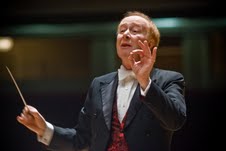
Christopher Seaman, Master Conductor In the foreword of master conductor, Christopher Seaman’s new book, Inside Conducting, Chief Conductor of the Tonhalle-Orchester Zurich, David Zinman describes Mr. Seaman as a rare personality and a highly stimulating teacher.[1]

I read this passage after I had personally talked with Mr. Seaman on the telephone. I immediately thought that Mr. Zinman described the British conductor accurately. Aside from his kindness and positive attitude, Mr. Seaman is naturally delighted to share details about his new book and his experiences.

“So many people [often] ask me about what conductors do that I decided it was time to publish the answers the best I could. I thought it was time to answer people’s curiosities,” explains Mr. Seaman.

“This book is meant to stimulate interest and get alongside people. It is aimed at two kinds of people,” he adds. “The first are concert goers and music lovers that are curious to learn about what a conductor does. [The second] are students who are training and want to learn more.

“There is a lot of information in the book, and I hope to present it in a way that is interesting, stimulating, approachable and not intimidating. You can read it even if you have never gone to music school.”

I attest that Inside Conducting is for anybody who loves music, and those who played or are currently playing an instrument or are involved in music in some way might find it even more exciting. As for musicians training in the profession of conducting, Mr. Seaman advises students on specifics like how to correctly use a baton, what to do with the left hand when conducting, how to be more economical in their instructions to the musicians in the orchestra, and more.

One lesson from Inside Conducting that stood out to me is the balance of leading and yielding that every conductor must master. Like within any profession, including musical, controlling and managing is not enough. The individual must also learn to relinquish control and take chances in order to work with others in producing a great piece of music.

It is my pleasure to welcome Christopher Seaman as the full-length feature for this month on Music Historian’s Hear; Let’s Listen.

Conductors must master the balance of leading and yielding

“If a conductor does not give clear leadership, the orchestra does not function

as well as it can or should. As with any organization that lacks leadership, the organization flounders,” begins Mr. Seaman. “The musicians work with you [the conductor] and look to you for leadership. They also look to you to recognize and orchestrate the framework in which they can use their artistry. The musicians are the conductor’s partners, not subordinates in the creative process.”

Mr. Seaman continues to explain that conductors have to “steer between two extremes: one is to control everything so much that you take away from the musicians’ creative freedom; the other extreme is to give them so much creative freedom that the whole performance becomes a mess.

“Conductors have to steer between these two extremes all the time, off and on, bar by bar,” he enumerates. Quoting the Indian Parsi conductor Zubin Mehta, Mr. Seaman states “The balance between leading and yielding is something every conductor has to master.”[2]

“Rehearsing” is the passage in the book where I feel Mr. Seaman clearly emphasizes this balance, specifically in an experience in which a conductor might run into an orchestra of “lower standards.”

According to Mr. Seaman, a conductor, especially one who is new to this experience, might feel the need to show commitment to the music and to the orchestra through micromanaging the move of each musician. Although such a solution might seem logical, the conductor tends not to notice that he or she is restricting or preventing musicians from understanding the shape of the piece.

Mr. Seaman writes, “You may occasionally face a group that sounds so bad that you have the feeling of dragging them from note to note just to get through the piece. If some sections of an orchestra have rhythmic problems (particularly in playing late), you may feel the need to conduct every beat aggressively simply to get people playing together. This corrective style of conducting destroys the shape of any piece… if you take a chance and indicate flexibility and shape, you have the feeling that the whole thing will fall apart; so you may have to choose between square, shapeless accuracy and a well-shaped mess… but when an orchestra does grasp the shape of a piece or even a phrase, they’re music more likely to play together. So, in the end, you can usually take a chance and conduct the music rather than just the beats.”[3]

In this passage, Mr. Seaman explains that while a conductor needs to make sure the players are hitting the notes on the right beats, there also comes a time in rehearsal when the conductor must move on to additional essential components of a piece. Mr. Seaman tells me:

“If you imagine a piece, you [the conductor] want to be very clear and give direction in the beginning.”

He then supports this idea in the passage called “Rehearsing” in which he writes “An entry can be messy because whatever comes before it is either late or not together; players making the entry don’t know whether to follow their ears of your beat …[4]

“When you want an orchestra to find a particular place in the music, use a strong, clear voice and address the people farthest away, so nobody needs to ask his neighbor, “Where’s he going from?”[5]

Returning to our conversation, Mr. Seaman continues, “Then there may be a passage, perhaps during a solo, where you can be a little more lyrical and slightly loosen the reins and give [the musicians] a little freedom.”

Mr. Seaman parallels this statement with a passage in Inside Conducting that emphasizes the musicians’ need for independence and creative ownership of a piece.

“Occasionally it can be useful to leave an orchestra playing and go back into the hall to listen; you’ll get a different perspective… Playing on their own gives an orchestra confidence, so they’re not over-dependent on a conductor…

“Finally, take a chance and leave some things fluid. Don’t cross every “t” and dot every “i.” This may feel risky, but it keeps and orchestra on its toes and gives a concert an edge,” which helps the music get across; you’ll find what works best for your talents and personality.”[6]

An audience’s job is to respond

In addition to the valuable lessons Mr. Seaman provides, like the one above, he offers advice to aspiring or emerging conductors. He suggests some of the following to those looking to take on this profession: conducting a youth orchestra, acquiring keyboard skills in order to get a stronger understanding of harmony, and intensively training their own relative pitch – the ability to sing back a note that you hear on an instrument.

So, if Mr. Seaman talks about the practical side of this artistic pursuit, why would a music lover or a musician who has no intention of becoming a conductor, read Inside Conducting? The author explains:

Inside Conducting by Conductor, Christopher Seaman. Published in July 2013

“I talk about topics like rehearsing, learning scores, and playing instruments, economic gesture, concerto accompaniments, and more not just to teach but to gain the interest of a music lover.”

After music lovers read Inside Conducting, Mr. Seaman hopes they will be able to go to a concert, understand what does into a performance and see it with a new perspective. Then, one might ask another question – why might a master conductor feel the need to reach out to the interest of an audience rather than solely a conductor? Mr. Seaman answers, “An audience’s job is to respond to great music.”

During my phone chat with Mr. Seaman, I started to pick up bits of information that supports an opinion about classical music that I harbored for a long time – the classical music genre is not going anywhere; it is still alive and well in our musical landscape. I asked for the master conductor’s opinion on the notions few cynical critics make about classical music – that it is a ‘disappearing’ genre.

“I disagree with that,” Mr. Seaman begins. “Audiences are not disappearing. I’ve heard people say audiences are getting older. All audiences [actually] look the same as they have for 80 years, they looked the same since I started playing in the London Philharmonic at the age of 22, however; they are not the same people.

“People discover music later in life. For example, you get a job, you raise your kids, you send them to school… Then, when you are alone and have free time to yourself you say, “I’m going to give classical music a try.” You go, you try, and you might realize your musical but just never knew.

“Musical means responding to music, not playing the piano better than anybody in the world. It means responding to music and loving it. You can play all the notes correctly [on an instrument] and not be musical. As a conductor, I like people that can both play the notes and be musical.” Christopher Seaman. Photograph provided by Sally Cohen PR.

Hearing classical music live is better than listening to any record

I felt an enormous sense of comfort and relief to learn from an experienced musician that audiences for classical music are still alive and well and have not changed for the past 40 or some years that Mr. Seaman has been playing and conducting.  I asked the master conductor what about live classical music excites listeners, and he answers, “When you hear it live, you are present at the creative process. There is something about being there with the actual creation or recreation of what’s going on. No record – no matter how good the orchestra or how well produced – can replace that.”

Mr. Seaman is currently preparing for a long trip to Australia where he will be conducting. He will also return to the United States in December to conduct a concert in Orange County, California with the Pacific Symphony, and the Milwaukee Symphony Orchestra in Wisconsin. I suggest that all classical music lovers in the Chicago, Milwaukee, and the Orange County area keep their eyes peeled on these symphonies’ websites and mark their calendars for a future performance and a chance to see Mr. Seaman live in action.

In the meantime, whether you plan to attend as a music lover, musician, or conductor in training, I highly recommend Mr. Seaman’s new book, Inside Conducting, which is also available on amazon.com and in their kindle store. Readers will gain a better understanding of a conductor’s role in an orchestra and, they just might find a little piece of themselves in some of the stories within the book. Mr. Seaman’s storytelling of his days with England’s National Youth Orchestra, experience as assistant conductor in the London Philharmonic during his early twenties, and his time with the BBC Scottish Symphony Orchestra in Glasgow will also remind readers of a time they played in an orchestra as a child or the processes they experienced when learning an instrument.

At the moment, this is the only book I read in which the author, who is a working master conductor, pays the same level of attention to both student of conducting and amateurs from all musical backgrounds.

Inside Conducting bridges the interest of amateur musicians, listeners, and students with topics that Mr. Seaman says “demystifies the mysterious into something practical.” While talent in conducting will always have a mysterious element, Mr. Seaman asserts that conducting can be “much more practical than people think.”


[1] Seaman, Christopher. Inside Conducting. Rochester, NY, USA: University of Rochester Press, 2013, Kindle file.

[2] Seaman, Christopher. Inside Conducting (Rochester, NY, USA: University of Rochester Press, 2013) 239.

3-5 Seaman, Christopher. Inside Conducting. Rochester, NY, USA: University of Rochester Press, 2013, Kindle file.

[6] Seaman, Christopher. Inside Conducting. Rochester, NY, USA: University of Rochester Press, 2013, Kindle file.