Just In: New Video and Sound Cloud from Radiation City!

Earlier today, I interviewed Radiation City’s drummer, Randy Bemrose for the December band feature on Hear; Don’t Listen. In my interview with Randy, I learned about a lot of exciting projects coming up for the band in 2012. However, you’ll have to standby on Music Historian’s blog to learn about them. In the meantime, listen to Radiation City’s sound cloud and watch their video of their song, Babies.

http://www.deathandtaxesmag.com/165281/exclusive-radiation-city-babies-popopepe-remix/

The Portland-based band, Radiation City will kick off their west coast tour tomorrow in Eugene, OR. Visit the link above to see their tour schedule.

Seth Glier’s Food for Thought: Giving Back to Communities with Food and Music

Thanksgiving is upon us, and I would like to talk about how one up and coming singer-songwriter gives to his own music as well as to communities all across America. Seth Glier is currently wrapping up the Food For Thought tour. The tour is an effort that helps food banks all over the country feed the hungry.

Seth Glier: The Next Right Thing

In my interview with Seth Glier for the Music Historian blog, Hear; Don’t Listen, I talk to Seth about his efforts towards tackling hunger. In return, I learn about the genuine thought, emotion and experiences Seth puts behind his music.

The Food for Thought Tour

“We started planning this tour in April of 2011. At first, we were reaching out to performance venues and organizations in the community to help make this tour happen. Then, we looked at the schedule and noticed the tour would take place a few weeks before Thanksgiving. So we wanted to do something that created a feeling of thanks, and decided to collect food for people in need,” explained Seth.

Hunger currently affects 146 million Americans everyday – that’s one in every six people. As part of their Food for Thought tour, Seth and his guitar player, Ryan Hommel make time between shows and traveling to deliver collected donations of canned food to food banks. The two video blogged about one of these stops last Sunday: the Akron-Canton Food Bankin Ohio.

Guitarist, Ryan Hommel

In my telephone conversation with Seth, he tells me, “When we went to Ohio, we learned 45% of the state lives on food stamps. We also learned that the Akron-Canton Food Bank sends over 75,000 pounds of food to 40,000 people a week. By next year, they would like to send a total number to 20 million pounds of food. It was apparent that this type of tenacity is needed when tackling hunger.”

Seth also claims that making this effort and making these extra trips are worthwhile. He says, “I am happy to see how many people actually bring out food. When people came out to the New York City show, they stop to Whole Foods or Duane Reade on the way just to purchase extra food to help out with our efforts. They are going out the extra mile to help out a neighbor.”

In exchange for going the extra mile, Seth Glier charges only one can of food for concert admission on this tour!

Seth adds, “This tour is about providing hope and information; it is about inspiring fans to take action in their community. Although I know I can’t patch hunger in the world, I can do it for the communities I visit on this tour.”

“I’ve gotten to where I am today because of communities”

As I talked with Seth and listened to his answers, I started to wonder about what motivated him to give back to communities. He says:

“I’ve gotten to where I am today because of communities. The same three people that came to the Rockwood Music Hall for my performance last year came back to see me perform again this year. They also help spread the word about my performances in New York City to their friends and neighbors.

“I also enjoy returning to these communities and playing live music for them. For me, playing live is a great time and place to let go and share my personal stories and experiences with a group.”

Seth Glier at the Rockwood Music Hall 11/11/2011

“Whenever I share personal parts of my life on stage I feel that people hold it with them”

Seth’s need for sharing his life stories both in music and on stage is a fundamental part of his emotional process – one of the many factors that contribute to his song writing. Seth says, “Whenever I share personal parts of my life on stage [and through music] I feel that people hold it with them. My stories might be too personal for some, but for the right person on the right night, it can stay with them.”

That night, November 11th, 2011 at the Rockwood Music Hall, one of Seth’s stories definitely stayed with me; the story he shares in the song “No Place to Land.”

Seth tells his audience that he spends a lot of time away from home and when he returns, it’s like déjà vu – the feeling that he never really left. Although he is close to his parents and likes his childhood home, he also feels home is something you have to find and make alone. He says, “Home is a place of inspiration, not a destination.”

“No Place to Land” definitely resonates with me at the moment. I will soon look forward to starting a life somewhere in New York City. While I’ve spent some years away from home as a college student, I spent the last two years of my post-grad life at home. Now, I will begin the process of relocating in a new place once again.

Some of the inspirations behind Seth’s songs like “Too Hard to Hold the Moon” and “I Don’t Need You” are very personal and sometimes trying. Seth’s lyrics tell stories about growing up with a father that battled sobriety and a mother whose strength often overshadowed her compassion.

“I believe if you go too long without unveiling, you get a little wound up”

 Further in the interview, I wanted to know what Seth experiences when he shares his most personal stories in his songs. He describes this process of sharing as a purifying experience:

“I always feel lighter and more open. I believe if you go too long without performing or unveiling, you get a little wound up. The creative process for me might require a lot of preparation and careful thought, but the emotional process requires a lot of back and forth communication.”

Seth’s artfully constructed songs come from years of developed musicianship and dedication.

His guitarist, Ryan, grew up listening to Steve Ray Vaughn, Stevie Wonder and learning to play Motown, Soul and Rhythm and Blues. Meanwhile, Seth’s musical development started when he wrote his first song at the age of 13.

Seth developed a liking for classic song writers like Randy Newman, Billy Joel and Joni Mitchell, and he picked up the guitar and piano as musical tools that would help complete his lyrical compositions.

He also claims that learning more about music certainly helped him communicate better with people around him. It is no wonder Seth is such an intimate performer. Further, his openness and comfort in front of an audience makes the intimate concert experience a genuine one.

“I would love to play live for more people…and make a large performance seem just as intimate as the Rockwood Music Hall concert”

  I then asked Seth where he sees himself and Ryan in their career a few years down the line. Here is what he had to say:

“When people talk about a career, I feel like they’re referring to a list of checkpoints that have nothing to do with music or performing, like being on MTV. I would love to play live for more people. I would like to touch thousands of people a night and make a large performance, like one at Radio City Music Hall, seem just as intimate as the Rockwood Music Hall concert.

“I think there’s a place for intimate spaces in pop music – it’s not easy to create, but then again, most things never are.”

Stephie Coplan and the Pedestrians Take on the Music Industry

Stephie Coplan and the Pedestrians: A new band on the music scene

“We’re both addicted/ But their drug is meth and mine is the Simpsons/ ….’Cause where I’m from, when you’re mad at someone/ You don’t use knives,you go onto Twitter and ruin someone’s life…” 

These quirky and humorous lyrics come from the song “Take Me Back to the Suburbs” by the new and upcoming band, Stephie Coplan and the Pedestrians.

During my interview with Stephie Coplan, she explained, “I wrote this song last August (2010) when I started working for a non-profit in Newark. During my 20 minute commute between Penn Station and the non-profit, I continuously observed individuals whose lives were so much different from mine.

“Many of these individuals lived in poverty, had a disrupted education, and coexisted with crime on an everyday basis. Though these problems stared them in the face, they just accepted this as their reality and that there’s no way to overcome it. I couldn’t help but feel like everyone has just sort of given up – and this made me most sad.”

“Take Me Back to the Suburbs” is the first song I heard from Stephie Coplan and the Pedestrians when I researched the band. I initially learned about this band while making my CMJ concert schedule earlier this month. As I educated myself more about the band, I became so impressed with Stephie’s lyrical composition, vocals, and her piano playing, that I wanted to see her play live and potentially talk with her. So, I did, on Friday, October 21st at the Dominion.

During my first conversations with, Stephie Coplan, I noticed just how passionate she is about music and starting a full-time recording career. So naturally, I invited her to be the interview feature for Music Historian’s blog, Hear; Don’t Listen.

In this interview, Stephie answered my burning questions regarding her song writing and taught me that a serious musician should always remember the following three things: 1) Believe in yourself; 2) Practice; and 3) Don’t set overwhelming goals that you expect to accomplish by tomorrow.

Stephie grew up learning songs by some of Broadway’s most beloved like George Gershwin and Roger & Hammerstein. “Learning how to play seemed very much like a puzzle – one that did not involve English words, but music,” explained Stephie. 

Learning to play pieces and practicing enough to become a promising songwriter and performer, takes years of dedication. The decision of pursuing a professional recording career in the popular music industry though, is a complicated one – or at least I imagine. I then asked Stephie about her decision to pursue this career path: how did she know when it felt right? She explains:

“The desire to be a professional musician had been brewing in my mind for a long time, but I didn’t have the confidence to do it because I didn’t think I was good enough. 

Believe in Yourself: I started playing my songs for producers, … their response was I should be doing this full-time

“When I started performing in college up in Boston, I was in a toxic long-term relationship with someone who really enjoyed telling me how mediocre I was; and I believed him! After I finished college, I broke up with my boyfriend and moved to New Jersey. I really felt like it was my chance to start over, and I started playing my songs for producers, A&R people, and musicians. Their overwhelming response was that I should absolutely be doing this full-time.”

Stephie has been playing for audiences for quite a while. She participated in many classical music competitions and jazz ensembles as a high school student.

Although performing solo on piano and vocals was new for Stephie, her music background helped her overcome this obstacle early in her career. However; like every great musician, Stephie still had her challenges.

“First, it’s really hard to be creative and write all the music and lyrics, while being your own publicist, manager and booking agent. Yet, I feel very lucky that I have work; and it’s rewarding to know everything is going well with the band.

“Secondly, I struggle in balancing what I naturally want to write about with what the public wants to hear. The majority of popular artists are not writing about poverty in Newark, but pining about heartbreaks.”

During our conversation, Stephie admitted that when she was starting out, she often compared herself to other performers. While Stephie was a great instrumental performer, learning to play and practice with a band was new territory.

Practice: We became a band in March and started recording in May

“After I graduated college, I was being courted by a label in Hoboken, and the guy who wanted to sign me really wanted to put a band together.

“My manager and I auditioned people, and that is how I met my bassist, John. After the audition, John had to go away temporarily for a show in Louisiana. So I continued to work with the label.

“Then, things were not going so well with the label, and I eventually decided to hold auditions for a drummer by myself. When John returned from Louisiana in March, I had finally found the band’s new drummer, Shane. In May (2011), we started recording an album.”

 I was amazed to hear that a brand new band was able to not only tour, but to start recording an album in only two months. Several bands take a year to rehearse and perform before they start recording music. In Stephie’s case though, one artist knew what she wanted and knew how to search for the right band.

Stephie says, “When I auditioned drummers and bassists for the group, I knew exactly what I needed.

“Time and rhythm are my weaknesses, and I wanted a band that could really lay the beat down. Sometimes my excitement makes me rush in a song and stray away from the beat. John and Shane have an incredible sense of time, rhythm and grove, so they keep me in check!”

All musicians dream about making it big, but Stephie believes that the end goal of an established career comes from dividing that end goal into numerous little steps.

Don’t set overwhelming goals that you expect to accomplish by tomorrow

According to Stephie, it is really hard to be recognized in the industry without any recordings. By recognizing her challenges, she and the band have set their sights on releasing an EP by the end of this year.

Stephie says, “Everyone’s first question is “let me hear what you sound like” and I can only use words to describe it. So I’m hoping that with this upcoming EP, we can start doing some weekend touring though Boston, Portland, Washington, DC, Philly and Chapel Hill (North Carolina).

“We are also releasing a music video on November 19th for the song “Jerk,” announced Stephie. “We worked on this video with director David Dutton, who also directed “Internet Killed the Video star” for the Limousines.”

“Jerk” is also on Stephie Coplan and the Pedestrians’s debut EP called, “Nervous But Excited.” Brooklyn-based producer, Ben Gebert, is their album producer.

The album title appropriately describes where Stephie Coplan and the Pedestrians are in their career right now.

“Nervous but Excited: it’s definitely how we feel about releasing the album.” Stephie also hopes this album will take her band to the next career step: a year of full-time performances.

As of now, Stephie Copland and the Pedestrians are slowly making a name for themselves. They received recognition from the Hoboken Music Awards and have been nominated for the “People’s Choice” in new music. 

Stephie and her band have set their sights on a plan for a future in the industry. Stephie says:

“We’ve worked with a few managers in the past, and we learned that it is much better for the band to do all the publicity, marketing and managing until you find the RIGHT team; the one that really understands where you want to go, and understand you as people and musicians.”

Rarely have I ever heard a songwriter or performer talk about practice, confidence, persistence and thoughtful planning as tools for success. Very well, success means something different for different people; but for Stephie Coplan and the Pedestrians, it just might be taking on the music industry on step at a time.

CMJ Music Marathon 2011: NYC’s Cornucopia of “New Music”

College Music Journal Marathon, the largest and longest-running music industry event of its kind, dominated the performance scene in Manhattan and Brooklyn this past week. Up and coming bands on the independent music scene, were the focal point of this massive 5-day city-wide festival. CMJ traditionally attracts college students, young professionals from all walks of life and members of the music industry and press. As a young professional and a ringer in today’s “new music” scene, I was sucked into CMJ and now, I have a new happy concert memory.

Avi Wisnia: “Something New” at Rockwood Music Hall

(From left to right) Toru, Avi, and Gil

My CMJ celebration started at Rockwood Music Hall in New York City last Friday afternoon. I came to this rustic, cozy and bohemian bar to see Avi Wisnia – an artist from the independent record label, MPress Records. Although they’re a new band, Avi Wisnia blends musical elements common in older genres like the blues and 1950’s west-coast jazz. The song “Rabbit Hole” is an ode to the 12 bar blues style and American jazz.

The acoustic bassist, Gil Smuskowitz, opens “Rabbit Hole” with a syncopated melody; which is repeatedly improvised on both the piano and guitar throughout the entire song. “Rabbit Hole” also makes a great anthem for those cold and nippy autumn days. Avi sings you know it’s a good thing we’re in here it’s starting to pour/… we’re in these close quarters but somehow we’ll make due/ well it looks like I’m stuck in this rabbit hole with you.

This funny song of young and foolish love will warm your insides, especially when you’re consuming your favorite cocktail. On the other hand, “Something New” – the title track on the band’s newest album – is far more riveting and upbeat.

Audience at Rockwood Music Hall

“Something New” quotes 4 different songs: “Smooth Operator” (Sade); “Eleanor Rigby” (The Beatles), “I Will Survive” (Gloria Gaynor), and “Pumped-up Kicks” (Foster The People). “Something New” was the perfect ending to Avi Wisnia’s set. Everyone in the audience, including myself, was curious about the singer’s next improvisational surprise but before we all knew it, the song was over. “Something New” is the single on Avi Wisnia’s newest album, which is now available on iTunes.

Purity Ring Steals the Webster Hall Show

That night, I came to a larger performance space, NYU’s Webster Hall. Here, the experimental electronic group, Purity Ring opened the 7pm line up. Purity Ring’s sound is undefined; their songs chill me to the core. Though the band is a duo; they together created a performance of theatrical proportions. Singer, Megan James and sythesizer player and automator, Josh Kolenik stole the show.

Nobody in the audience ever saw James’s and Kolenik’s faces, only their silhouettes, which were outlined by flashes of colored lights. James and Kolenik purposely programmed these lights to flash along with the

Webster Hall reception for Purity Ring's show

down beats in their songs. In addition to an eccentric lighting effect, Purity Ring’s clever use of automated and synthesized rhythms and incomprehensible sounds in tracks like “Belispeak” and “Ungirthed” transcended listeners to a deep dark abyss of nonsensical musical ambiance. Purity Ring’s performance was out of this world!

Britain’s Emmy the Great hooks Brooklynites at Spike Hill

On Saturday, I took the L train to Bedford Avenue in Brooklyn to a pub called Spike Hill. Here, music video distributor, BaebleMusic lined up bands to perform throughout the day and evening. One of the first artists in the line-up included the up and coming singer-songwriting duo from England, Emmy the Great.

Emma Moss and Euan Hinshelwood tune up at Spike Hill

Emma-Lee Moss sings beautifully with a clear and crisp pronunciation. The one track in which she exhibits this vocal skill is “Paper Forest” – a song that celebrates living in the moment, whether it be joyful or somber. In this song’s last verse, Emma sings, Oh come and we will celebrate the things that make us real/ the things that break us open and the things that make us feel/ like these accidental meetings and the partings of our ways/ that are not so much our choice but in the blood that we are made… . Those who gathered at Spike Hill to hear Emmy the Great were hooked by Emma’s bold and poetic storytelling.

Spike Hill in Williamsburg, Brooklyn

Select 5-7 bands each day, and personally chat with them!

One can describe CMJ Marathon as a cornucopia of new music; but the abundance of bands and performance venues can be overwhelming for first timers. If you plan on attending the next CMJ, I suggest you research a few bands you’d really like to see and, if time permits, select 5-7 for each day. Unless you are Hermoine Granger from Harry Potter, there is no way you can attend every CMJ concert; so take your time in deciding!

I also discovered CMJ is an intimate festival where attendees are in close physical proximity of every band. In addition, bands are excited to talk about their music with attendees, and I can attest that every musician I met at CMJ was welcoming and open to conversation. I look forward to continuing my conversations with a few of them. I hope to learn as much as possible and I can’t wait to record and share these conversations with readers right here on Music Historian’s Hear; Don’t Listen.

A Love for Piano Meets Entrepreneurial Achievement

Last Saturday, I caught up with Melissa Ng, a former classmate. She runs a music center with her family in Jackson Heights called PianoVerse – an organization dedicated to facilitating people’s love for piano and developing their passion.

PianoVerse has come a long way since it first opened over a year ago. According to Melissa, challenges during the first year of business involved getting the word out about the company and learning the logistics. The challenge for the second year was finding ways to improve the company.

Word of mouth advertising, or customer driven advertising, is one of the most effective marketing techniques today. This technique works in your favor when you provide individuals a positive experience. PianoVerse continuously demonstrates these experiences.

PianoVerse: A place to learn, play and love piano

“Parents come to PianoVerse to give their children a chance to play piano. They see their child has potential. Recently, I have seen an interesting development among parents: they start building an interest in piano after they see their kids practice. This has inspired many parents to take lessons at our facilities for their own interest in music.” This developing trend encouraged Melissa, her sisters and mother to make PianoVerse a more accommodating space for adults. I then asked Melissa on the challenges of working with students on a wide age range.

Young PianoVerse student performs at Summer Finale Recital at the Langston Hughs Library

“We believe age is just a number. We don’t lock anybody into a “learning” category. I’ve met all kinds of students and I’ve learned that each person has their own way of learning. Work ethic is a big part of learning piano; and if you have a desire and curiosity for it too, that’s already taking you half of the way. If you have the willingness to do it and you give yourself permission to try, this is what will help you move yourself along.”

Discipline and work ethic is a small part of learning piano; a larger part of it is passion. At PianoVerse, playing piano is all about “enjoying it – something that is a huge part of learning. It helps you stay engaged.” This is perhaps why PianoVerse’s latest tag line reads, “PianoVerse: A place to learn, play and love piano.”

As someone who has been a piano student for years, I wonder how PianoVerse facilitates this love for piano for their clients. The answers might stem from the fact that Melissa and her family doesn’t simply see their clients as business customers, but as “friendly new faces.”

The positive student and teacher dynamic

“When people come in here, we think of them as new friends. I believe you meet a person with expectations but you never know what you might learn from them. We want to create an environment where people can learn from each other and support each other; and we find this helps develop a positive relationship between teachers and students.”

The relationship between student and teacher is very apparent in the way some young students reacted when they learned they wouldn’t have the same teacher for the Fall as they did this past Summer. Melissa explains, “On one hand, this is endearing. On the other, some students had to continue with a new teacher due to scheduling differences. Overall, we are really happy to see that a positive student and teacher dynamic. It means the student really enjoyed learning with that teacher.”

Such a dynamic really helps create a familial atmosphere at PianoVerse. The idea of family is a reoccurring theme at PianoVerse – one that is perhaps fueled by the critical role music plays in Melissa’s own family.

It was a family pursuit and we all felt like it was the right thing to do

Melissa’s grandparents ran a piano center in Manhattan for over 30 years; her mother and her mother’s siblings also played a big role in managing the business in their youth. Melissa’s mother also pursued additional entrepreneurial projects outside of this center, but has now found herself returning to music.

Melissa tells me, “My grandmother told my mother, “Whatever you do with your life, make sure music is a part of it. It will give you peace.”

“Overtime, my mom continued her various businesses with my father while she raised me and my sisters. A year and a half ago, my grandmother became very ill and at that moment, my mom and sisters decided to drop everything we were previously doing and come together to make a piano center in Queens. It was a family pursuit and we all felt like it was the right thing to do.”

Melissa, her mother and sisters wanted to show their grandmother the results of this starting venture, but her grandmother passed away before they even had a chance to show her PianoVerse.

Melissa Ng (left) superving the Summer Finale Recital

As our conversation continued, I truly understood how music brought personal and entrepreneurial fulfillment to the Ng family. “Music has really drawn our family together,” explains Melissa. “My family has always been close and working with them is great. Jackson Heights is also a very family oriented neighborhood; many businesses are family run. And in times like these, people appreciate small businesses more, because working with family gives you that mutual support and constant communication. This helps make a business better.”

Creating opportunities in music

Like many young professionals in the arts industry, I am attracted to the robust artistic scenes in and around New York City; and I plan to make PianoVerse part of my artistic pursuits when I physically get closer to the city. In addition, I also feel young professionals in the arts have something to learn from Melissa Ng and her family’s business, and that’s how to find career opportunities in music.

Melissa explains, “We need to be more creative of how we want to use music in our lives. People will ask me, “What’s the point of learning music? Or “What can you do with music?” I believe everybody should learn music without expecting a specific end goal like “how much do I have to practice before I can become a concert pianist?” Most goals in our lives constantly change just like music.”

Melissa and her family wants PianoVerse to be a place where people can fall in love with piano and carry this love to something more notable like improving their performance skills or completing a piece. While PianoVerse cannot magically transform beginning students or training pianists into “superstars,” they can help students develop musical goals or simply help students relax and have fun.

Audience at Summer Finale Recital 2011

When I asked Melissa where she hopes to see PianoVerse a year from now, she would like to make the business “even better.” She enumerates, “We always want to improve and supports our students’ interests and help them out more… a lot of our teachers and students are very performance oriented and we’re looking to find them performance opportunities outside of recitals.”

For Melissa and her family, music is not just a business, it is a lifestyle. PianoVerse doesn’t only require dedication, business expertise and an understanding of music; it requires genuine love and a belief in the potential music helps unlock in every person. Melissa claims, “Just like people and life, music is beautiful and forever changing.”

Ava Luna: A Band in Transition

A band undergoes several transformations, hardships and disappointments before they gain recognition from music lovers and record producers. Brooklyn-based band, Ava Luna, is no exception. This band has persevered through some of the toughest and, sometimes, seemingly impassible obstacles and are now reaping the benefits. Front man, Carlos Hernandez has been with Ava Luna every step of the way. He enumerates on his experiences in this first full-length band feature article for Hear; Don’t Listen

“Hated to practice; but loved to write”

 Carlos started the band at 17 years old. Over the course of his music training, Carlos consistently trained in classical piano. Over the course of his training, Carlos learned he “hated to practice but loved to write.” This led to an interest and pursuit in piano composition. Carlos also developed an interest in rock and roll; and the band, Weezer became his favorite group. At 17 years of age, Carlos had a new passion and goal: writing music that people his age would listen to and love.

Along with his best friend at the time, Nathan, a synthesizer player, Carlos stared a band called Ava. In later years, the original band members adopted the second name, Luna, after they learned about another band also called Ava.

The band’s early fall-outs

In the early years, Ava Luna created three albums, all of which Carlos claims were “disasters.”

“Back when Ava Luna first started, people called it cabaret; somebody even described it as the Rocky Horror Picture show – something I definitely didn’t want to hear.” In his mind, Carlos perceived the band’s sound as something darker and with less pizazz. Comments like these shocked him.

In addition to the response from audiences; problems started brewing between Carlos and Nathan. The two original Ava Luna members ended their friendship once they both finished college. Afterward, Carlos decided to continue Ava Luna as a one-man band.

“How can I make this group sound?”

After the band broke-up, Carlos rethought a lot about what he wanted in a band. “I literally sat down one day and thought ‘how can I make a band with no people in it, and how can I make this group’s sound?’ If I wanted to have a future with this band, I had to define a clear sound. I thought about my musical background and asked myself how I could make a band that represents this and gives me the opportunity to compose and offset the soul music influence.”

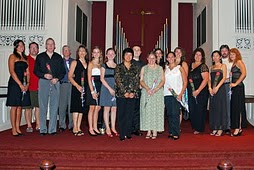
(Left to Right) Carlos, Julian, Becca, Anna, and Felicia

Carlos also thought of how he could contribute instrumentally to the band, and picked up singing and guitar in addition to playing synthesizer. He also asked his younger brother to play drums. Eventually, Carlos decided to compose intricate vocal lines for multiple singers, and this led to inviting three back-up singers to the group. A drummer would soon follow, and Carlos’s old band mate and friend, Nathan, reunited with Ava Luna.

Ava Luna today is a “group of musicians that come together and combine their eclectic tastes”

Ava Luna is now a 6 person band. They managed to go on tour after only a year of performing.  And though they were still experimenting as a band, they received a greater response from audience members.

Carlos describes Ava Luna today as “the group of musicians that come together and combine their eclectic tastes.” Ava Luna might

Ava Luna perform at the Baseline Stage of the U.S. Open

have started as an experiment but over time, it became a long-lasting band in which everybody has a free say and the ability to play around with how ever much they want.

Carlos adds, “I can now understand what makes my band members like this music, and my job is to see how I can make everybody feel satisfied.”  Their latest performance at the U.S. Open in Flushing, Queens, New York proves this.

The group’s musical magnitude, dedicated and flawless performance stirred the most attention from the passing crowds that day. I was in the middle of that crowd photographing and video recording this band the entire time. I might have gotten the back of many people’s heads but the performance was worth every minute!

Recently, a record label invited Ava Luna to create a new album titled “Service LP.” They will also tour New England, Canada and some of the mid-west as an opening act for Toro Y Moi. Their first show is tonight at Webster Hall in New York City, and their last show is on September 25th in Minneapolis.

Greater opportunities and commitments also equates more complicated time and work management for the band. In my conversation with Carlos, I learned four of the band members have full-time jobs. They all try to make it to rehearsals 2-3 times a week and when they can’t, all singers and instrumentalists perform their parts in their own times. At rehearsals, Carlos conjures up ways he can synthesize rehearsals to temporarily fill the absent instrumentalist or singer.

“We have day jobs, but we play enough shows to support the band…It’s a lot of work”

Carlos also works several part-time jobs in order to make time for the band. On a normal day, Carlos communicates with the band members through constant emails concerning Ava Luna’s upcoming performances.

Becca, Felicia and Anna: Ava Luna's back-up singers

“We have day jobs, but we play enough shows to support the band; it is self sufficient. It is a lot of work,” concludes Carlos with conviction. Yet, Carlos wants to continue the group and further develop it professionally.

“When you step back and look at how far this band has come, it’s an accomplishment”

I asked Carlos where he would like to see Ava Luna a few years from now. One of his wishes is for Ava Luna to keep their sound without any compromises, or without changing their music in order to satisfy another major band’s musical taste. Carlos also says, “I want to see how far this can go. When you step back and look at how far this band has come, it’s a great accomplishment.”

Ava Luna’s mix of blues, soul, rhythm and blues, and folk in their songs, makes this independent group unlike any I’ve ever heard. I hope this band will go on more tours and make more albums. I finally asked Carlos what keeps him motivated to stay in the music business and he candidly replied, “It’s not a choice; this is just what I do.”

Hear People Listen, Part 2: Tapping into part of my father’s life

I recently interviewed my father, a former Cold War refugee from Romania, and learned about the power of forgetting and remembering stories. Such stories linger in people’s minds but rarely surface in conversation.

His flee to the United States

 This past April, I visited my parents’ native Romania. My parents, sister and I stayed at, what used to be, our grandparents home in the center of the capital city, Bucharest. I brought with me a story kit from StoryCorps to initially record a conversation with my mother and her best friend. My father became excited by the idea and asked if I would interview him and his two life-long friends, Dan and Marian.

I had to limit the conversation between these three friends to 45 minutes. Along with the “ice-breaking” background questions – how did you meet, describe me a favorite childhood memory, etc. – I also saw this as a golden opportunity to tap into a specific part of my father’s life – his flee to the United States.

After 30 minutes of listening to their walk down memory lane, they finally ambled to the year of my father’s daring escape from Romania – 1980. I then asked the following: “When you learned Tomi (my father) was going to make a perilous journey to America during the Romania’s communist occupation, what thoughts came to your minds?” So, the story began.

“My leave in 1980 was a dangerous matter…those who know will do well to forget”

I watched my father lean back into his chair with his arms folded across his chest as he enumerated.

“My leave from Romania in 1980 was a dangerous matter and one that was kept confidential. My wish for all my friends and family was this: those who know will do well to forget.”

And forget they did. As far as all his friends knew, my father was going on a month-long trip to Israel to visit an aunt. Marian elaborates.

“Tomi and I attended a sports club every Sunday to play tennis in pairs. Since we were both enthusiasts we always showed up on time.

“A month had passed since he left for Israel and I knew he was supposed to be back; so I waited for him at the club one Sunday after his return but he never came. I was incredibly amazed but I assumed he hadn’t come home from Israel yet. His prolonged absence eventually worried me.

“Sometime later, I stopped by his parents’ house to see if they had heard from Tomi. They invited me inside to listen to a homemade tape recording of a telephone conversation between them and Tomi. Making that tape was courageous because in those days, government authorities tapped most phones.

“I listened to the conversation. Tomi had gone to Italy to get an exit visa for the United States. On the tape, Tomi told his father about his arduous time abroad. He was exonerated by the application process and didn’t feel confident about continuing his journey. In the conversation, his father encouraged him to push forward. Mr. Trutescu said to Tomi, “You left here for this reason, and you’ve traveled too far to turn back now. Keep going.”” My father eventually finished his journey safely.

“You could only imagine what my friends thought when they learned I wasn’t coming back”

“I started my journey on Jun 10, 1980 in Israel,” said my Dad. “In September, I boarded a charter plane from Italy and landed in America.” He then remarked, “You could only imagine what my friends thought when they learned I wasn’t coming back.” Dan then told his story.

“It was 1982, two years after Tomi left when I learned he wasn’t returning home.

Romania during communism

“It all happened at my parents’ house on Christmas of that year. Marian and his fiancée, Veronica stopped by, and I saw they brought Tomi’s father along with them.

“I found it unusual how Marian and Mr. Trutescu stopped by without bringing Tomi. At this point, I started thinking he already fled the country; a thought I kept to myself because I was so afraid of possibly exposing Tomi.” Dan didn’t know about the cassette recording Marian had heard and thus, wasn’t sure if my father had already made it to the States or discontinued the trip.

These memories and stories were seldom shared, even though communism was long gone

For a few seconds, I noticed a remarkable silence. My father still had his arms crossed; this time seated all the way back into his chair. Dan adopted a similar posture. Meanwhile, a gloomy expression came over Marian’s face as he turned his head downward toward his seat. It was clear to me that these memories and stories of my father’s escape were seldom shared, even though communism was long gone.

Further into the conversation, my father talked about his return to Romania for the first time in 10 years – right after communism collapsed in 1989. During those 10 years he was in the States, the only contact he made with his friends was through a Christmas card. Marian pulled that Christmas card out of a manila envelope and showed it to me. He kept it in mint condition for over 3o years.

A holiday greeting card can mean many things, but for my father’s friends, it was a sign of hope that their friend, Tomi was alive and well and somewhere safe.

Remembering and preserving some of life’s most important stories

Romanians today no longer adhere to secrecy and forgetfulness. However; those who lived in a time where certain speeches, knowledge and verbal speculations opened a door to danger, still remember this protocol: forgetting is the best way to protect yourself and those around you. Today, remembering and preserving some of life’s most important stories is essential; especially among friends, family, and generations to come.

I am happy to preserve and share my father’s story. It is a story about freedom, danger, perseverance and friendships that have passed the tests of time.

Opera Night’s 7th Anniversary!

Like any modern day music historian, I talk about music during our generation in the 21st century. I also like to examine the role of classical music in today’s society. Although classical music is not on the top 10 list of popular genres, it is still used to educate and help young musicians, school children and professionals further their performance skills.

 Northport – a New York City suburb on Long Island – is one such artistic community where classical musicians and music teachers dedicate their time to building new talent. My former classical piano teacher, Isabella Eredita-Johnson has not only developed young artists as a teacher, but she has also created an organization called Opera Night.

Since its beginning, the series grew 

Since its first gathering at Café Portofino in Northport village on Friday, July 1st, 2004; Isabella and her sister, Maddalena Harris, have been inviting singers to perform arias and vocal duets on a monthly basis. They both named this gathering, Opera Night. As the series grew and began attracting larger audiences, the little café with the bistro charm couldn’t accommodate crowds.

Two years later, Opera Night relocated to St. Paul’s United Methodist Church across the street. Along with more seating space, the church provided an upright Steinway piano to accompany the singers and greater performance space. While moving to St. Paul’s greatly benefited audiences and singers, Isabella, also faced challenges. Some of them involved focusing on professional singing and musicianship while accommodating local audiences. I personally talked to Isabella about how Opera Night evolved from a monthly gathering to an actual venue, and the challenges that arose.

Opera Night is still as fresh and exciting as when it started

Isabella explained, “The caliber of the audience has grown and the presentation is now more formal than from Opera Night’s beginnings in 2004. The one thing that hasn’t changed is the spontaneity.” The performance program is determined by which singers show up that night. Isabella claims, “we do this to keep the performances fresh and exciting. After a performance, people come up to me and say, “this was the most exciting Opera Night to date!” If I had a dollar for every time I heard that, I would be very rich.”

 This spontaneity helps Opera Night stand out amongst the competing performance venues that heavily rely on structure in their programming.

Another aspect of Opera Night that hasn’t changed is the immediate delivery of famous arias and duets. Isabella started Opera Night to bring the most exciting and popular parts of great operas to opera lovers instead of performing full operatic works. Some musicians might find this hodgepodge of music overwhelming, but for Isabella, it comes naturally. Isabella claims, “For me, it’s easy because good, finely trained singers have come to me. The nature of inviting 20 different singers is they will most likely sing 20 different songs.”

Opera Night now focuses on furthering singers’ performing repertoire and skills

Focusing on the singers is fairly new general goal at Opera Night. Isabella explained, “The reasons a singer would want to sing at Opera Night are: they sing in front of a large audience; they get a free accompanist provided by Opera Night; and they increase the quality of their performances.” These benefits naturally encourage singers to spread the word about Opera Night to opera lovers and potential future Opera Night performers.  

If a free accompanist and a full house is not enough to attract singers to Opera Night, the success story of some regular performers will perhaps change prospective singers’ minds.

Bringing professionals back to the music and putting their voices in films

Bruce Solomon initially had a successful singing career. However; supporting a family while performing as a concert artist was challenging. So he went into sales.

Years later, he heard about Opera Night, which helped satisfy his passion for singing and helped make up for the years he was out of the musical scene. Thanks to Opera Night, Solomon can now easily step back into singing.

In the beginning years, Frances Fascetti was an Opera Night regular. Chris Garvey, an audience member, taped and recorded all of Fascetti’s performances and distributed them on a digital music platform.

One faithful day, independent film director, David Campfield, found Fascetti’s recording of “Ave Maria.” Isabella was thrilled to hear Campfield wanted to use Fascetti’s recording in his upcoming film, Cesar & Otto’s Summer Camp Massacre. Fascetti was doubly excited to learn that out of all the “Ave Maria” tracks available for download on the worldwide web, Campfield chose hers.

Opera lovers are all around and they are coming out to Opera Night

Aside from helping young professionals develop their skill and performance repertoire, Opera Night reinforces the communities love for one of the most classical performing arts.

Isabella says, “Opera lovers are out there and they’re coming out of the woodwork. We see the audience turn out, and it is growing. You meet these people who love Opera and want to know if there is anywhere they can listen to it… and you tell them about Opera Night.”

The minute Isabella meets an Opera lover looking for a good performance; she puts them on the email list and sends them reminders about upcoming performances.

Opera Night also reinforces Isabella’s life-long drive and passion for opera and classical performing arts.

Isabella’s performance experience during college encouraged her to take on Opera endeavors

 Isabella’s mother and father were the first opera lovers she ever knew. Their love of music fostered Isabella’s talent for classical piano, and soon, her years of dedication and performing eventually resulted in a degree from the Manhattan School of Music. Her greatest inspiration for opera however, was a “fine” bass/ baritone singer and enthusiastic voice teacher named Peter Maravell.

Isabella became Maravell’s piano accompanist at his studios. What Isabella thought would be a summer job that paid more than what her peers were making at McDonalds, turned into an assistantship and apprenticeship under a great singer. Maravell taught Isabella the music from the operas by some of the greats – Mozart and Puccini.

Maravell helped give Isabella a job that enhanced her experience as a concert pianist. Working under Maravell also expanded her musical world.

Isabella’s performance experience outside of academia encouraged her to teach music and take on projects and musical endeavors that would attract large audiences. For her, these projects and endeavors would revolve around opera.

Isabella encourages communities to help keep opera afloat

As Isabella continues in her musical endeavors and projects, she is constantly reminded of the hard economic times currently affecting many opera companies – even large ones in the neighboring metropolis, New York City. Isabella has taken the initiative in promoting New York City Opera’s Chairman Challenge, a fundraiser that will help City Opera continue producing full operas. More importantly; this challenge will help New York City Opera improve their opera education and professional development programs. This is why Isabella encourages community members to take an active interest in keeping opera afloat by attending a performance; spreading the word about a company; or donating.

Tonight is Opera Night’s 7th Year Anniversary!

Tonight’s celebration of Opera Night’s 7th year in Northport will remind community members of how much people love Opera. People want to have it and need to have it. “And for a good reason too,” Isabella says, “it is just wonderful!”

Hear People Listen, Part 1

Hello again. It is my first entry of 2011 and I feel I have to explain myself a little. The New Year started with a busy communications job in Brooklyn and evening classes at NYU. At the end of March and beginning of April, I found myself in Romania interviewing family members and friends about their histories and pasts.

Now that you know what has happened to me, the Music Historian brings you a special first entry of the year.

Throughout my experience with a non-profit called StoryCorps, I learned that sometimes, the greatest soundtracks of our lives are without music.

Dave Isay, Founder of StoryCorps

Dave Isay, a former radio producer and recipient of the MacArthur’s “Genius” Fellowship, started this non-profit in 2003, recording and preserving the stories of everyday Americans from all walks of life. Today, StoryCorps has recorded and archived more than 30,000 interviews from over 60,000 Americans. In addition to preserving these stories at the American Folklife Center at the Library of Congress, StoryCorps also broadcasts stories on NPR’s Morning Edition every Friday and animations on PBS. Dave also published people’s stories in his original bestsellers – Listening is an Act of Love and Mom: A Celebration of Mothers from StoryCorps.

The big question is – why do people find others’ life stories so intriguing? One reason might reside in the fact we are all individuals or a collective group of individuals who come from different backgrounds and are interested in learning about “ways of living” that are unfamiliar to us.

One StoryCorps recording that struck this chord with me is the story of “Danny and Annie”— a couple who had a late-life romance and happy marriage.

Danny and Annie

Judging from the number of views this animation received – about 1 million – it has struck a chord with other listeners as well.

On the opposite end of the spectrum, many people like it when strangers, close friends or family listen to their stories. I discovered this after I was interviewed by StoryCorps in January. I then decided to share the gift of recording and interviewing by taking StoryCorps’ portable interview kit abroad to family members in my parent’s native Bucharest in Romania.

My mother’s life-long friend in Bucharest fell gravely ill and was spending her time in Bucharest’s oncology center. My Mother planned to go to Romania to visit her friend and then I suggested the idea of going with my Mother to record their conversations and preserving them for her friend’s family. Excited by the idea, my Mom agreed to bring me along.

When we got to Bucharest however; we discovered the branch of the oncology center where my Mother’s friend was placed was completely quarantined and recording devices were not permitted in her room. Luckily, my father and his life-long friends wanted to record their story and two of my Mother’s other close friends also wanted a chance to tell their stories.

On April 7th, I returned to the United States with great stories from my parents’ native country, Romania.  I cannot wait to translate these stories into English and share them with readers.

Until then, I invite you to hear people listen at StoryCorps.

The Shepherd of the Messiah Sing-In

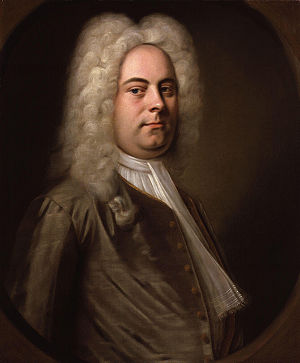
Handel’s Messiah Sing-In is an event where audience members, for one night, become Avery Fisher Hall’s largest concert choir of the year. This transformation begins when the conductor faces the audience in the orchestra section- the section in front of the stage- and leads them in singing The Messiah by Georg Frideric Handel.

What if you are not a singer? Do you experience the same sensation as the other 1,000 members who brought a copy of The Messiah? You will have an amazing experience but it will be very different from the singers’.

The night I attended, this past December 21st at Avery Fisher Hall, I had a throat cold and my score money went to tickets. Therefore, I became an observer from inside the performance rather than a participating singer. Being an observer however, enabled me to see just how important the conductor’s leadership and presence is for the deliverance of a great concert.

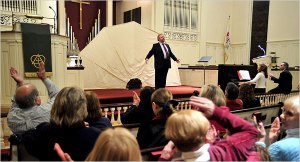
Gary Thor Wedow is very well known for conducting large choirs at Carnegie Hall and was selected to lead the first choral performance. He divided the orchestra section of the audience in two sections he called “New York” and “New Jersey,” for the heterophonic piece, “And The Glory of the Lord.”

While Wedow may have given these sections corny names, he did set a positive mood for the singers. Contrary to Wedown, the next conductor, Vincent Rufino, displayed more interest in his appearance than in Handel’s music.

During the run of “He Shall Be Purified,” Rufino’s enthusiasm was relevant in his bounce of the heels and raised posture of his shoulders. Prior to beginning the song, Rufino received frantic shrieking and cheers of praise from adults who were alumni of his high school choir. The only thing missing from his reception was flying panties.

One of the only conductors who exhibited a more professional and interpersonal presence was Gail Archer, the choir conductor from Barnard College and Columbia University. She stepped to the podium to tell the audience a little about Handel’s history as a composer in the royal courts in England and Italy. Following her brief history lesson, she proceeded to conduct the song, “And We Like Sheep Have Gone Astray.”

Like a conductor with years of experience in leading large ensembles, Archer expressed the massiveness of the performance by swaying her hands and forearms gracefully: counting the meter with her right hand while signaling dynamics, rests and accents with her left. With the rest of her body planted to the stand and a great balance in her torso, Archer’s motion was like that of a classical Hindu dancer: it told a story about this piece of music.

I felt the audience delivered the most spirited performance during Archer’s performance. I feel she, like a shepherd, led all the sheep home. If Archer should be in next year’s, 44th annual Sing- In, I would definitely consider attending.