
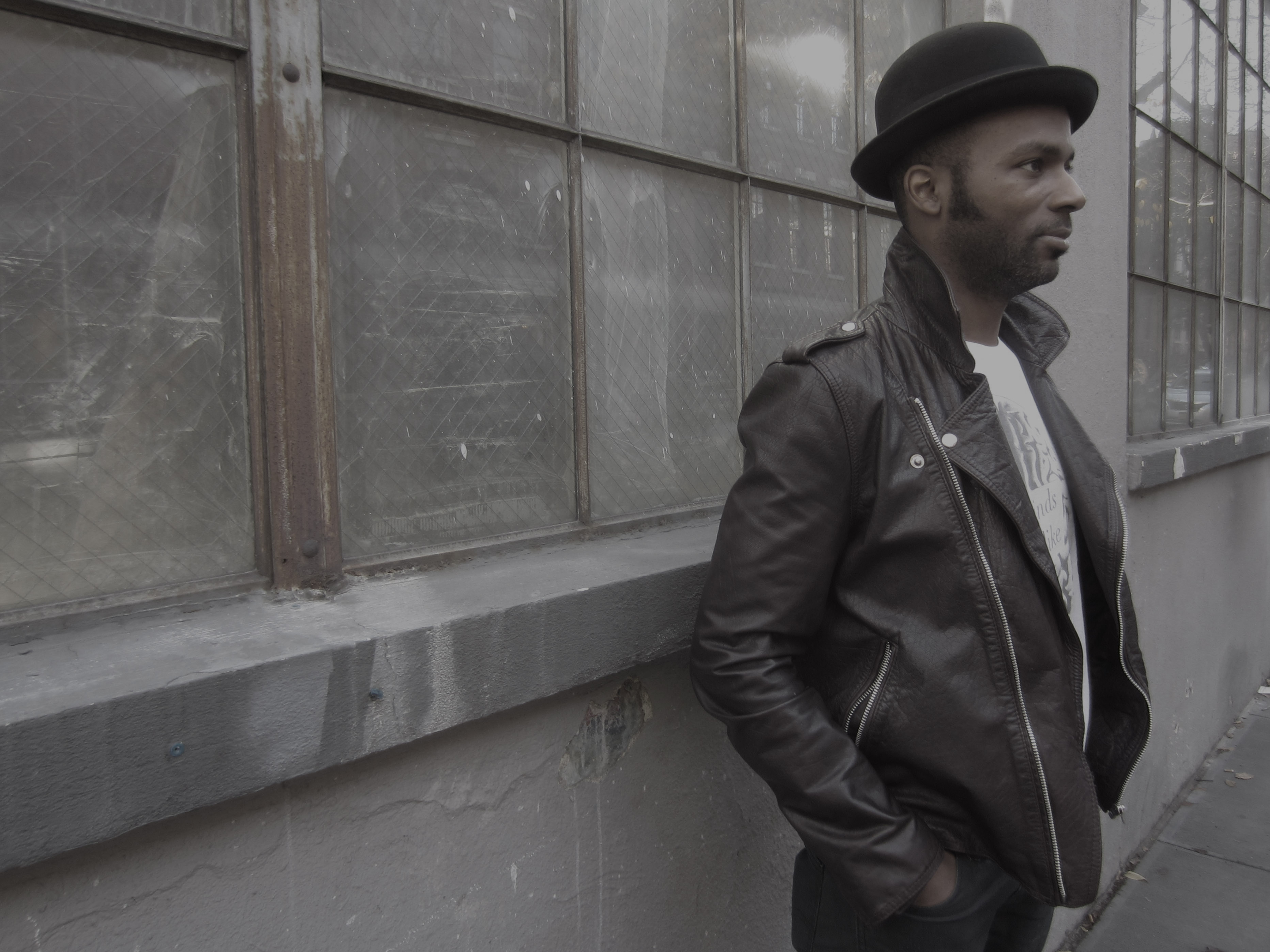
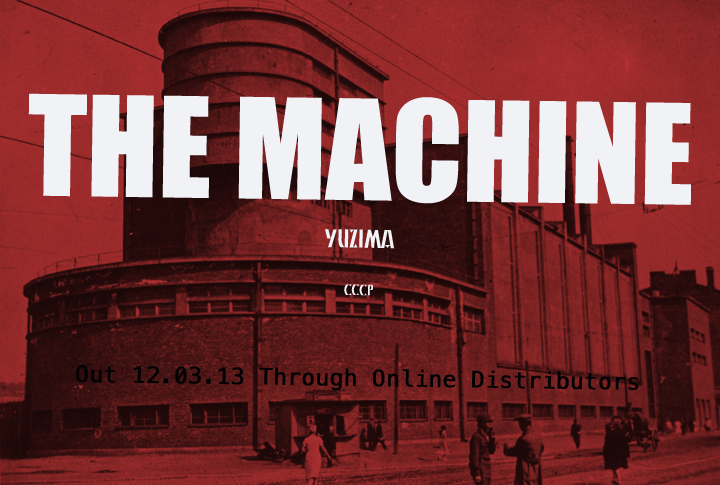
 New Yorkers might recognize Yuzima for his performance of “Hey Jude” at the annual Beatles Complete on Ukulele concert. While the concert approaches, Yuzima is currently celebrating the release of his latest LP, THE MACHINE.
The singer songwriter describes his earlier works – Sound Opera – Project One (2012) and Powerful (2012) – as statements, larger than that of his additional work Glasnost (2011), all adding up to THE MACHINE (2013). “The songs on THE MACHINE are bigger, more pop, and more political. Everything is more,” he explains.
“Get Things Done,” is the first song on the album that gives the listener any idea about the meaning of the record’s title. The vocalist mentions within his lyrics how everyone should have dreams so that they can avoid becoming part of “the machine.”
In my first full-length interview feature for 2014 on Hear, Let’s Listen with Yuzima, I come to understand the machine he describes only operates properly with contradictions, politics, and musical craftsmanship.
“Everything is a machine – your family, your neighborhood; they all have systems, habits and levers,” explains Yuzima. “We all know what makes our families work: who’s who, who’s a bully, who’s artistic. It’s a system.
“People like to think of things in a very compartmentalized way: allies and enemies, etc. Life in essence is about competition. We’re all the current players in the way life works.”
He adds, “You can’t escape “the machine.” The minute you exit one you enter another. It happened in the 60’s going into the 70’s where many learned that the alternative of the system was another system. On the other hand though, you can “escape the machine”, in the instances of, being yourself, getting out a bad relationship, and more. In the end, the artist wants to be free.”
As I listened to the song “Get Things Done,” I wondered whether Yuzima feels that there is a moment where individualists want to be a part of the machine – a collective in which individuality is lost. According to Yuzima, this is “the irony of human nature.” He enumerates:
“People want to be alone – just in a crowded room… We’re all working together while competing against one another.”
Yuzima helps express this contradiction through his music. The first few tracks of his record include a fragmented musical form. For example, “Black Graffiti” has a guitar that produces riffs which follow measures with specifically placed rests. There is a disruption in the harmonic flow of the chords. Yet, the clear and imagistic storytelling keeps the listener moving throughout the discord of the song. Half-way through “Black Graffiti,” a listener will soon start putting together in their own minds how to sing the song back in a continuous flow that follows the harmonies from the music and Yuzima’s vocals.
By the time listeners get to “Sex City,” they no longer have to make the inner effort to put a fragmented song together. Instead, Yuzima delivers a more easily audible tune that listeners can immediately sing back. In this song, he sings, You were spotted on the outskirts of town/ looking for a new drug…
Yuzima reminds listeners of experimental independent music that no matter what message is being expressed within the song; chord progressions, vocal melodies, harmonies and rhythm come first. Meanwhile, his vocals include a hint of soul that resonates deeply with the listener, especially when the lyrics tell a story about love, violence or societal troubles. “Black Graffiti” and “Sex City” are such examples. Then, there is the simple political message in the song “Guns,” expressed through lyrics guns kill.
Yuzima claims that while he freely makes political statements in his songs, he does not classify himself as a political artist. He says:
“I write about what is happening to people and what they are going through; kind of like a documentarian. If you don’t write about what is really going on, you’re playing pretend.”
While Yuzima may repeat some of the lyrical practices artists before him implemented, like politically themed messages – which I believe veers toward the prosaic – and compositional experimentation; the clear artistic reflection between song structures and titles – a practice he has implemented throughout all of his music – presents something new for the independent musical culture.
“Anarchy,” for instance, includes several musical ideas, like an electric guitar riff playing with drums against the fragmentation between the song and the lyrics. The song evokes a feeling of disorder. Listeners can guarantee that all his songs on THE MACHINE will accomplish this reflection between song structures and titles.
“Music for me is an art form from top to bottom,” he enumerates. “I’m thinking of these songs from the beginning to the end. Some songs, you want to be easy while some you want to be more ambitious.
 “In order to be ambitious, you need to break rules. Yet, at the same time, you need to get to the point – for instance, the drums on “Anarchy” have a monochromatic hard hitting sound to them. The guitars have a militant feeling to them with discordant notes, and the chorus is a ground shaking explosion.”
Clearly Yuzima is the type of experimental musician who makes a plan for each of his songs, putting a great deal of effort and love within each track. On this note, he makes a point to keep his collaborating and recording process very restrained. Yet, Yuzima openly listens to feedback from reliable colleagues, including mastering engineer Nathan James, who “throws the magic” on the music.
At the end of our conversation, I learned the machine is a system that feeds on overused politics and the contradictions produced by human nature. This system exists in all dimensions within our present societies, the societies that once existed, and the ones yet to emerge. I also learned that philosophy has always been the hidden hand behind Yuzima’s most pop-inspired material, including THE MACHINE. Yuzima shares the quote from Red Plenty that inspired the theme of his LP.
“Capitalism created misery, but it also created progress, and the revolution that was going to liberate mankind from misery would only happen once capitalism had contributed all the progress that it could, and all the misery too… At the same time, the search for higher profits would have driven the wages of the working class down to the point of near-destitution. It would be a world of WONDERFUL MACHINES and ragged humans.”
While these philosophies might have inspired political and social movements, Yuzima does not serve a political agenda through his music. Instead, Yuzima wants to express the nature of machines – systems that leave little room to reinvent the wheel but at the same time require changes, usually brought about by the continuation of time, in order to survive. The artist successfully conveys this idea through his music by accomplishing two different goals simultaneously. The first developing the symbolic relationship between the titles of songs and structures which validate each title’s specific tone. The second, breaking some of the compositional rules of pop music through fragmentation, the imbalance in the volumes of the electronic instruments, and that unsettling industrial noise.
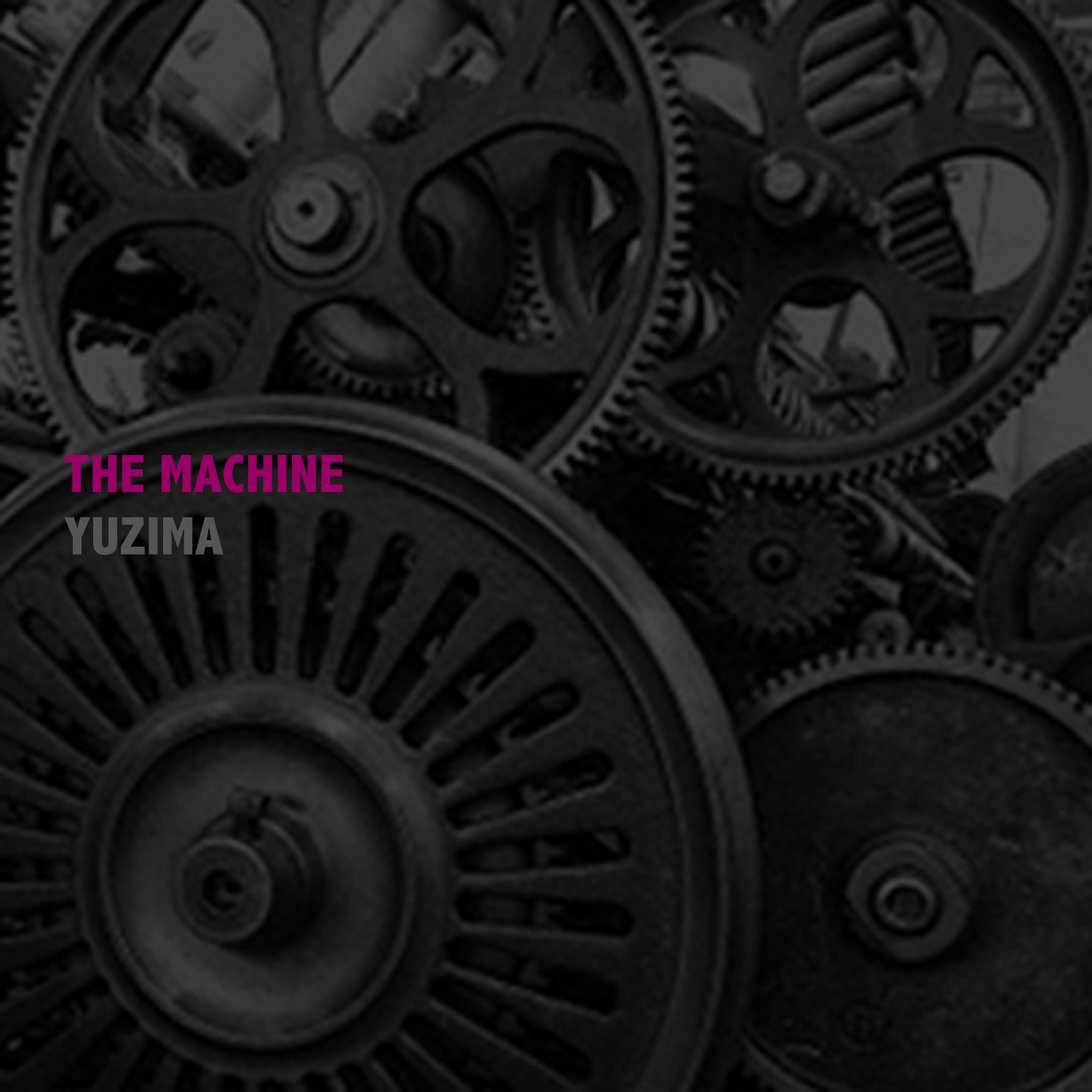 Yuzima’s THE MACHINE inspires lovers of experimental indie music to embrace a new listening experience. This might be why writers described Yuzima as a “rising indie luminary,” while fans deemed his music to be “bad ass” and “flawless.”
Yuzima will perform songs from his latest LP for audiences on January 11th at Pianos NYC. In the near future, he also plans to debut three music videos for THE MACHINE online. THE MACHINE is currently available on iTunes, Cdbaby and Bandcamp.

 “Once I saw how many people were into this one particular project, I thought of making an actual band. I had been involved in the Brooklyn country scene and knew many musicians. I actually recruited people through word-of-mouth, and I was able to pick out a couple of them and bring them on board.”
 “The song “Big Branch” is based on actual events that happened,” explained Rench. “When I brought the song to Tomasia, she took it upon herself to research the rural mining issues that affect many communities in Kentucky. Tomasia put herself into that role and wrote from that perspective so well.
 “When I work with the rappers and bluegrass players, we find a lot of common ground musically. Both these genres share improvisational elements and each has a different word to describe these elements. For example, during a jam session, we stand around in a circle and take turns improvising. In hip-hop, this is called a cipher while in bluegrass, it’s called a pick. Basically, they are both the same thing.
 “As a genre, Bluegrass is very virtuosic-focused and lacks an exciting performance element. Traditionally, it involves people fine-tuning their skills and ability to perform accurately and passionately. Bluegrass performers typically stand in one place and focus on their instrument and playing something amazing.
 “I think the music industry has perpetuated this idea that there is white music and black music, rural music and urban music. Each style has a separate chart, separate radio stations, separate websites and separate everything, as though separate groups of people listened to these genres. That’s not the case.
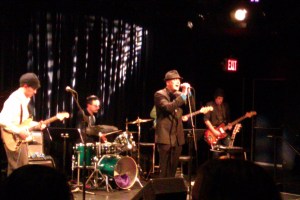 Todd Carter (a.k.a. The Looking), the New York City-based singer songwriter, is in the process of releasing their third album, Songs for a Traveler. In this record, Todd turns American folk classics and old country songs from the years 1850 to 1950, like “Wayfaring stranger,” “900 Miles,” “River in the Pines,” and “Blue River” into rock ‘n’ roll.
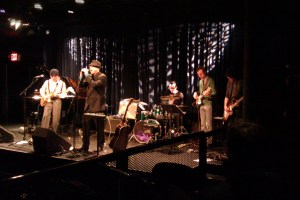 When I first listened to Songs for a Traveler, I had no prior knowledge that these songs were covers of folk and old country tunes. I simply judged them as originals. In doing so, I developed the following thoughts on The Looking’s record: the lyrics express an old country feel and tonally, the songs convey rock ‘n’ roll. Then, I picked up subtle influences of classical music, like the minor to major key modulations, and the simple duple meter in the song “Blue River.”
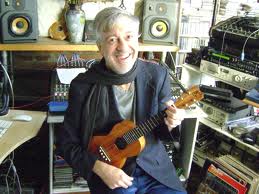 Last week, on one of the windiest evenings in January, I stopped by the Shabby Road Studios to talk with record producer
 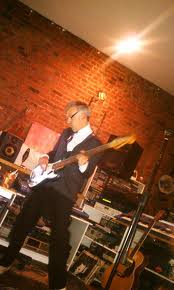 Roger continues, “I really like playing reggae bass. I’ll give you a taste of what reggae bass is – the opposite energy-wise of the ukulele, which is a collection of high frequencies just floating and dancing above in the hi register. The voice is here, in the middle,” he shows me with a flat-hand positioned in front of his mouth, “and the ukulele is here,” he moves his hand above his head, “and the bass is down here,” he re-positions his hand below his chest. “So it’s great that the voice has all this space and the bass generations so much more energy without clouding the vocal.”
 Roger’s job goes beyond providing the recording space and acting as master of the equipment.
















 Hear; Let's Listen